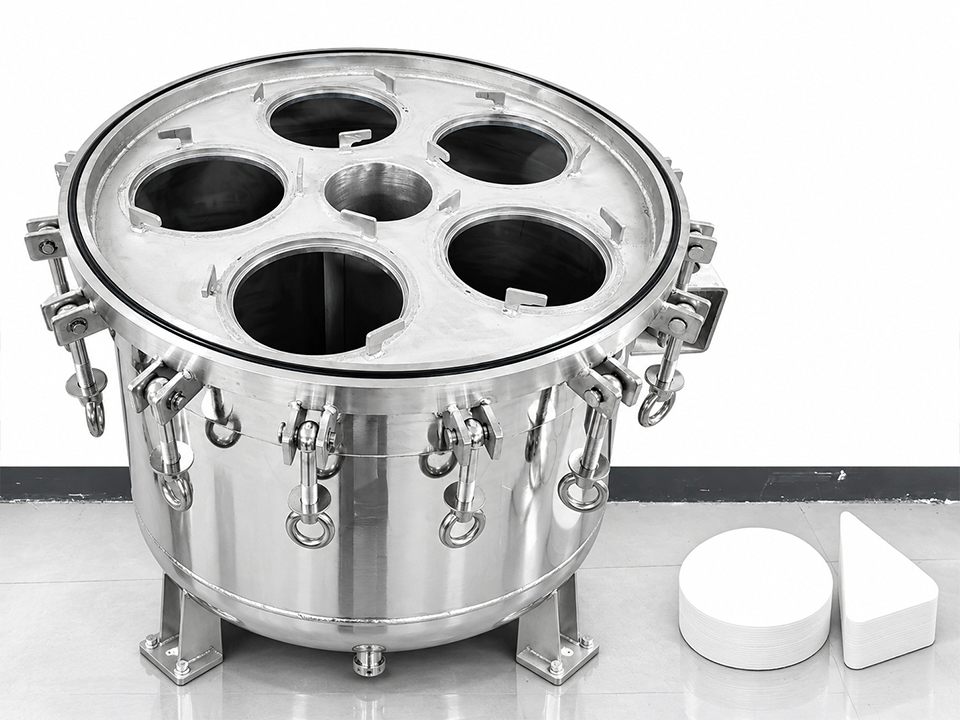
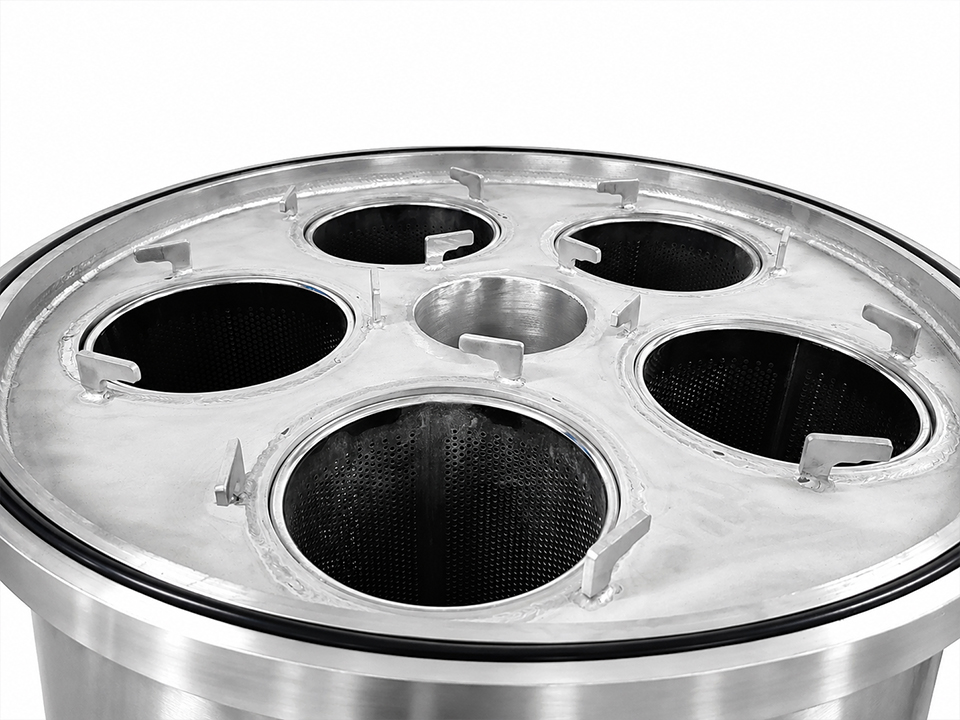
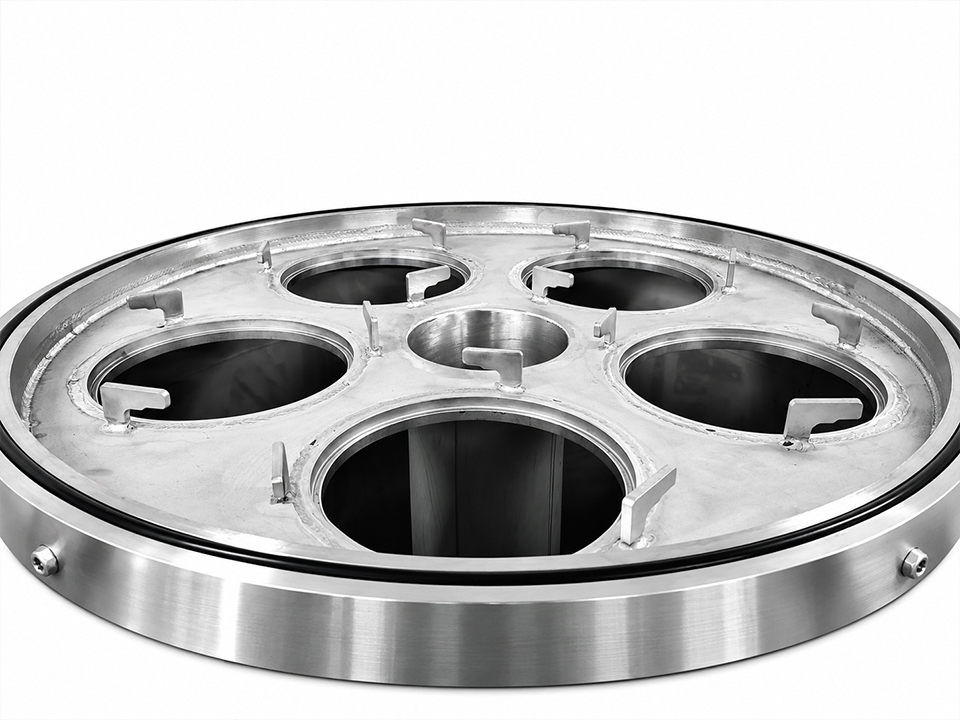
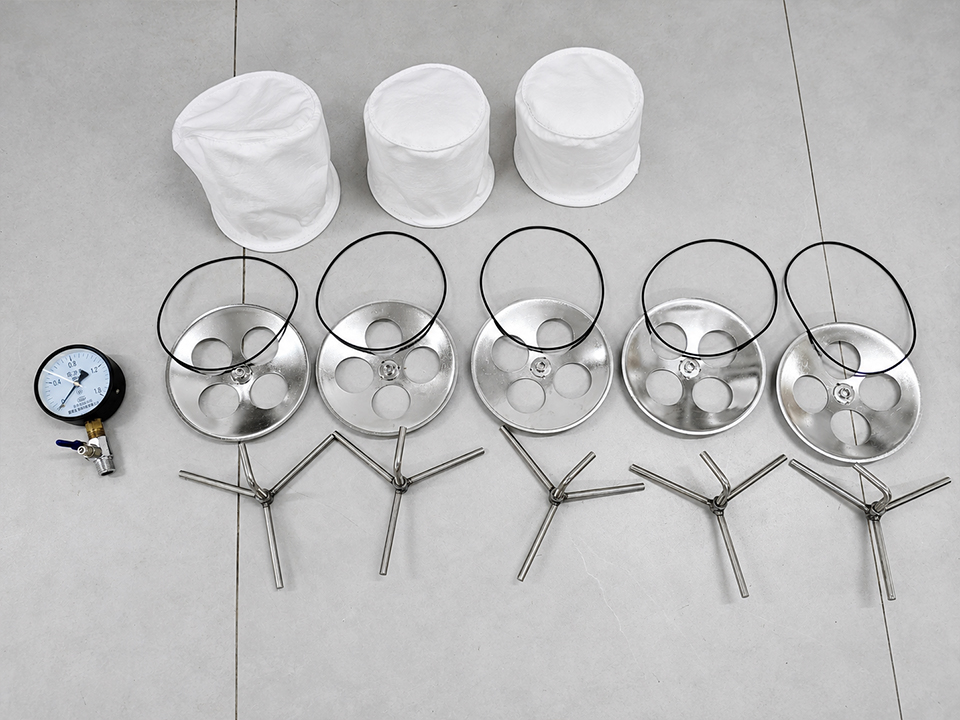
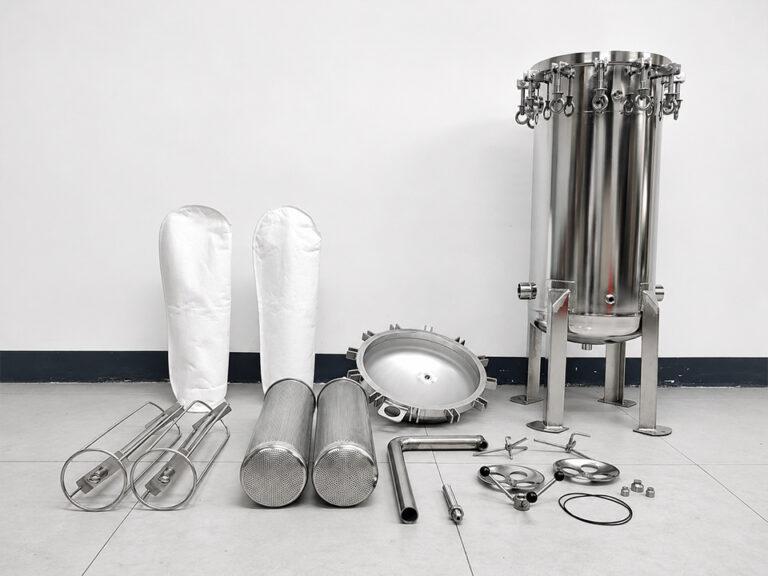
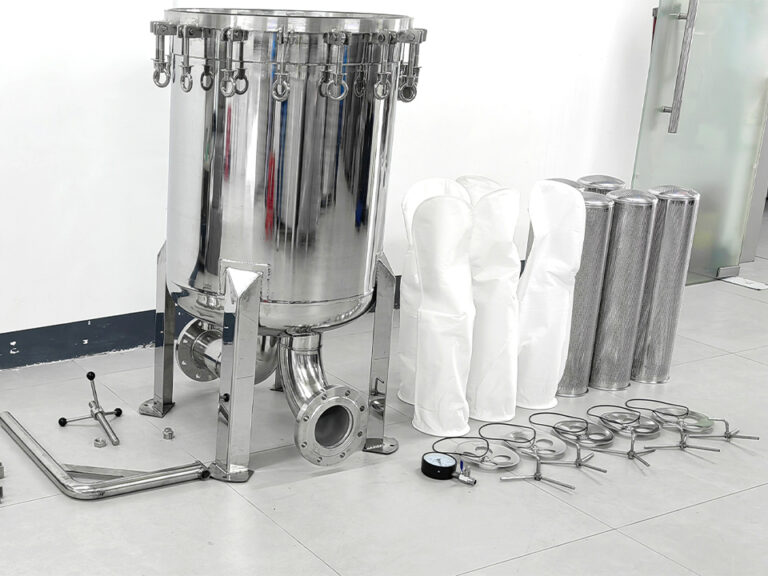
Guangzhou Lvyuan Water Purification Equipment Co., Ltd. is an industrial filter manufacturer founded in 2009 that designs and manufactures stainless steel filter housings, stainless steel sterile water tanks, filter elements, filter bags, ultra-polymer materials, and sintered filter products. Buyers choose Lvyuan for OEM/ODM support, ISO9001 quality control, and multi-country certifications.
Guangzhou Lvyuan Water Purification Equipment Co., Ltd.
To winterize an outdoor filter housing, you must either keep the fluid inside above its freezing point or remove the fluid completely. Everything else, including insulation, heat tracing, element handling and seal care, supports one of those two outcomes. Water expands when it freezes. The U.S. Geological Survey notes that ice is about 9 percent less dense than liquid water, so water trapped in a closed housing, gauge port or pump casing has nowhere to go and the pressure falls on the weakest part. For plant maintenance teams and engineers, a cracked fitting or distorted cover is often less costly than the unplanned shutdown that follows. This guide covers how to choose a winterization strategy, drain and dry equipment correctly, protect seals and elements, and handle different housing types.
Why Freezing Damages Filter Housings, Even Stainless Steel Ones
Instruments and small ports. Pressure gauges, vent connections and auxiliary threaded ports hold small volumes of water and are often the first parts to fail.
Gaskets, O-rings and sealing rings. Cold hardens elastomers, and frozen water can wedge a clamp or flange joint out of alignment.
Filter elements. Water frozen inside pleated media, a bag, or the pores of a sintered element can deform or damage it.
Dead legs and low points. Water standing in unused branches or below the drain outlet freezes first because it is not moving.
Pumps and valves. Casings, valve bodies and seats trap water that a housing drain will not reach.
Your process fluid matters too. Water-based fluids freeze near 0°C (32°F). Glycol mixtures and brines freeze lower, while oils and some chemicals may thicken or gel well before they freeze. Confirm the actual freezing or pour point of your fluid before choosing a strategy.
Choose a Strategy: Keep It Warm, Keep It Moving, or Drain It
Most outdoor installations use one of the approaches below. Which fits depends on how long the equipment sits idle, how cold the site gets, and whether power is available.
Strategy
Best suited for
Main risk
What to verify
Drain and dry (seasonal shutdown)
Equipment idle for weeks or months
Residual water in pockets, gauges, pumps and dead legs
Whether every low point can actually drain in the installed orientation
Insulation only
Short cold snaps with continuous flow
Insulation slows heat loss but adds no heat, so stagnant fluid can still freeze
Expected lowest temperature and longest possible no-flow period
Insulation plus electric heat tracing
Year-round outdoor service with intermittent flow
Power failure, wrong cable type, or uncovered valves and instruments
Cable rating for the application, thermostat or ambient-sensing control, and fluid temperature limits
Continuous circulation
Systems already running 24/7
Pump trips or low-flow periods overnight
Minimum flow, alarm on flow loss, and backup drain procedure
Relocate indoors or into an enclosure
Portable equipment and small skids
Handling damage, space availability
Whether the unit can be moved and drained safely
One conventional assumption deserves qualification. Many teams treat insulation as freeze protection, but insulation only slows heat loss. Without a heat source or moving fluid, a stagnant volume of water will eventually reach ambient temperature if the cold lasts long enough. Likewise, draining is not automatically safe. If a bottom drain sits above the lowest internal point, or a gauge line stays full, “drained” equipment can still hold freezable water. Verify drainage rather than assuming it.
Pre-Winter Inspection Checklist
Complete this inspection before the first forecast freeze, while valves still operate freely and fluids are still liquid.
Map every wetted component. List housings, strainers, pumps, valves, gauges, sample points and piping branches, including those that are rarely used.
Identify low points and dead legs. Confirm each can be drained, or remove it from service.
Test drain and vent valves. Operate them. A seized or plugged drain is a common reason a “drained” unit stays full.
Inspect seals and closures. Look for hardening, cracking, flattening or permanent set in O-rings, gaskets and clamp seals, and replace questionable ones.
Check clamps, swing bolts and flange bolts. Confirm they are complete and uncorroded so the unit can be opened in cold weather.
Review insulation and heat trace. Check for wet, compressed or missing insulation, damaged cable jackets, and uncovered valves or flanges.
Record baseline differential pressure. Cold weather changes fluid viscosity, so you need a reference to interpret later readings.
Confirm element stock. Have spare cartridges, bags, baskets and seals on site so a winter change-out does not leave the housing open.
How to Drain and Dry a Filter Housing Correctly
Follow this sequence for seasonal shutdowns, adjusting for your plant’s procedures and lockout/tagout rules.
Stop flow, isolate the housing, and relieve pressure before opening anything.
Open the vent first so air can replace the liquid, then open the drain and let the housing empty completely.
Remove the filter element, bag or basket. Dispose of single-use media, or clean, dry and store reusable media indoors.
Wipe or blow out remaining water from the vessel, especially in seal grooves and clamp or flange faces.
Drain or blow down connected piping, gauges, pumps and dead legs. A housing drain does not empty them.
Leave the drain and vent open, or the cover loosely seated, so condensation and rain cannot collect. Cover openings to keep debris and moisture out.
Tag the equipment as drained, and record the date and who completed it.
For hygienic or food-contact service, follow your site’s cleaning and drying requirements before storage.
Insulation, Heat Tracing and Enclosures
If equipment must stay in service, build the protection around the whole liquid path rather than the vessel alone.
Insulate everything that holds liquid. One vendor guide on protecting water filtration systems from freezing temperatures recommends wrapping housings, pipes and valves, and focusing on elbows and exposed fittings. It is written for residential systems, but the principle carries over to industrial piping.
Add heat where insulation alone is not enough. The same guide recommends thermostatically controlled heat tape for targeted freeze protection and cautions against overlapping heat tape on itself, which creates a fire hazard. Always follow the cable manufacturer’s installation rules, since overlap requirements differ by cable type.
Use proper controls. According to 3M’s application guide for self-regulating heat-tracing cables, ambient-sensing control is primarily used for freeze protection of water and water-based solutions. For other fluids, confirm control strategy and maximum temperatures with the heat-trace supplier.
Do not forget the details. Gauges, flanges, valve stems, drains and vents lose heat fastest and are often left bare.
Consider an enclosure. A ventilated insulated enclosure with a thermostat-controlled heater suits small skids, but check that it leaves access to cover bolts, clamps and drains.
Heat tracing and insulation must also respect the equipment’s temperature limits. Confirm that the heat source cannot push the fluid or the seals past their rated temperature.
Seals, Gaskets and Closures in Cold Weather
Seals are a quiet failure point. Elastomer compounds differ widely in low-temperature behavior, and the right choice depends on the compound, the fluid and the operating temperature. Rather than assuming a general rule:
Confirm the seal compound and its low-temperature rating with your supplier.
Replace seals that show hardening, cracking or compression set before winter, not after a leak.
Apply only lubricants compatible with the seal material and the process fluid. In food, beverage or potable service, use lubricants approved for that use.
Re-check clamp and bolt tightness after the first cold cycles, since thermal contraction can change joint loading.
Keep spare seals indoors so they are pliable when you need to install them.
Housing-Specific Winterization Notes
Each housing type holds liquid in different places, so the drain and vent routine differs.
Basket strainers
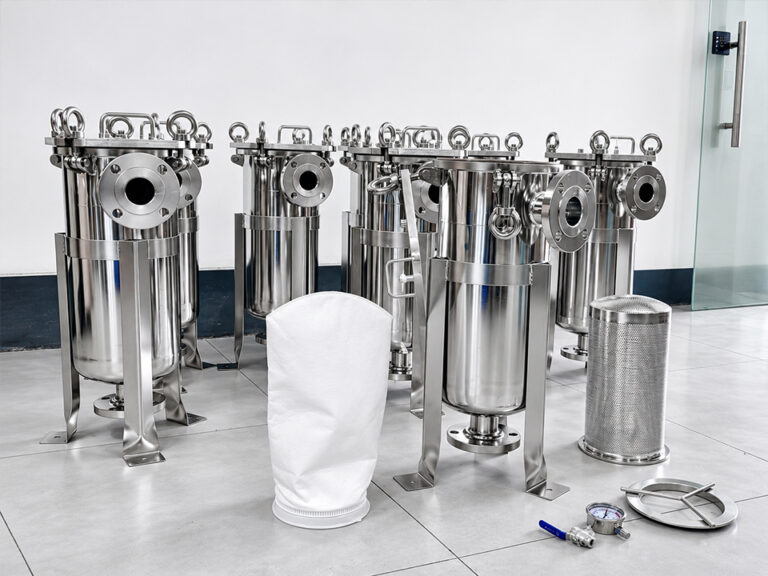
Basket strainers sit in the pipeline and often hold liquid below the basket. The stainless steel basket strainer listed by LY Filter has a swing-bolt cover, flanged ports and a drain fitting, which suits a shutdown drain routine. For a basket strainer that gets frequent cleaning in cold weather, an industrial basket strainer with a quick-access cover offers a bottom drain, gauge and vent arrangement in its product configuration, so confirm the drain sits at the true low point once installed. Lift out and dry the basket, and check that the cover bolts are not seized by ice.
Single-cartridge and sanitary housings
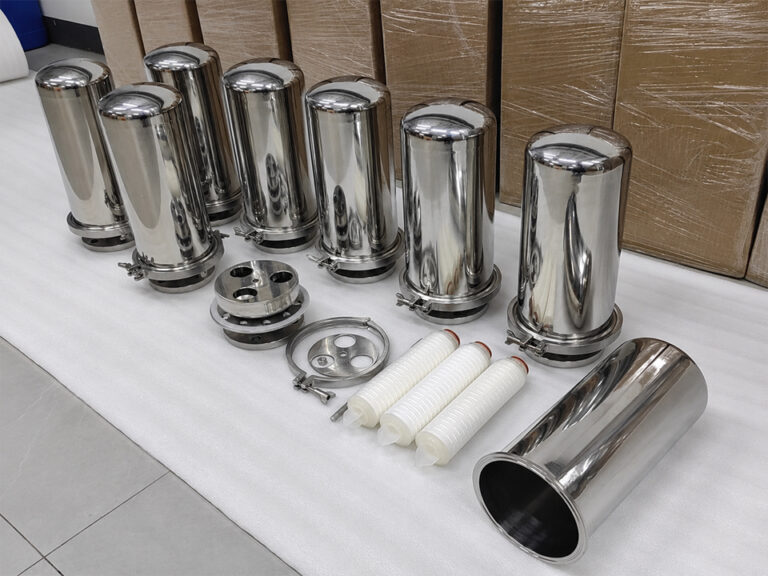
A compact single cartridge filter housing with a quick-release clamp and threaded ports is easy to open for draining, but the sealing ring and any threaded gauge or port fittings need attention. A sanitary stainless steel cartridge filter housing typically includes a top pressure gauge and vent port. These small voids are freeze-prone, so drain and dry them as part of the procedure. Clean and dry clamp gaskets before storage in hygienic service.
Flanged and sintered cartridge housings
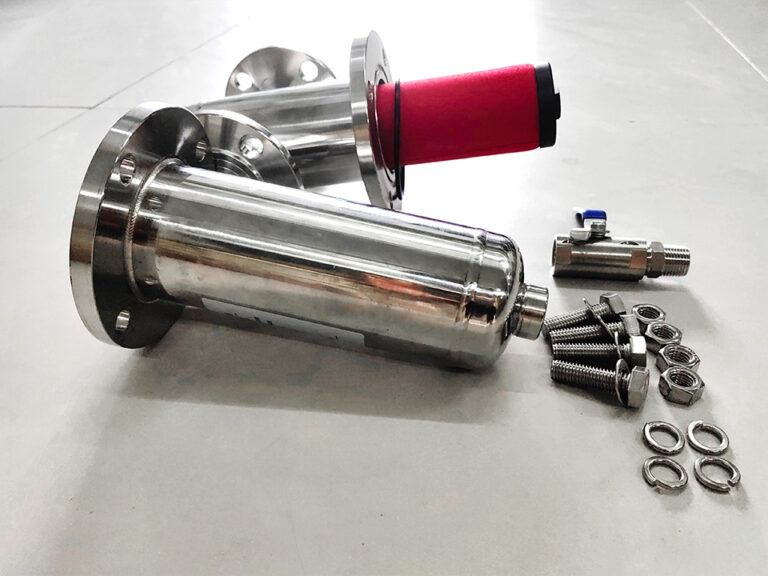
A flanged stainless steel sintered cartridge filter housing is described for gas, steam and liquid service. On steam or gas lines, condensate collects at low points and can freeze after shutdown, so confirm the drain arrangement. A sintered metal element has a porous structure that can retain liquid, so drain it, and dry or purge it where the process allows, before cold storage.
Bag filter housings
A side entry stainless steel bag filter housing has a side inlet and bottom outlet. Before shutdown, remove the filter bag, since a water-saturated bag can freeze and become damaged. Verify that the bottom outlet and drain let the vessel empty completely in the installed orientation.
Mobile filtration carts
A mobile stainless steel filtration cart with cartridge housings and a centrifugal pump can usually be rolled inside for winter, which avoids most freeze exposure. Drain the housings, pump and hoses first. A pump casing holds water that a housing drain will not remove. Store the cart in a frost-free area and keep cartridges dry.
Handling Cartridges, Bags and Baskets in Winter
Single-use cartridges and bags: Remove and replace before shutdown rather than leaving wet media in an idle housing.
Reusable stainless baskets and mesh cartridges: Clean, dry and store them indoors, or leave them in place only if the housing is fully drained.
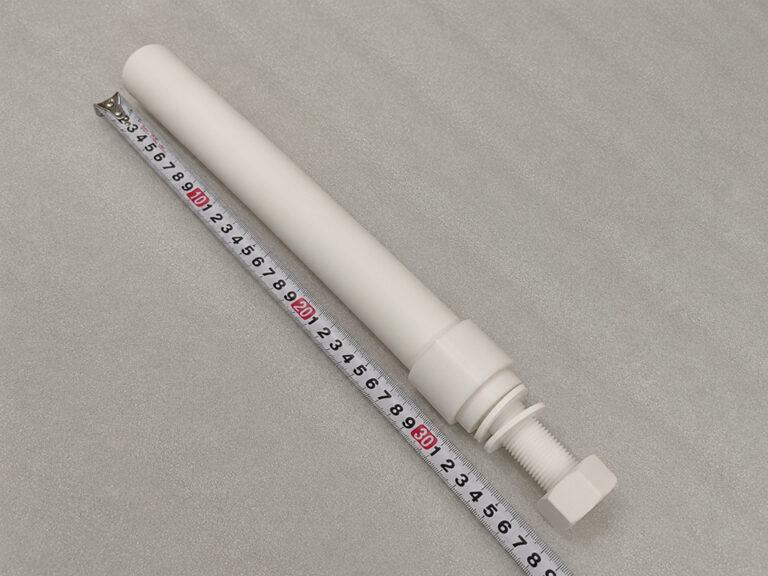
Sintered elements: Follow the element manufacturer’s instructions for cleaning, drying and storage.
Membrane or PTFE cartridges: Follow the cartridge manufacturer’s storage and wetting guidance, since these are more sensitive to drying and freezing than basic depth media.
Winter Operation: Flow, Differential Pressure and Monitoring
Moving fluid is harder to freeze than stagnant fluid, but it is not immune. Low-flow periods, pump trips and night shifts are when freezing tends to start.
Set a minimum flow or a flow-loss alarm if you rely on circulation.
Watch differential pressure. Colder fluid can be more viscous, so pressure drop across a clean element can rise even with no extra solids. Compare readings with your baseline before changing elements.
Check heat-trace power and thermostat function during each cold-weather walk-round.
Inspect for ice around covers and drains. Ice around a closure can damage a seal when you open it.
Keep a written cold-weather shutdown procedure with the exact drain points for each unit.
Restarting After Winter or a Cold Snap
Before restarting drained or frozen equipment, inspect it for cracks, weeping joints and distorted fittings. Replace damaged seals and any suspect gauges. Reinstall clean elements, close drains, open the vent, and fill slowly to avoid air hammer, then check closures for leaks at low pressure before bringing the unit to operating conditions. If a housing has frozen solid, thaw it gradually and have it inspected before returning it to service.
What Should You Specify Before Requesting an Outdoor-Rated Filter Housing?
If you are buying equipment for a cold site, include the following in your RFQ so the supplier can quote accurately:
Lowest design ambient temperature and expected duration of freezing conditions.
Process fluid, including freezing or pour point and viscosity at low temperature.
Operating pressure and temperature range, including any steam-out or sanitization cycles.
Housing type and size, cartridge, bag or basket element, and required filtration rating.
Materials, such as SS304 or SS316L, and seal compound with low-temperature suitability.
Connections and ports, including drain location, vent and gauge connections, and whether the vessel can drain completely.
Insulation, heat-trace or enclosure needs, and whether the supplier should provide them or only leave space for them.
Duty pattern, such as continuous, intermittent or seasonal, plus whether the unit needs to be portable.
Documentation and testing requirements for your project or target market.
LY Filter’s product pages list standard materials, connections and ratings, so share your site conditions and fluid with the team when you contact them for a quotation or a configuration review. They can advise what is available as standard or customized.
Frequently Asked Questions
Can a stainless steel filter housing freeze and crack? Yes. Stainless steel stays tough in cold weather, but water expands as it freezes. Ice trapped in the vessel, gauge ports, vents, seals or pump casing can deform joints, split fittings and damage elements even if the vessel wall survives.
Is insulation enough to protect an outdoor filter housing from freezing? Not always. Insulation only slows heat loss. With continuous flow or short cold snaps it may be enough, but stagnant fluid in prolonged freezing needs heat tracing, circulation or draining.
Should I drain a filter housing for winter or leave it running? Drain it for seasonal or long idle periods. Leave it running only if flow is reliable and protected by alarms or backup heat. Confirm the drain empties every low point first.
Do I need to remove cartridges or bags before freezing weather? Generally yes. Water-saturated media can freeze and be damaged. Replace single-use elements before shutdown, and clean, dry and store reusable baskets or cartridges. Follow each element manufacturer’s storage guidance.
What should I check on O-rings and gaskets before winter? Check for hardening, cracking, compression set and flattening, and confirm the compound’s low-temperature suitability with the supplier. Use compatible lubricant only, and keep spare seals in a heated area.
Can I use heat tape on a filter housing? Often yes, when it is rated for the application and installed per the manufacturer’s instructions, with thermostatic or ambient-sensing control. Avoid overlap where prohibited and confirm temperature limits for seals and process fluid.
How can I tell if a housing was damaged by freezing? Look for cracks around ports and gauges, weeping flanges or clamps, distorted covers or sealing faces, and torn or flattened seals. After restart, check for leaks at low pressure before returning to full operating pressure.