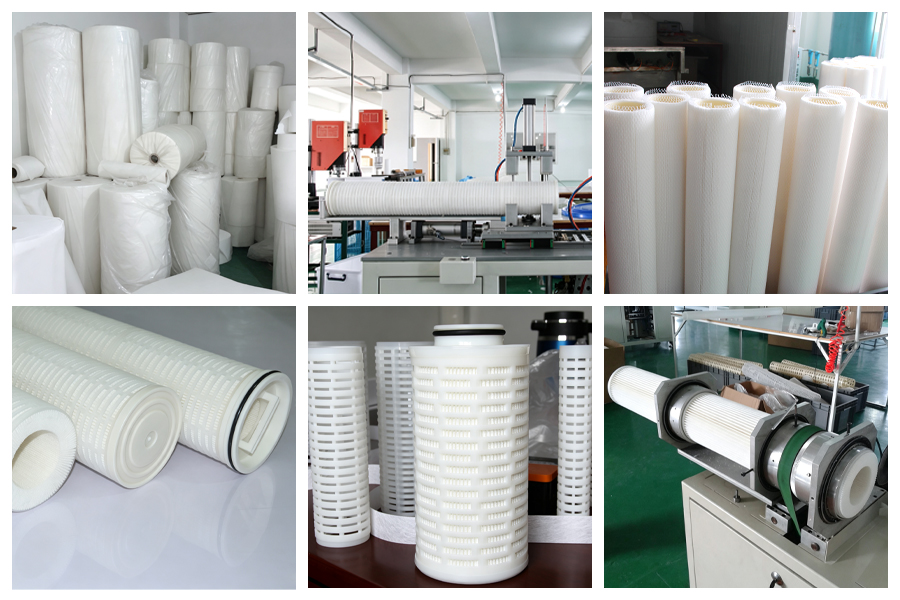
Guangzhou Lvyuan Water Purification Equipment Co., Ltd. is an industrial filter manufacturer founded in 2009 that designs and manufactures stainless steel filter housings, stainless steel sterile water tanks, filter elements, filter bags, ultra-polymer materials, and sintered filter products. Buyers choose Lvyuan for OEM/ODM support, ISO9001 quality control, and multi-country certifications.
Guangzhou Lvyuan Water Purification Equipment Co., Ltd.
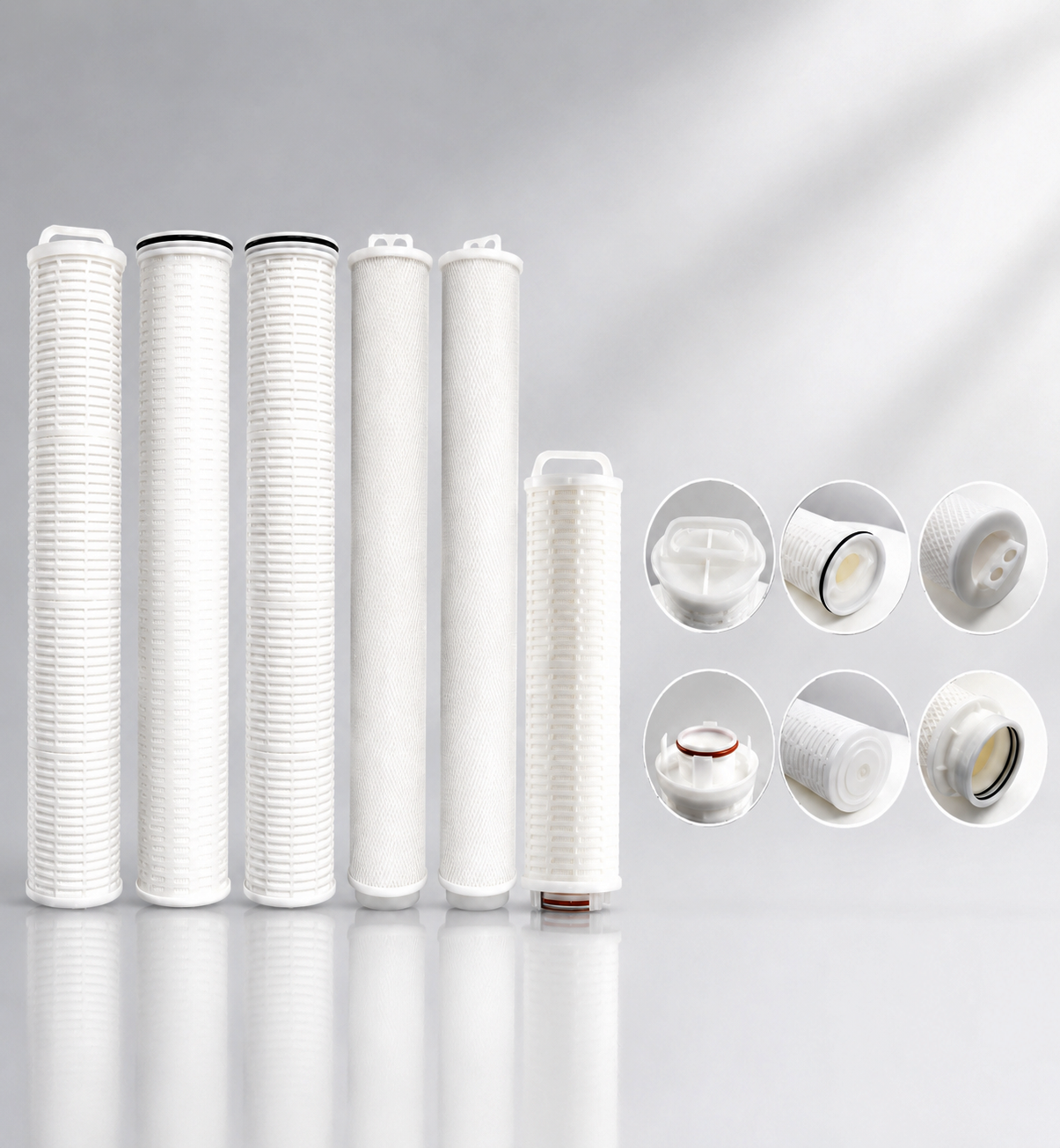
Lvyuan high flow filter cartridges are large-diameter filtration elements designed to process high volumes of liquid with fewer cartridges than conventional small-diameter systems. A large filtration area, engineered pleat geometry, and high-capacity construction can help reduce housing size, cartridge quantity, pressure loss, and maintenance frequency. Depending on the selected media and configuration, high flow filters can be used for industrial water, process water, RO pre-filtration, condensate treatment, chemical processing, food and beverage production, and other demanding applications.
Total Solution
High Flow Filtration for High-Volume Industrial Processes
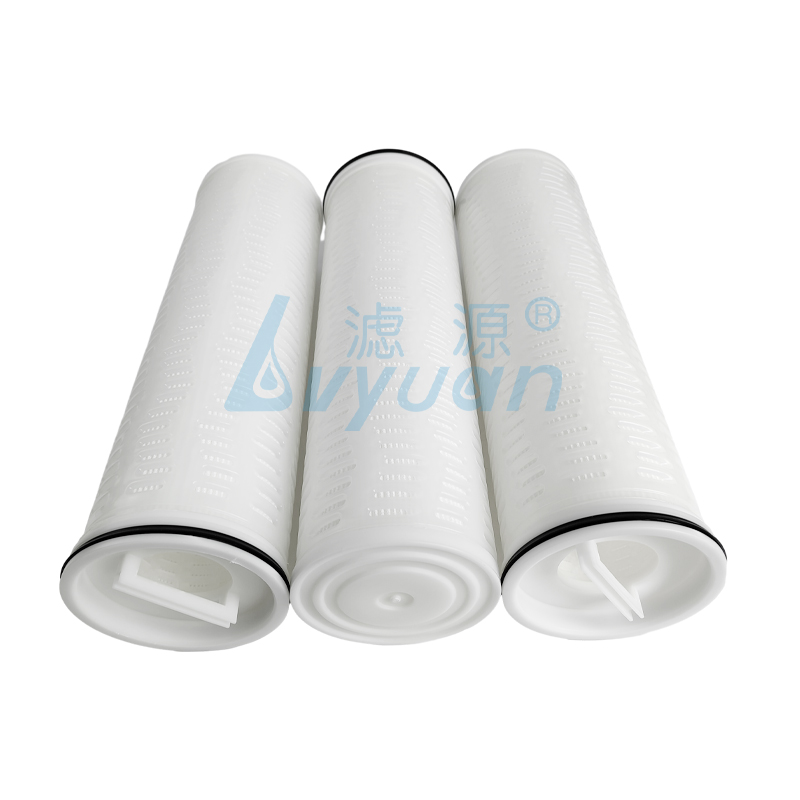
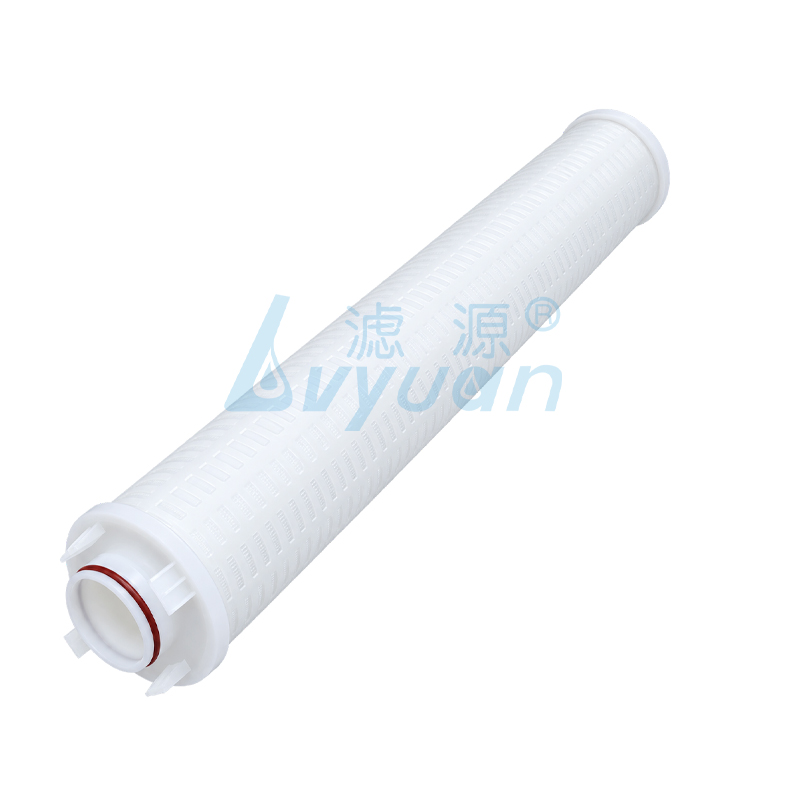
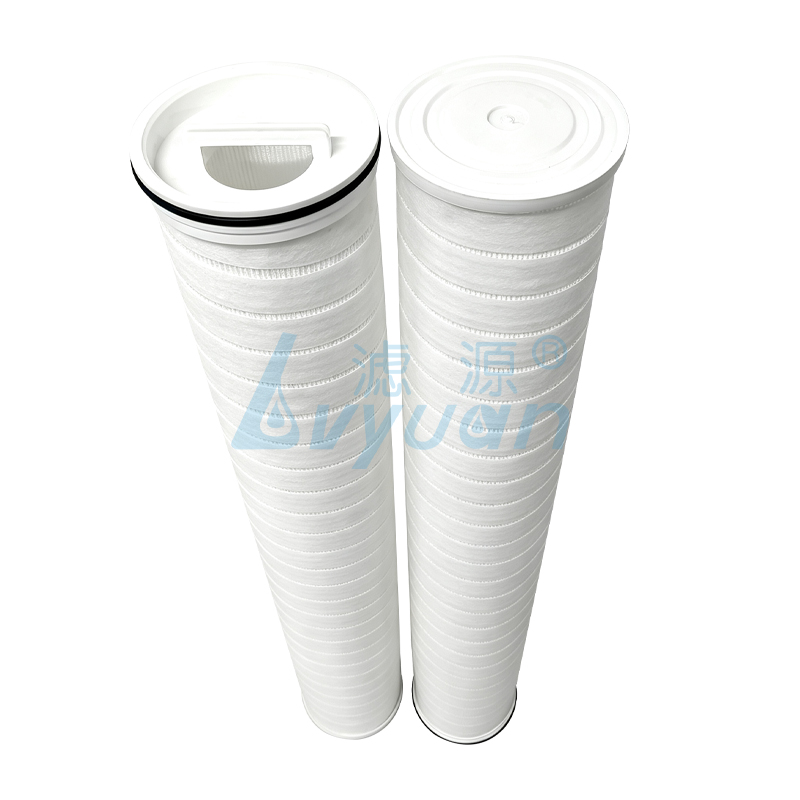
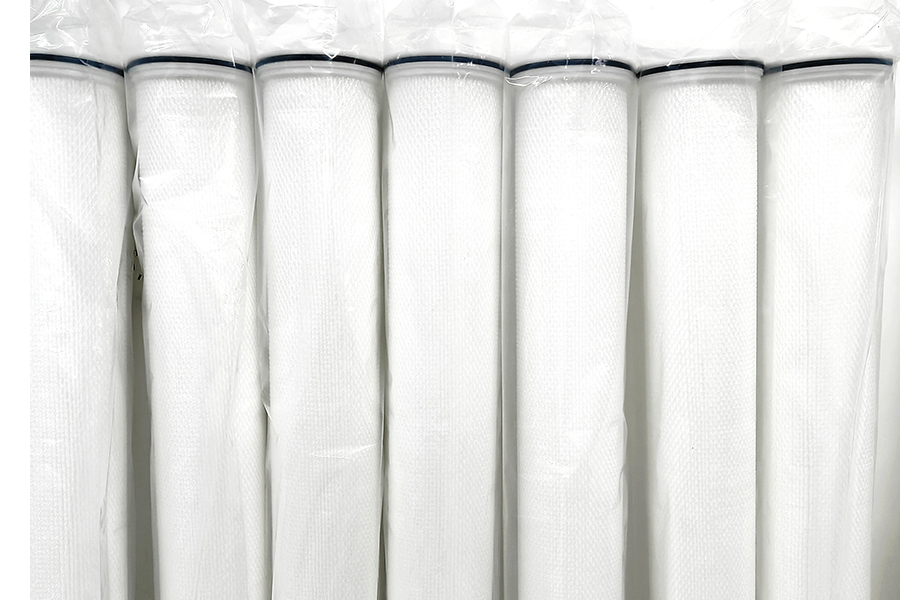
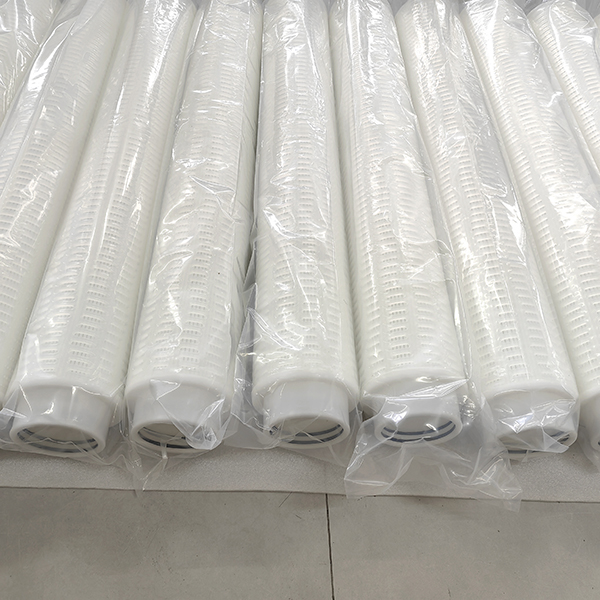
Lvyuan high flow filter cartridge combines a large diameter with a pleated design so more usable filter media can be installed in a compact housing. This helps process large liquid volumes while reducing the number of elements compared with many conventional cartridge banks.
1. Fewer Cartridges
Large-diameter construction can reduce the number of elements required for a target system flow.
2. Large Filtration Area
Pleated media increases usable surface area and can support greater dirt-holding capacity.
3. Maintenance Efficiency
Fewer cartridge positions can simplify installation, removal, and routine change-outs.
High Flow Filter Cartridge Range for Industrial Filtration Systems
Lvyuan high flow series can be configured around different filtration requirements, housing designs, and replacement needs. Options may include alternative cartridge lengths, outer diameters, polypropylene or other media, nominal or absolute filtration grades, different pleat structures, end configurations, flow directions, and O-ring materials. Replacement formats can also be developed from dimensions, drawings, samples, or existing cartridge references.
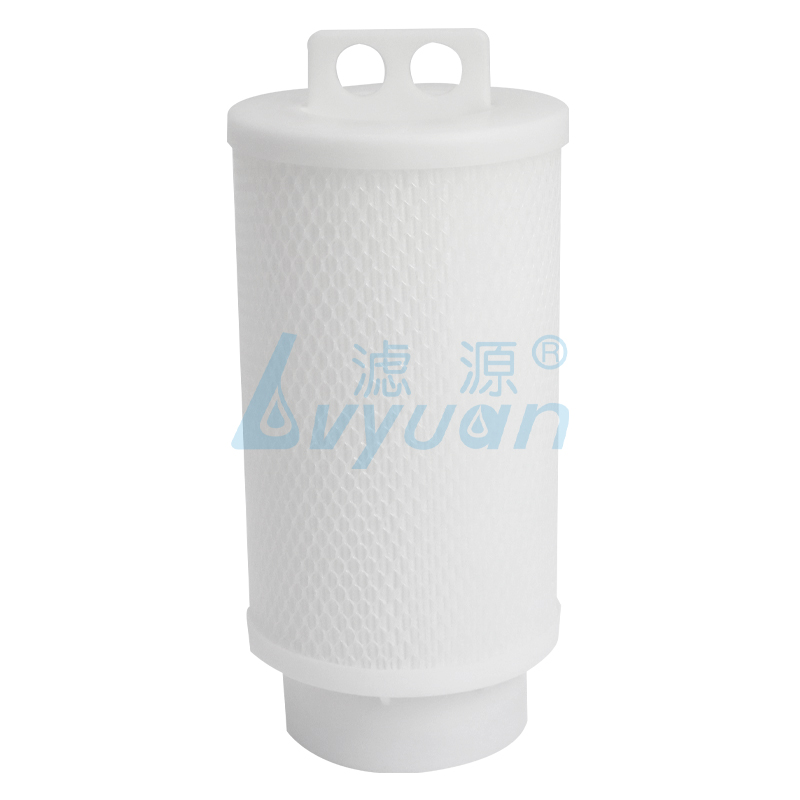
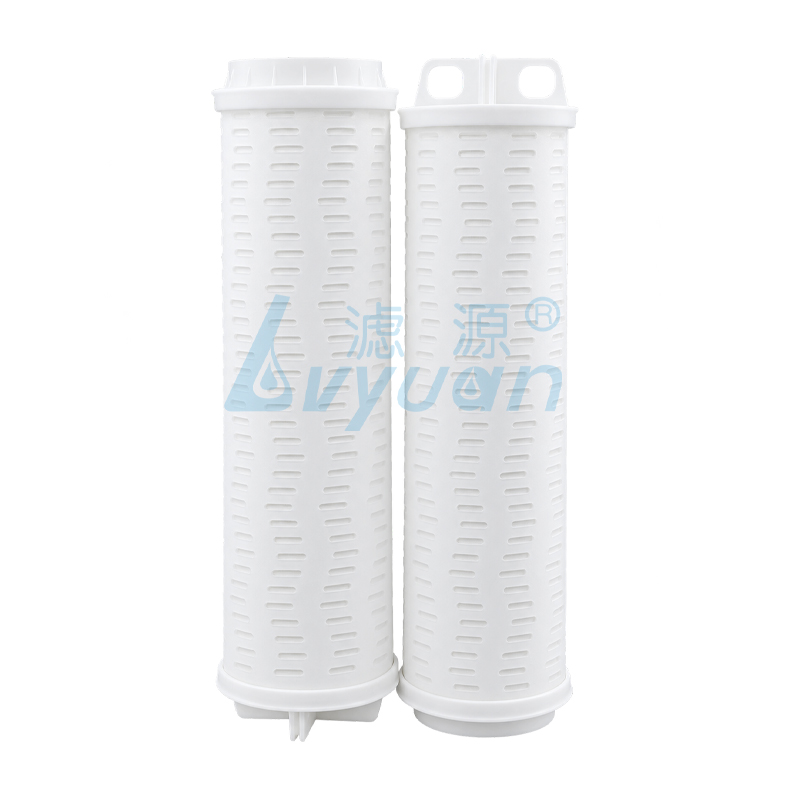
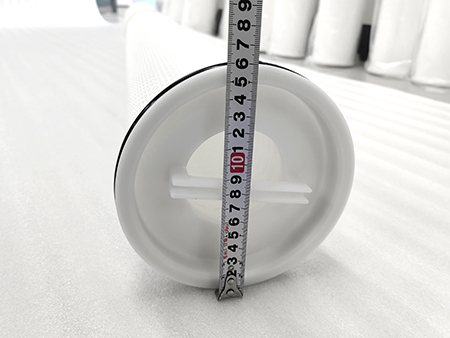
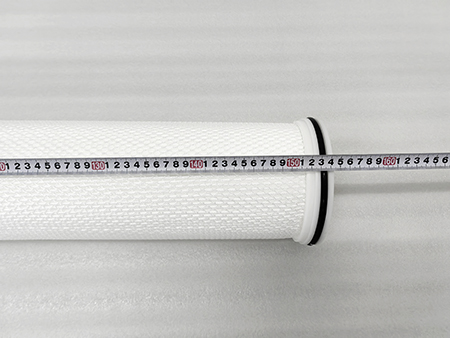
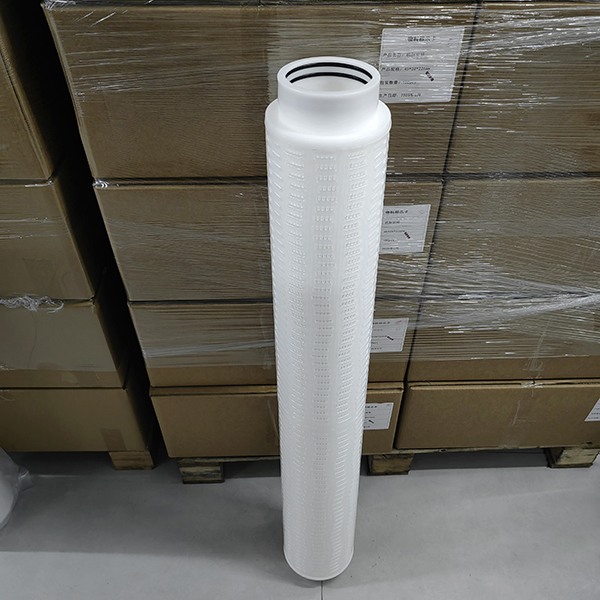
10 inch high flow filter with 6″ OD, 1–70 µm absolute, PP/PES media, up to 85 GPM, 3.4 bar, 82°C; ideal for RO pre, process water, food, beverage, petrochem, electronics, industrial water.
How to Select the Right High Flow Filter Cartridge
The correct cartridge is selected by balancing hydraulic requirements, contaminant characteristics, filtration target, and physical compatibility with the housing. Start with the required system flow rate and determine how much flow each cartridge should carry at an acceptable clean differential pressure. Then evaluate the type and concentration of suspended solids. A process with low contaminant loading may favor a different media and pleat arrangement from one containing large quantities of deformable or irregular particles.
Cartridge Requirements
Micron rating
Nominal vs. absolute filtration
Filter media
Cartridge length and diameter
Flow direction and end configuration
Seal material and replacement compatibility
For an existing system, provide the current cartridge model, drawing, photographs, or a physical sample when possible. This reduces the risk of selecting a replacement that has the correct diameter pleated appearance but an incompatible seal or end configuration.
Large-Diameter Cartridge Sizes and Replacement Compatibility
High flow formats are available in several dimensional families. Common market configurations include large-diameter elements around 6 inches and lengths such as 20″, 40″, and 60″, although actual outer diameter, sealing geometry, end configuration, and usable length vary by manufacturer and series.
Check Before Replacement
Why It Matters
Length and outer diameter
Determines whether the element fits the housing correctly.
End configuration
Open-end, closed-end, handle, locking, and support geometry must match.
Flow direction
Inside-to-outside and outside-to-inside designs are not automatically interchangeable.
O-ring and seal
Seal dimensions and elastomer chemistry affect leakage control and fluid compatibility.
Operating conditions
Flow, pressure, temperature, chemistry, and required efficiency must match the replacement design.
OEM High Flow Filter Cartridge Manufacturing and Customization
Industrial projects do not always fit a standard catalog configuration. OEM customers, distributors, system integrators, water treatment contractors, and equipment manufacturers may require a cartridge adapted to an existing housing or developed for a new filtration system.
Lvyuan manufacturing options can include alternative dimensions, micron ratings, filter media, end designs, sealing materials, and replacement configurations. Cartridge and housing matching can also be considered when the filtration package is being designed as a complete system.
For replacement development, drawings and samples are particularly useful. They allow key dimensions, sealing surfaces, support details, and end geometry to be compared before production. Application data should still accompany the dimensional information because a physically fitting element may not be suitable for the same operating temperature, chemistry, flow, or pressure conditions.
Request Technical Specifications if you are comparing multiple configurations, or Request Samples or Technical Data when a cartridge must be evaluated before a larger OEM or project order.
Cartridge Construction, Pleated Filter Media, and Material Options
The core advantage of a pleated filter is the amount of usable media surface that can be installed within a relatively compact cartridge. A well-designed pleat structure increases filtration area without simply increasing housing diameter. Greater effective surface area can improve dirt-holding capacity and moderate pressure rise, especially when the pleat spacing remains open as contaminants accumulate.
Polypropylene is widely used for water filtration and many chemical-service applications because it offers useful chemical resistance and can be incorporated into media, support layers, end components, and other cartridge structures. Polyester may be selected where its mechanical or chemical characteristics better suit the process. Glass fiber media can be considered when finer particle retention or a particular filtration efficiency is required. Activated carbon may also be incorporated into specialized cartridges when adsorption is required in addition to particulate filtration, but carbon construction should not be treated as equivalent to a standard particulate pleated element.
Media selection must be based on the liquid itself. Broad chemical compatibility is useful, but no material is universally compatible with every acid, alkali, solvent, oil, process chemical, or sanitizing agent. Operating temperature and exposure time should be reviewed together with the material compatibility data for the selected cartridge.
Micron Rating, Nominal Ratings, and Filtration Performance
Micron rating describes the particle-size range a filter is intended to control, but the rating method matters as much as the number itself. Nominal ratings generally describe a stated level of particle removal under defined conditions, while absolute ratings are associated with a more clearly defined maximum particle size or validated removal criterion.
For critical processes, buyers should not assume that two cartridges marked with the same micron value provide identical filtration performance. A 5-micron nominal product and a 5-micron absolute-rated product can serve very different engineering requirements. Likewise, a statement such as 99.9% particle retention only has technical value when the particle size, test method, flow conditions, fluid, and efficiency definition are identified.
High flow filter cartridges may be offered across broad ranges such as 1 to 100 micron, while certain applications may require finer or even sub-micron filtration. The available range depends on the selected media and cartridge platform. Confirm absolute and nominal ratings with the technical specification rather than selecting only by the micron number.
For applications requiring superior filtration efficiency, provide the target contaminant size and required efficiency so the media can be evaluated against the actual process requirement.
Flow Rate, Differential Pressure, and Filter Life
The maximum possible flow rate should not be the only sizing criterion. A high flow rate through too little filtration area can generate excessive initial differential pressure and accelerate pressure rise as contaminants accumulate. Conversely, increasing usable media area or installing additional cartridges can reduce the loading applied to each element and may extend practical filter life.
Several variables interact:
Higher fluid viscosity generally increases pressure drop at the same flow.
Finer micron ratings may create greater resistance than coarser media.
High contaminant loading can shorten service life even when the clean differential pressure is low.
Longer cartridges typically provide more available filtration area, but the benefit depends on the cartridge design.
Higher operating temperature can reduce fluid viscosity while simultaneously affecting media, support, seal, and housing limits.
Uneven pleat loading or inappropriate flow distribution can reduce the usable dirt-holding capacity of the media.
The recommended change-out point should therefore be established from the selected cartridge specification and the operating strategy of the plant. A system should normally be monitored for differential pressure rather than relying only on a fixed calendar interval. Increasing pressure drops can indicate that retained contaminants are progressively restricting fluid flow.
Values written as a maximum pressure or as “X bar at 20°C” must also be treated as product-specific ratings. They should never be transferred automatically from one cartridge, housing, or sealing arrangement to another.
Large-Diameter Cartridge Sizes and Replacement Compatibility
High flow formats are available in several dimensional families. Common market configurations include approximately 6″ large diameter designs and cartridge lengths such as 20″, 40″, and 60″, although the actual outer diameter, sealing geometry, end configuration, and usable length vary by manufacturer and series.
For example, Pall Ultipleat products use a large-diameter, single-open-ended configuration with inside-to-outside flow in selected high flow ranges. Pall describes a 152.4 mm (6-inch) diameter design intended to reduce the number of elements required for a given high-flow application. 3M CUNO and 3M High Flow formats use their own dimensional and sealing arrangements, while Parker MegaFlow cartridges are another large-diameter pleated format; Parker documents a 6-inch cartridge capable of replacing the flow capacity of multiple conventional cartridges in its specific system design. Pentair Aqualine High Flow systems represent another commonly encountered industrial format.
These brand names are useful references for replacement sourcing only and do not indicate affiliation, authorization, or endorsement.
Visual similarity is not enough to establish compatibility. Before specifying a direct replacement for Pall Ultipleat, 3M, MegaFlow, Pentair Aqualine High Flow, or another format, confirm:
exact cartridge length and diameter;
open-end and closed-end geometry;
inside-to-outside or outside-to-inside flow direction;
sealing surface and o-ring dimensions;
o-ring material;
handle or locking features;
housing support arrangement;
required flow and filtration efficiency;
temperature, pressure, and chemical exposure.
Send Your Cartridge Dimensions or Ask About Replacement Compatibility before placing a production order when an existing housing must be retained.
High Flow Filter Cartridges for Industrial Applications
High flow filtration is especially useful where large liquid volumes must be processed consistently without installing a very large quantity of standard cartridges.
Industrial water and water treatment: High-capacity cartridges remove suspended solids before downstream processes and help protect pumps, membranes, valves, spray systems, and other downstream equipment.
RO pre-filtration and prefiltration: Cartridge filtration upstream of reverse osmosis helps control particulates that could contribute to membrane fouling. Parker, for example, lists reverse-osmosis pre-filtration as an application for its MegaFlow range.
Boiler feedwater and condensate treatment: Fine particulate control can help protect boiler and polishing equipment where stable cleanliness is required before subsequent treatment stages.
Petrochemical processing: High-volume liquid streams may require particulate removal before sensitive process equipment, polishing stages, or recirculation systems. Media and seal compatibility must be checked carefully because hydrocarbon and chemical exposure can differ substantially from standard water service.
Food and beverage and bottled water: High flow cartridges can reduce cartridge count in large water-processing systems. Where food contact compliance is required, the applicable media and construction documentation should be confirmed for the selected model rather than assumed from the product category.
Pharmaceutical manufacturing: Cartridge systems may be used for process-water or utility filtration where the required retention level and material documentation are clearly defined. They should not be represented as sterile or validated filtration devices unless the selected product has appropriate supporting documentation.
Industrial water plants: Large-volume treatment systems can use high-capacity cartridges to reduce maintenance complexity while maintaining consistent particulate removal before membrane, ion exchange, or other treatment stages.
Request a High Flow Filter Cartridge Quote
For a reliable quotation and cartridge recommendation, provide as much process information as possible. The most useful details are:
application or industry;
liquid type and chemical composition where relevant;
required system flow rate;
contaminant type or solids loading;
required micron rating;
nominal or absolute filtration requirement;
cartridge size, including length and outer diameter;
existing cartridge model, drawing, or sample;
housing dimensions and number of cartridge positions;
inside-to-outside or outside-to-inside flow;
operating pressure and allowable differential pressure;
operating temperature;
preferred sealing material;
required quantity and purchasing schedule.
With these details, the cartridge configuration can be reviewed for hydraulic suitability, filtration performance, material compatibility, physical replacement requirements, and expected maintenance conditions before quotation.
Request a High Flow Filter Cartridge Quote or Discuss Your Filtration Conditions to evaluate a standard cartridge, custom configuration, or replacement format for your industrial filtration project.