Guangzhou Lvyuan Water Purification Equipment Co., Ltd. is an industrial filter manufacturer founded in 2009 that designs and manufactures stainless steel filter housings, stainless steel sterile water tanks, filter elements, filter bags, ultra-polymer materials, and sintered filter products. Buyers choose Lvyuan for OEM/ODM support, ISO9001 quality control, and multi-country certifications.
Guangzhou Lvyuan Water Purification Equipment Co., Ltd.
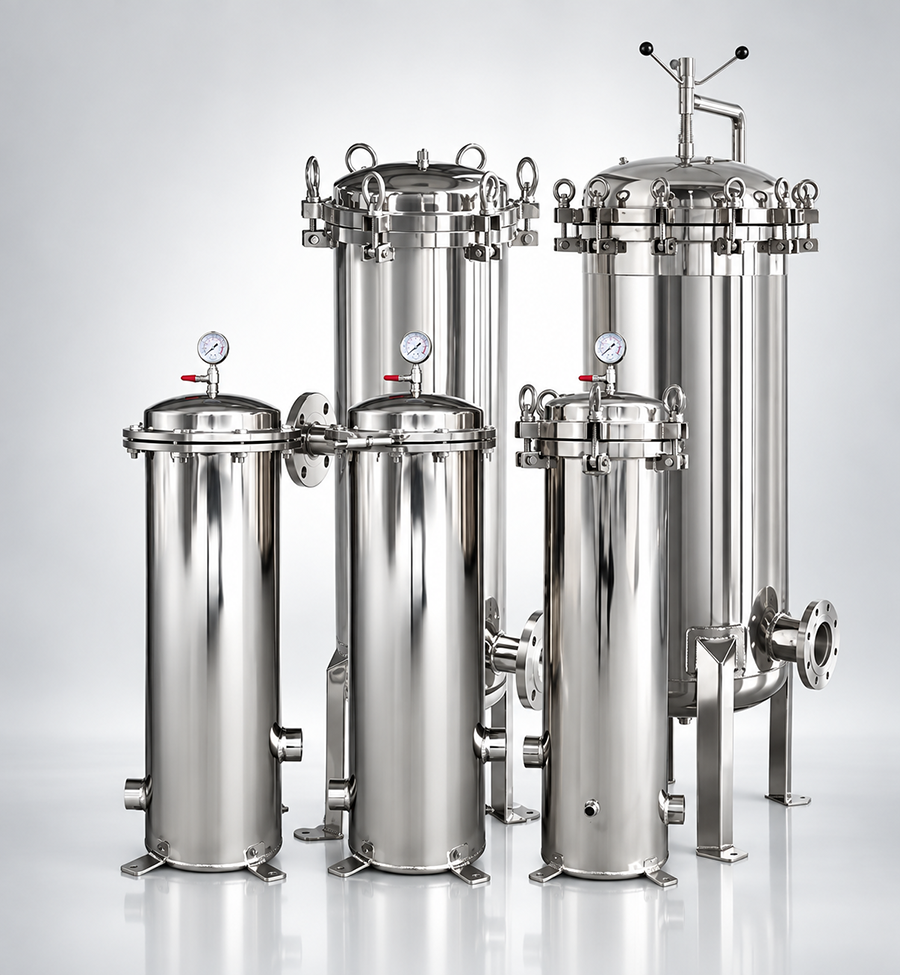
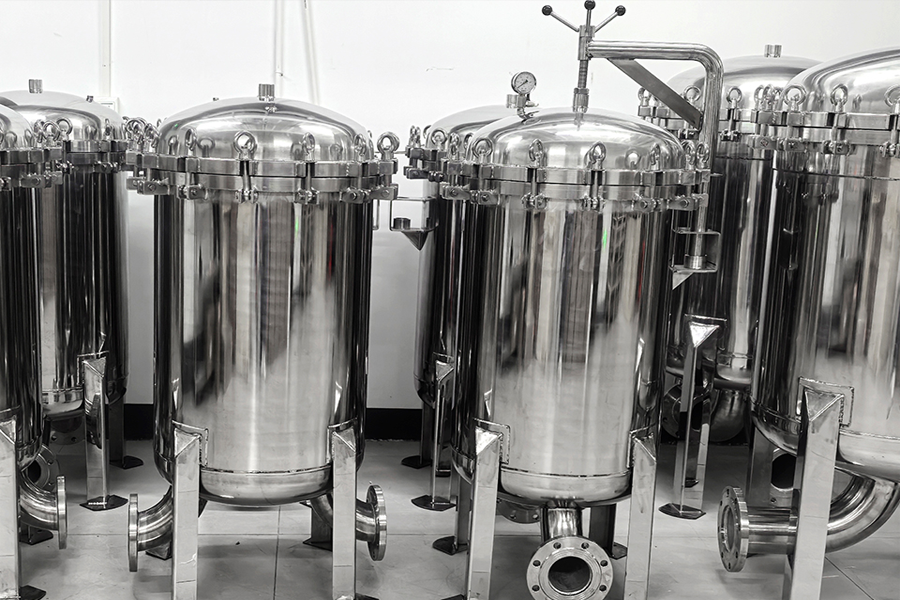
Lvyuan industrial cartridge filter housing provides a secure pressure vessel for replaceable filter cartridges used in water, chemical, food, beverage and general process filtration. Available configurations can be adapted to the required cartridge quantity, length, connection standard, housing material and operating conditions. Engineering and sourcing support helps procurement teams, OEM customers and plant engineers identify a practical configuration before ordering.
Total Solution
Custom Catridge Filter Housing Solution For Your Needs
Condimentum ullamcorper pellentesque nullam tellus dis lorem nibh dictum. Amet vel cursus consequat iaculis ipsumut.
01
Custom Configuration
Single- and multi-cartridge / bag configurations
02
Custom Features
Custom connections, closures, seals, vents and drains
03
Cartridge Compatibility
DOE, 222 and other cartridge end arrangements
04
Engineering Support
OEM, project and replacement housing support
What Is Lvyuan Cartridge Filter Housing?
Lvyuan cartridge filter housing is a pressure-containing vessel that directs process liquid through one or more replaceable cartridges. The cartridge captures particles or other targeted contaminants, while the housing supports the element, controls the flow path and provides secure inlet, outlet, vent, drain and sealing points.
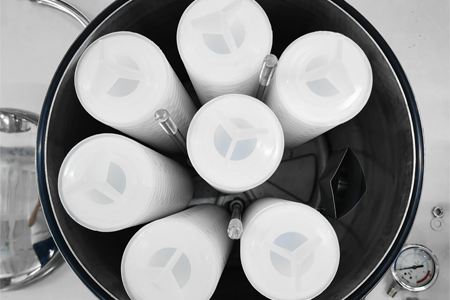
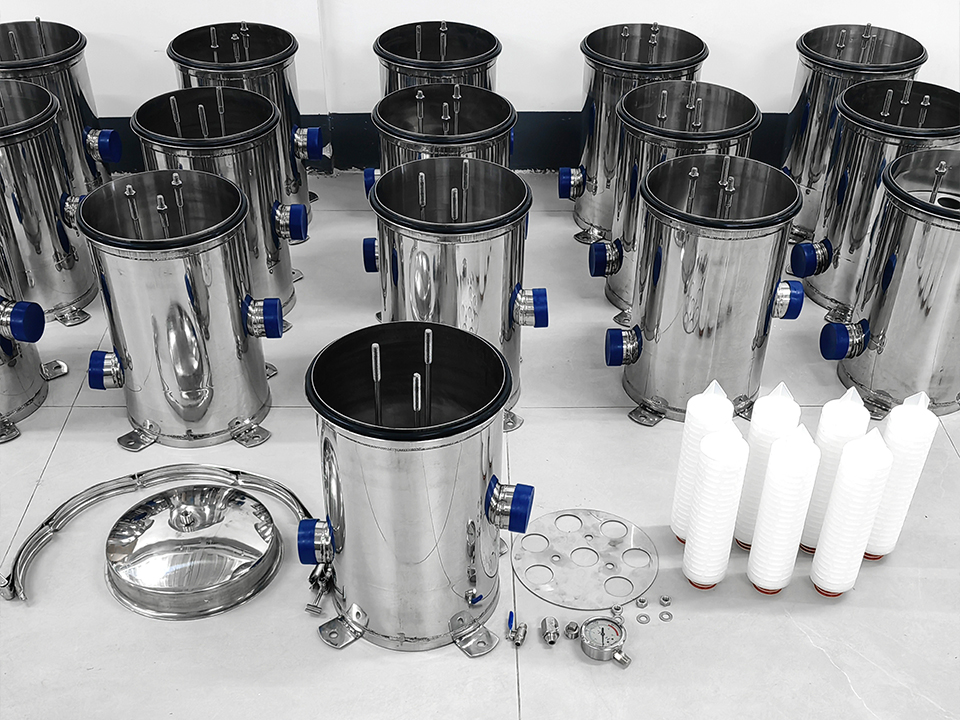
The main components normally include a body or sump, removable cover, closure, seal, inlet, outlet, internal cartridge assembly and mounting structure. Depending on the design, a valve, pressure gauge connection, drain port or vent connection may also be incorporated.
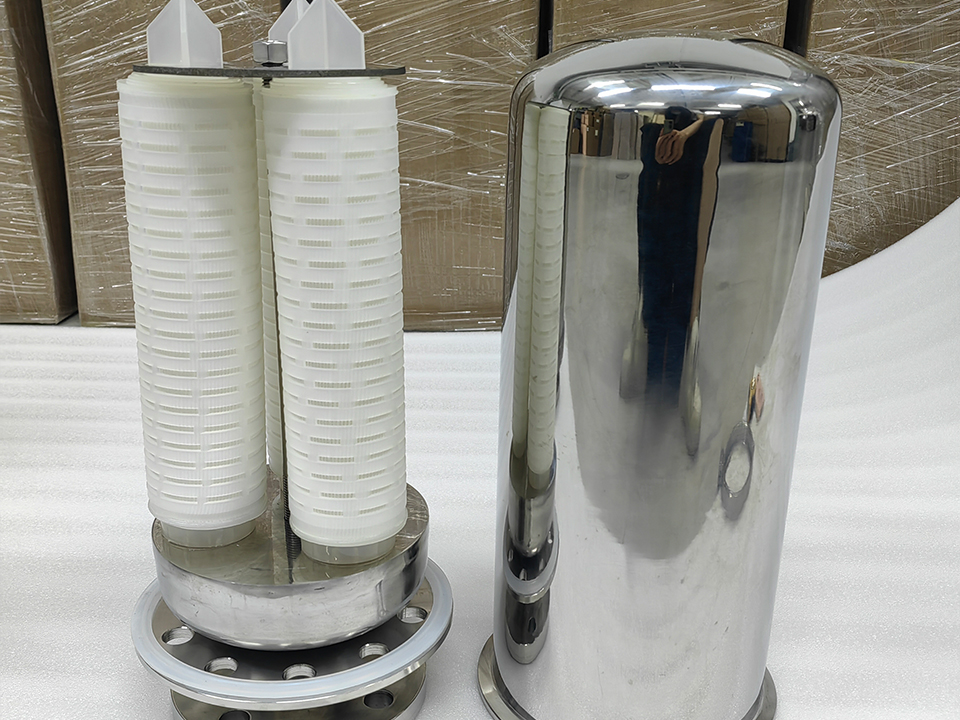
The housing and filter cartridge perform different functions. The stainless steel filter housing is the reusable equipment, while the internal element is replaced or cleaned when its differential pressure or service condition reaches the specified limit.
Explore Our Cartridge Filter Housing Range
Industrial cartridge filter housings are available in different configurations to suit point-of-use filtration, production lines and larger commercial and industrial systems. Buyers can compare single and multi-cartridge housings according to cartridge quantity, element length, housing material, connection standard, closure style, expected flow rates and service environment.
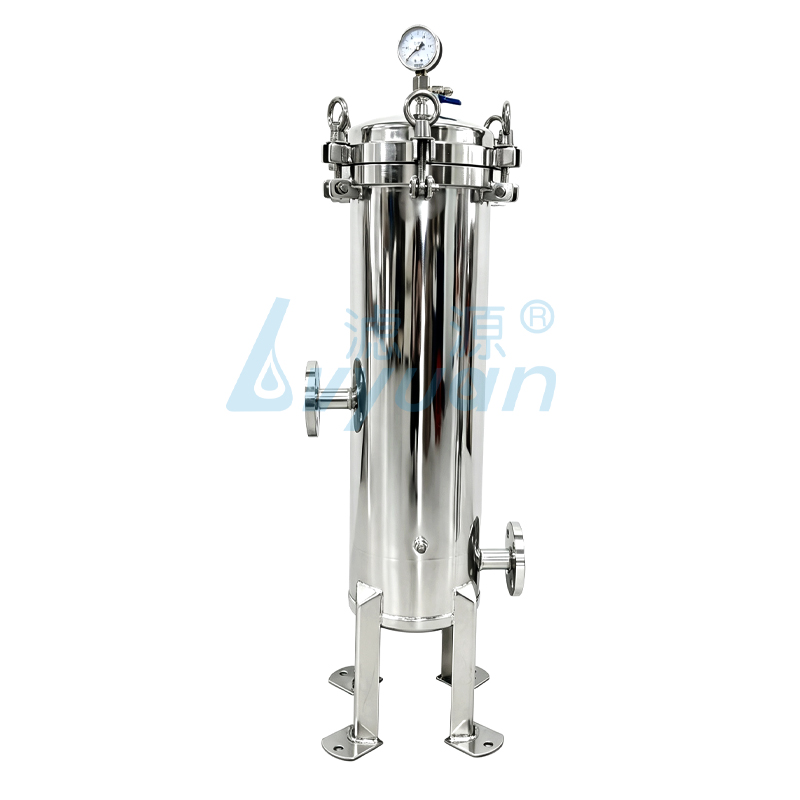
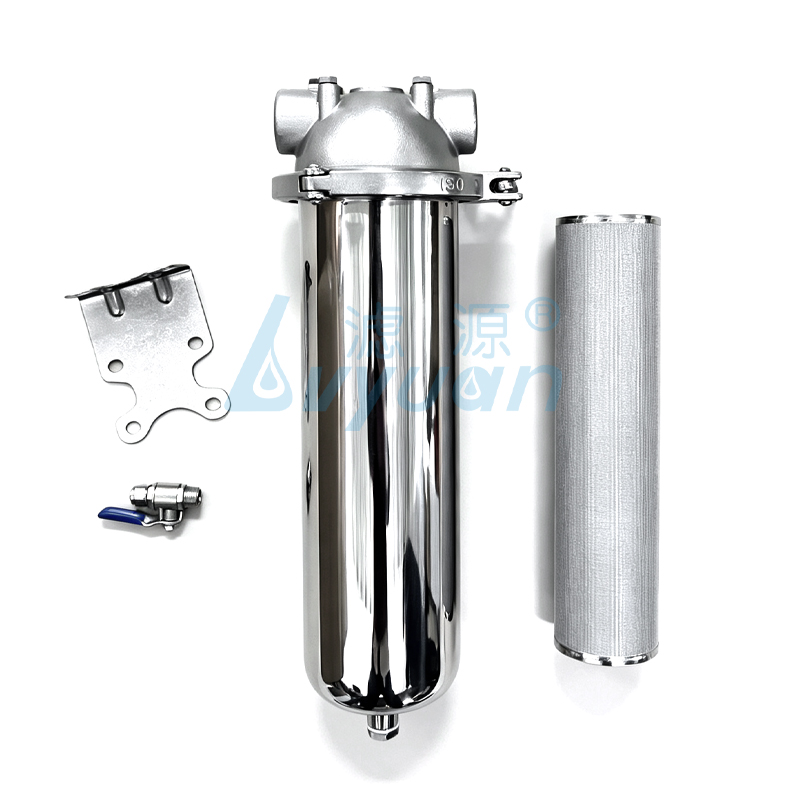
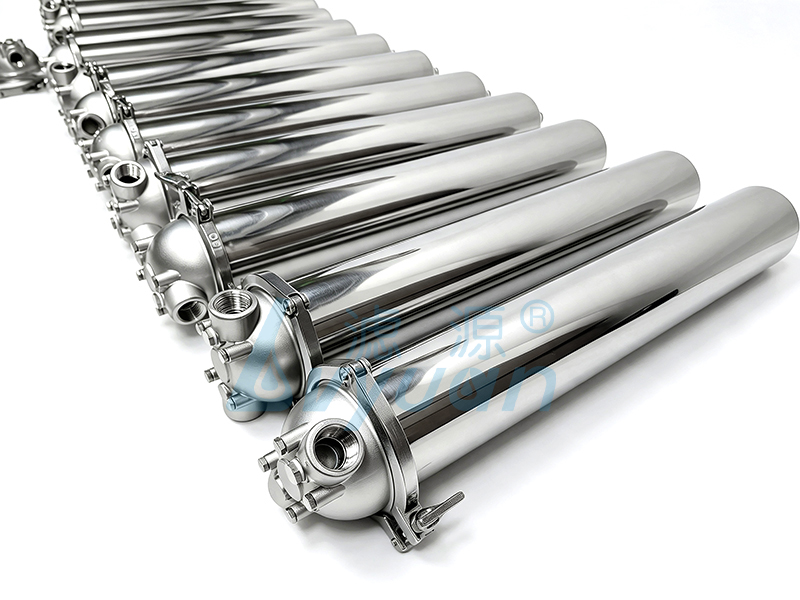
Lvyuan Stainless Steel Single Cartridge Filter Housing uses SS304/316L construction to hold one cartridge for reliable filtration of water and industrial process liquids.
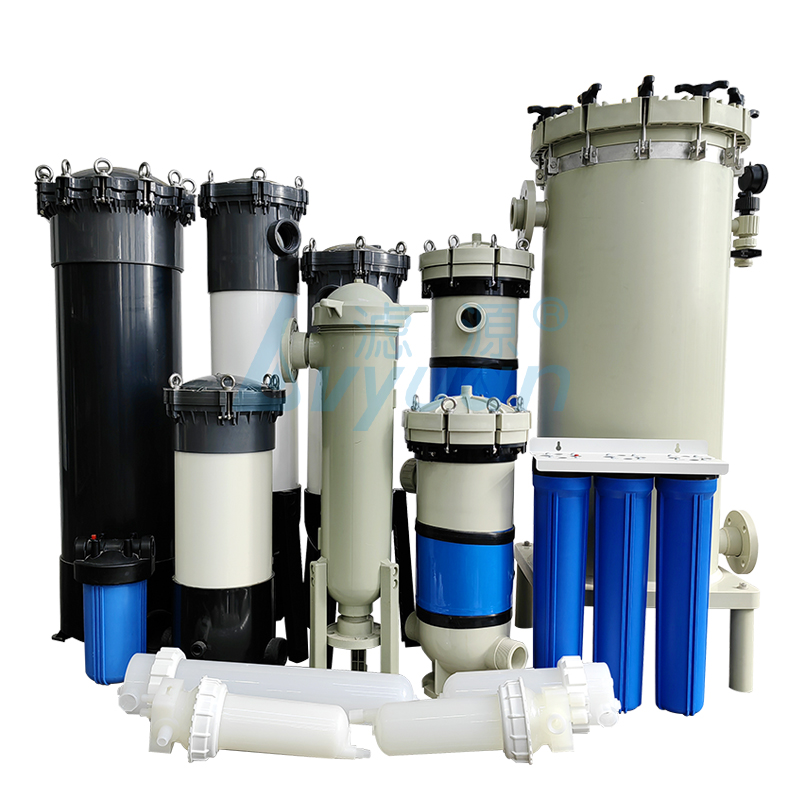
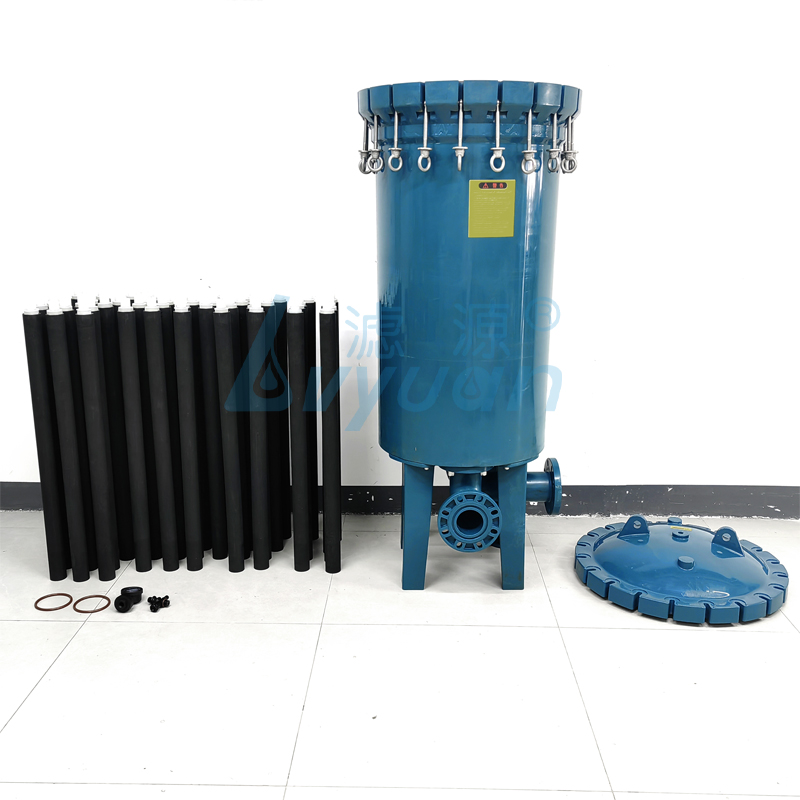
Lvyuan Industrial Plastic Filter Housing provides durable liquid filtration for water, chemicals and process fluids, with flexible cartridge options and easy maintenance.
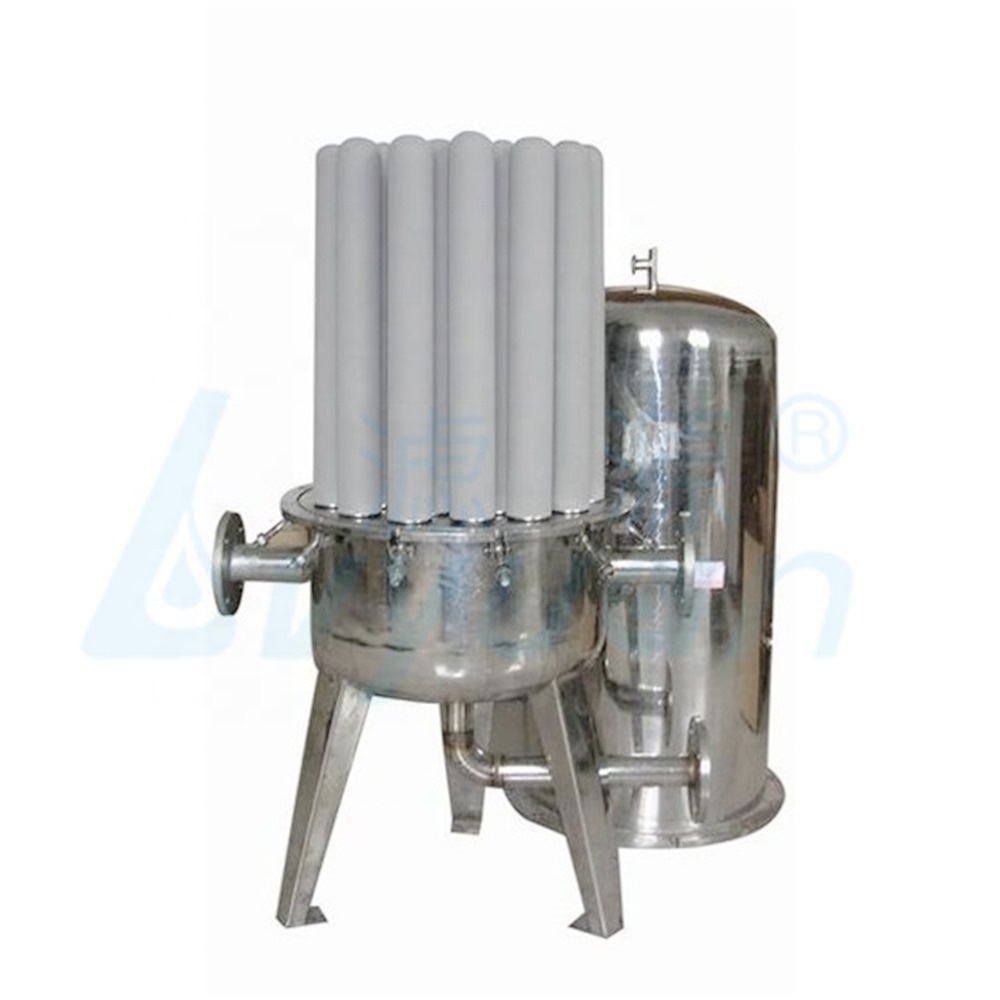
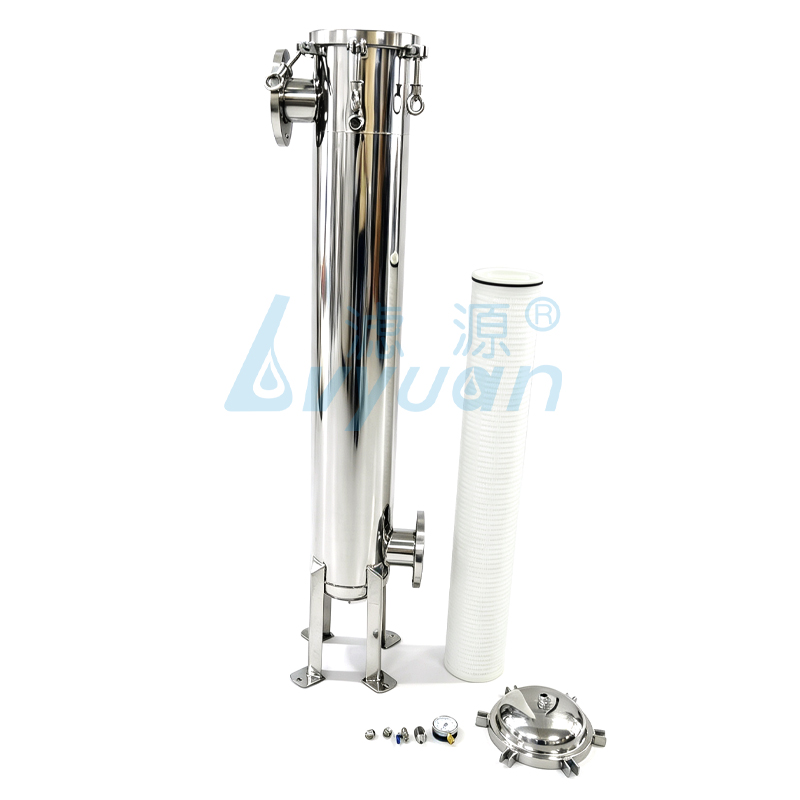
SS304/316L Multi-Cartridge Filter Housing is a durable filtration vessel that holds multiple cartridges for high-flow particle removal from water and liquids.
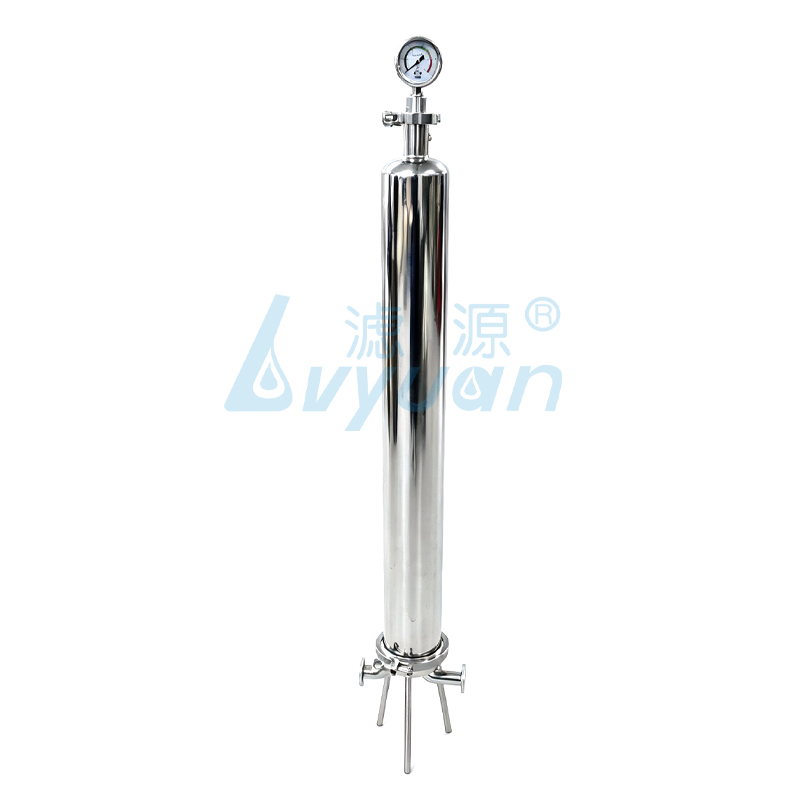
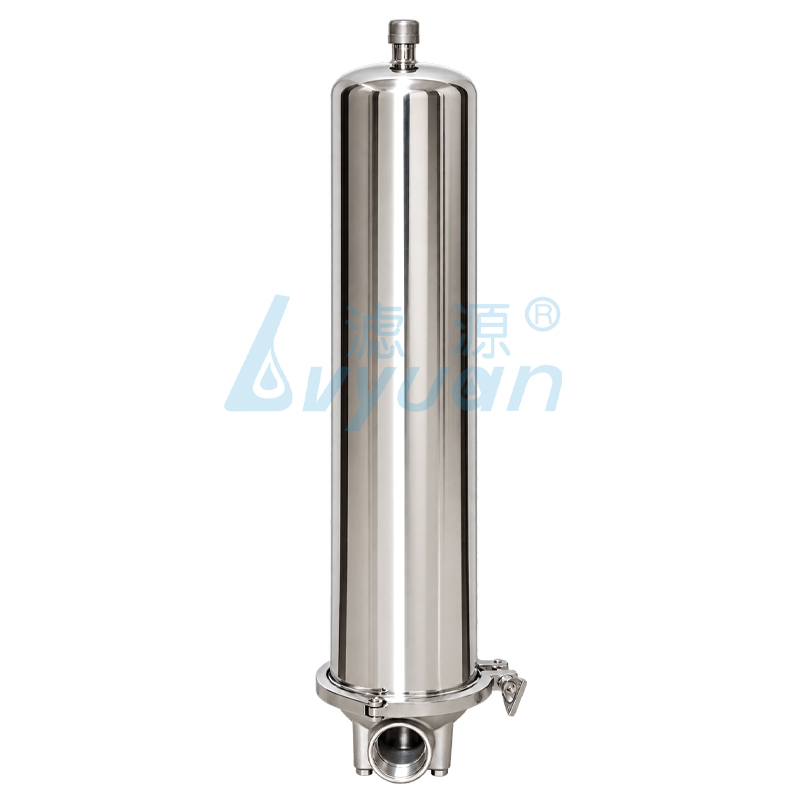
Lvyuan Stainless Steel Sanitary Cartridge Filter Housing features polished SS304/316L construction and sanitary connections for hygienic filtration of water, beverages, and process liquids.
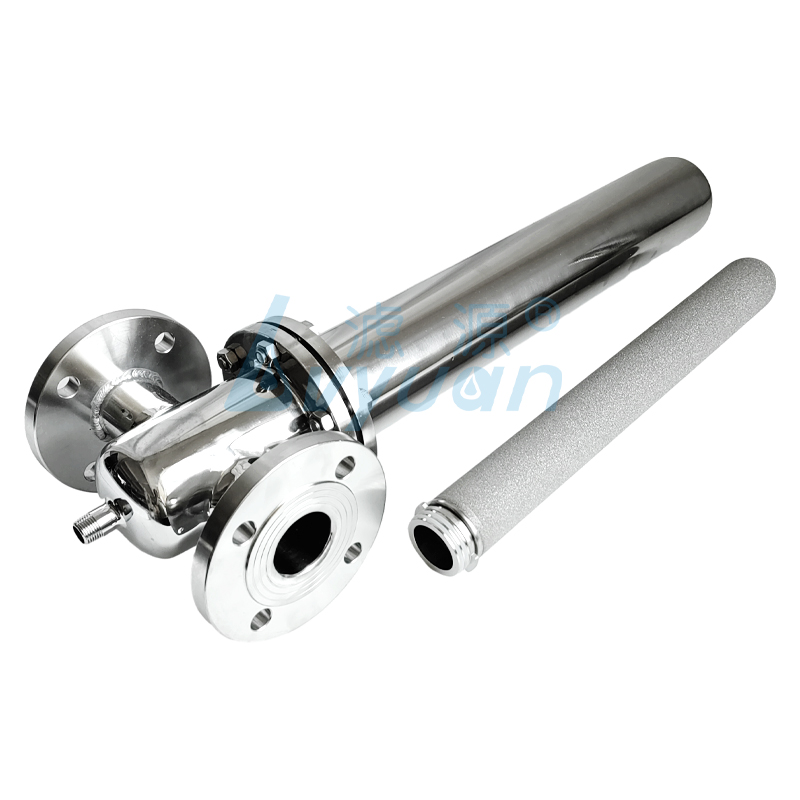
Lvyuan Stainless Steel Sintered Cartridge Filter Housing is a durable housing with a replaceable sintered metal cartridge for reliable filtration of industrial liquids, gases and steam.
Lvyuan Stainless Steel Single Cartridge Filter Housing uses SS304/316L construction to hold one cartridge for reliable filtration of water and industrial process liquids.
Lvyuan 20 Inch Cartridge Filter Housing for 4.5″ diameter filters. Durable SS construction, high-flow design, 1″–1.5″ ports, up to 90 PSI, ideal for whole-house and water filtration systems.
Designed to hold large-diameter filter cartridges, enabling high-volume liquid filtration with low pressure drop in industrial and commercial water treatment applications.
Material selection should be based on chemical compatibility, temperature, pressure, cleaning method and expected service life. No single material is suitable for every liquid.
Material Option
Main Advantage
Typical Application
Selection Consideration
304 Stainless Steel
Economical corrosion resistance for many general services
Water filtration, utility water and compatible process liquids
Confirm chloride level, cleaning chemicals and temperature
316L Stainless Steel
Economical corrosion resistance for many general services
Food, beverage, pharmaceutical and chemical processing
Verify compatibility with the actual chemical concentration
Polypropylene
Lightweight non-metallic construction
Selected low-pressure chemical or water duties
Temperature and pressure capability may be lower than SS
CPVC
Resistance to various acids, alkalis and salts
Compatible chemical processing systems
Confirm solvent exposure and operating temperature
CPVC
Strong chemical resistance and cleanliness
High-purity or aggressive chemical applications
Project conditions and connection requirements must be reviewed
Why Source from a Specialized Cartridge Filter Housing Manufacturer?
A specialized supplier provides more than a metal vessel. The manufacturer should help translate process information into a workable configuration and identify missing details before production begins.
Useful sourcing support may include technical communication, material review, drawing confirmation, replacement-element compatibility, custom manufacturing, export packaging and documentation preparation.
This approach reduces common purchasing risks such as incorrect port standards, insufficient element clearance, incompatible gaskets, unsuitable internal components or a vessel that cannot achieve the required capacity.
For repeat orders, controlled drawings, material traceability and consistent assembly specifications are important. They allow OEMs, distributors and plant operators to maintain replacement compatibility and reduce variation between production batches.
How Do You Select the Correct Catridge Filter Housing?
Use the following process to develop a reliable specification:
Identify the liquid. Record its chemical name, concentration, viscosity and solids content.
Define the contaminant. Determine whether the target is rust, sediment, gel, fibre, scale or another material.
Confirm the filtration rating. Specify the required micron level and whether nominal or absolute performance is needed.
Calculate required capacity. Provide normal, minimum and maximum operating flow.
Check pressure and temperature. Include normal, maximum and design conditions.
Select compatible materials. Review the body, internals and seal against the fluid and cleaning agents.
Choose cartridge dimensions and quantity. Consider pressure loss, service life and available space.
Confirm process connections. Match the pipe standard, port size and orientation.
Determine maintenance requirements. Allow sufficient space to remove the cover and elements.
Review documentation needs. State any drawing, testing, material certificate or applicable code requirements.
Incorrect sizing may cause excessive pressure drop, short cartridge life, reduced capacity or frequent shutdowns. Incorrect materials may introduce corrosion, swelling, leakage or contamination, increasing maintenance costs and replacement risk.
What Is the Difference Between 304 and 316L Stainless?
A 304 stainless housing can be a cost-effective solution for compatible water and general industrial applications. A 316L stainless steel cartridge filter may be preferred where improved corrosion resistance, sanitary construction or product purity is important.
Surface finish should match the process. Standard industrial surfaces may be sufficient for utility service, while hygienic systems may require smoother internal finishes and cleanable geometry. Seal materials such as EPDM, silicone, PTFE or FKM must also be checked against the fluid, temperature and cleaning chemicals.
Cartridge Sizes and Housing Configurations
Single cartridge filter housings are commonly selected for point-of-use equipment, pilot systems, sampling lines and lower-capacity duties. A multi cartridge filter housing places several elements in one vessel to increase available filtration area and support higher capacity.
Common element lengths include 10, 20, 30 and 40 inches, although actual availability depends on the selected internal design. Standard and custom housing size options may accommodate different diameters and quantities.
Typical arrangements include:
DOE cartridges with two open ends
222 cartridge end connections with O-ring sealing
Flat, fin or spring-loaded cap arrangements
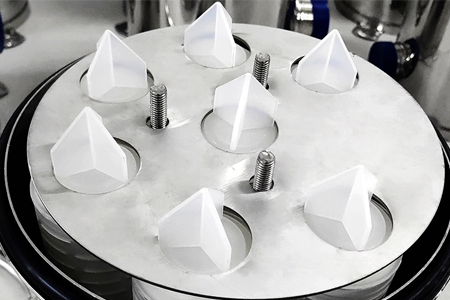
Internal tie rods, compression plates or locating cups
Single-cartridge and multi-cartridge filter housing designs
Standard or custom mounting assemblies
Increasing the cartridge quantity or length normally increases effective surface area. This may reduce operating differential pressure, extend element life or support greater capacity. However, a larger vessel also requires more floor space, lifting clearance and replacement elements.
The cartridge diameter, media construction and contaminant-holding capacity are equally important. A long vessel with unsuitable media can still experience rapid blockage or unacceptable performance.
Flow Rate, Pressure Drop and Filter Housing Sizing
A housing should not be selected from pipe diameter or a nominal GPM value alone. Final sizing must consider the fluid, element media, viscosity, particle loading, filtration rating, operating temperature and allowable clean and loaded pressure drop.
Pressure drop is the difference between inlet and outlet pressure. It increases as the cartridge captures dirt and can also rise when viscosity increases or the selected filtration area is too small.
For reliable sizing, confirm:
Required normal and maximum flow
Liquid name, viscosity and specific gravity
Operating and design pressure
Normal and maximum temperature
Target contaminant and particle size
Required micron rating
Cartridge type and efficiency
Expected solids loading
Clean and maximum allowable pressure drop
Batch or continuous operation
Current and possible future capacity
Pipe dimensions and connection standard
High flow requirements may call for longer elements, larger-diameter cartridges, additional cartridges or parallel equipment. Final rate calculations should be confirmed using actual process data and the pressure-loss information for both the housing and selected element.
Clamp, Connection, Closure and Seal Options
Connections and closures determine how the filter integrates with the process pipe and how efficiently operators can replace cartridges.
Common connection options include threaded ports, flanged pipe connections, sanitary ferrules and clamp connections. The correct standard must match the existing pipeline, pressure requirement, cleaning method and local project specification.
Closure options may include V-clamp, swing bolt or other bolted designs. A quick cartridge replacement arrangement can reduce service time, but the closure must still be suitable for the required pressure and operating conditions.
Important configuration points include:
Inlet and outlet position
Vent and drain arrangement
Gauge or sampling ports
Cover lifting space
Seal material and groove design
Leg, bracket or skid mount
Internal support assembly
Isolation and drain valve requirements
Correct connections reduce installation modification. The appropriate closure and seal help prevent leakage, by-pass and uneven compression while supporting safe maintenance.
Industrial Filtration Applications
Cartridge housings are used across many filtration applications, but suitability must be confirmed for each fluid and process condition.
Industrial Water and Pre-Filtration
In water filtration systems, the unit may remove suspended particles before membranes, pumps, UV equipment or finer treatment stages. Buyers should confirm incoming water quality, solids concentration, required micron rating and expected differential pressure.
Chemical Processing
Chemical filtration may remove particles, precipitates, catalyst residue or process debris. Material compatibility is critical. The chemical name, concentration, temperature and cleaning procedure should be reviewed before selecting 304, 316L or a non-metallic solution.
Food, Beverage and Sanitary Processing
A sanitary housing may be positioned before filling, blending or final processing. Internal finish, drainability, cartridge retention, elastomer compatibility and cleaning requirements are especially important.
Paints, Coatings and Inks
The housing can remove agglomerates, skin, dirt and unwanted particles before transfer or filling. Viscosity, pigment loading and media compatibility strongly influence sizing.
Electronics and Equipment Protection
Fine liquid filtration can protect spray nozzles, heat exchangers, pumps and sensitive production equipment. Buyers should define the critical contaminant and the acceptable cleanliness level.
Final Filtration
For final filtration, element retention performance, internal by-pass prevention and housing cleanliness become more important. The complete system must be evaluated rather than relying only on the stated micron rating.
Manufacturing and Customization Capabilities
A specialized manufacturer can evaluate standard and custom housings according to the buyer’s drawings, operating data or equipment layout.
Depending on manufacturing capability and project requirements, customizable items may include:
304 or 316L housing material
Cartridge quantity, diameter and length
Inlet and outlet dimensions
Thread, flange or sanitary connection standard
Clamp, bolted or swing bolt closure
Internal locating and compression components
Seal and gasket material
Internal and external surface treatment
Vent, gauge and drain locations
Leg, bracket, wall or skid mounting
Pressure design requirements
Sanitary internal construction
OEM nameplates, packaging or branding
Drawings and project documentation
An RFQ should include process conditions, preferred configuration, required quantity, installation restrictions and applicable documentation. Where the specification is incomplete, final construction can be confirmed during technical evaluation.
Quality Control and Project Documentation
Quality control for filter housing manufacture may include raw-material verification, dimensional inspection, weld examination, surface inspection, assembly checks, seal verification and pressure testing where applicable.
Before shipment, the manufacturer should also verify port orientation, internal cartridge fit, closure operation, packaging protection and agreement with the approved drawing.
Available documents may include:
General arrangement drawings
Material certificates
Dimensional inspection records
Pressure or hydrostatic test reports
Welding-related documents where required
Operating or maintenance instructions
Packing lists and identification records
ASME or ASME Code requirements must be stated at the RFQ stage and reviewed for applicability. A pressure vessel should not be described as code-compliant or stamped unless the required design, manufacture, inspection and certification have been completed.
Documentation helps importers, OEMs and engineering contractors verify specifications, approve installation and maintain repeat-order consistency.
Filter Housing Installation and Maintenance
The unit should be installed in the correct orientation with adequate support and enough vertical or horizontal clearance to remove the cover and cartridges.
Before operation, confirm that the cartridges are seated correctly, the sump is clean, the gasket is undamaged and the closure is fully secured. Air should be vented according to the system procedure before normal operation.
Never open pressurized equipment. Isolate the inlet and outlet, relieve internal pressure, drain the vessel and verify a safe condition before loosening the closure.
Maintenance checklist:
Monitor inlet and outlet pressure
Replace elements at the approved differential pressure
Inspect the seal for cuts, swelling or deformation
Clean the internal surface and cartridge seats
Check springs, cups and compression components
Inspect the sump for corrosion or accumulated solids
Confirm that cartridges are correctly installed
Prevent internal by-pass through proper sealing
Record replacement intervals and operating conditions
A planned maintenance schedule helps reduce unplanned shutdowns and provides data for improving element selection.
Frequently Asked Questions
What is a cartridge filter housing?
It is a reusable vessel that holds one or more replaceable filter cartridges and directs process fluid through the media. The body provides pressure containment and process connections, while the element removes the specified contaminant.
How do I choose the correct housing size?
Start with the required capacity, viscosity, solids loading, micron rating and allowable pressure loss. Pipe diameter alone is not sufficient. The element type, quantity, length and available filtration area must be evaluated together.
What is the difference between 304 and 316L stainless steel?
304 stainless is widely used for compatible water and general process duties. 316L usually offers improved resistance in many chemical, chloride and sanitary environments. Actual suitability depends on concentration, temperature and cleaning chemicals.
When should I use a multi-cartridge housing?
Use multi-cartridge housings when one element cannot provide sufficient surface area, capacity or service life. They are commonly evaluated for larger production lines, continuous processing and systems where lower differential pressure is preferred.
Which cartridge lengths are available?
Common lengths include 10, 20, 30 and 40 inches. Availability depends on the selected DOE, 222 or other cartridge end configuration, element diameter and internal housing design.
How are flow rates calculated?
Capacity is calculated using the cartridge media, effective surface area, liquid viscosity, contaminant loading and allowable clean pressure loss. Manufacturer data for both the element and vessel should be reviewed before confirming the configuration.
Which seal material should I choose?
Select the gasket according to the process fluid, concentration, temperature and cleaning chemicals. EPDM, silicone, PTFE and FKM each have different compatibility limits; selection should be confirmed using the actual operating conditions.
Can the housing be customized?
Yes, many construction details may be customized according to manufacturing capability, including material, element quantity, connections, closure, internal components, surface finish, vents, drains and mounting arrangement.
Request a Cartridge Filter Housing Quotation
These housings are intended for equipment manufacturers, distributors, contractors and industrial plants that need a configurable liquid filtration system rather than a one-size-fits-all product. For an accurate technical recommendation, please send:
Liquid or chemical name Required flow rate Required filtration rating Operating and design pressure Operating temperature Cartridge type, diameter and length Preferred housing material Connection size and standard Required quantity Drawings or installation restrictions Testing and documentation requirements
Send Your Filtration Requirements
Submit your operating data and purchasing specifications to request a quotation, configuration review or custom filter housing recommendation.