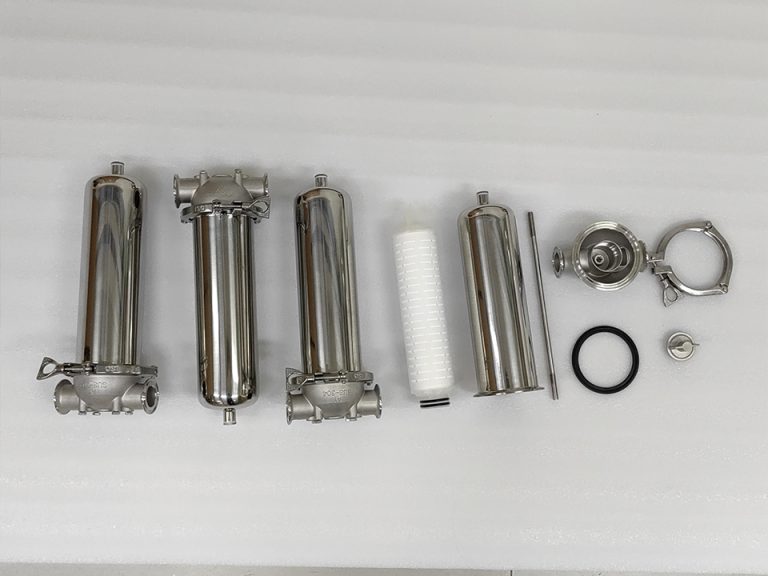
Guangzhou Lvyuan Water Purification Equipment Co., Ltd. is an industrial filter manufacturer founded in 2009 that designs and manufactures stainless steel filter housings, stainless steel sterile water tanks, filter elements, filter bags, ultra-polymer materials, and sintered filter products. Buyers choose Lvyuan for OEM/ODM support, ISO9001 quality control, and multi-country certifications.
Guangzhou Lvyuan Water Purification Equipment Co., Ltd.
Common Multi-Bag Housing Installation Mistakes to Avoid
A multi-bag filter housing can look forgiving. It is a pressure vessel with several bags in parallel, so one slightly misplaced component seems unlikely to matter. In practice the opposite is often true. Liquid follows the path of least resistance, and a single unseated ring, damaged lid seal or reversed connection can let unfiltered fluid reach the outlet while the pressure gauge looks normal. Teams can then blame the bag’s micron rating when the real fault is in the installation. This guide covers the mistakes that matter most when installing a multi-bag housing for liquid service, what each one looks like in operation, and what to verify with the housing and bag suppliers before the first start-up.
Why Do Installation Errors Cause Bypass Instead of Obvious Leaks?
A bag housing is only effective if every drop of process liquid passes through filter media. Inside a typical liquid housing, fluid enters the vessel, flows through the bag from the inside to the outside, and leaves through the outlet. Anything that opens another route, such as a gap at the bag ring, a damaged basket or a distorted lid seal, reduces filtration without necessarily raising an alarm.
That is why installation errors are expensive. A blocked bag raises differential pressure, which operators can see. A bypass path does the reverse: it can hold pressure drop down while particles pass downstream. Rosedale’s installation manual for its multi-basket strainer and multi-bag filter makes a related point, noting that its units are factory pressure tested and that seepage problems usually come from improper installation connections.
Which Installation Mistakes Are Most Common? A Quick Reference
The table below summarizes the errors covered in this article. It draws on manufacturer installation manuals and supplier guides, and it is a checklist of failure modes rather than a ranking by frequency.
Mistake
What you may see in operation
What to verify
Not checking housing ratings and material compatibility
Seal swelling, bag degradation, housing damage
Pressure and temperature limits; compatibility of housing, O-rings and bag media with the fluid
Reversing or misidentifying inlet and outlet
Poor flow distribution, abnormal pressure drop, bag displacement
Flow arrows, riser pipe location, piping drawings
Omitting vent, drain or pressure gauges
Air locks, messy bag changes, no early warning of loading
Top vent, drain points (including the inlet riser), differential pressure measurement
Bag ring not seated; bag not fully extended
Particles downstream although the bag is intact
Ring fully seated in the retainer opening; hold-down assembly in place
Wrong bag size, basket or format
Collapse, bypass, poor fit
Bag size, ring style, basket dimensions, liquid versus dust bag design
Wrong, dirty or reused lid seal; uneven bolting
Drips at the lid, premature seal damage, bypass
Seal material, size and profile; clean groove; tightening pattern
Rapid start-up without venting
Trapped air, bag displacement, pressure shock
Vent sequence; slow opening of inlet valve
Ignoring differential pressure limits
Bag rupture, forced particulate, short bag life
Housing manufacturer’s change-out limit
Opening the vessel under pressure or with fluid
Injury risk, spills
Isolation, depressurizing and draining steps
Mistake 1: Skipping the Rating and Compatibility Check
The first mistake happens before the housing reaches the site. Eaton’s installation manual for its PPL bag filter housings instructs users to confirm that piping operating conditions do not exceed the housing’s maximum pressure and temperature limits. It also asks users to confirm that the flowing product is chemically compatible with the housing materials, the O-rings and the filter bag media.
Buyers often check the vessel body and forget the soft components. A stainless or plastic body can be fully suitable while the lid seal is not. The same applies to the bag: polypropylene and polyester felts are both used for liquid bags, but their behavior with a given chemistry and temperature is not interchangeable, so the fluid data should drive the choice rather than the lowest bag price.
Verify with the supplier: maximum working pressure and temperature, body material, seal material, and the bag media and ring material proposed for your fluid.
Piping, Flow Direction, Vents and Drains
Reversing or Misidentifying Inlet and Outlet
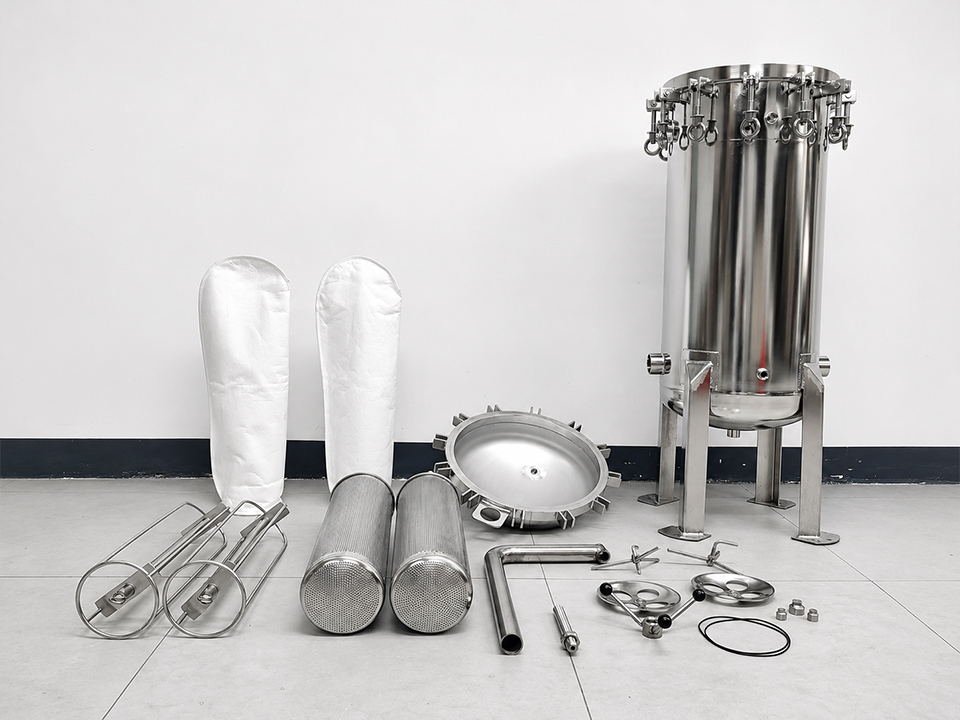
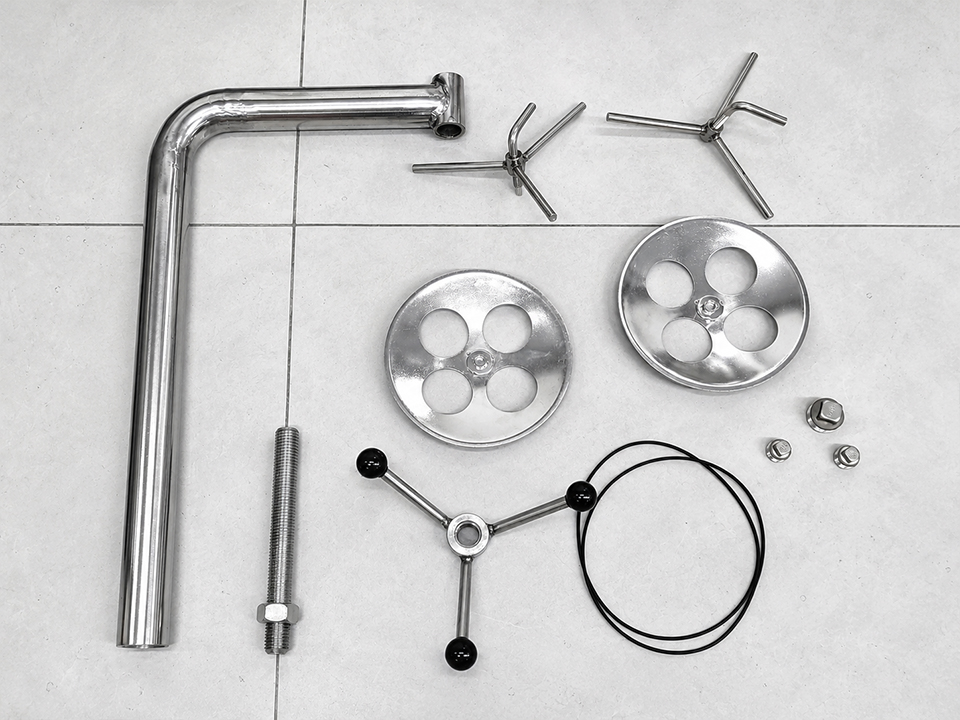
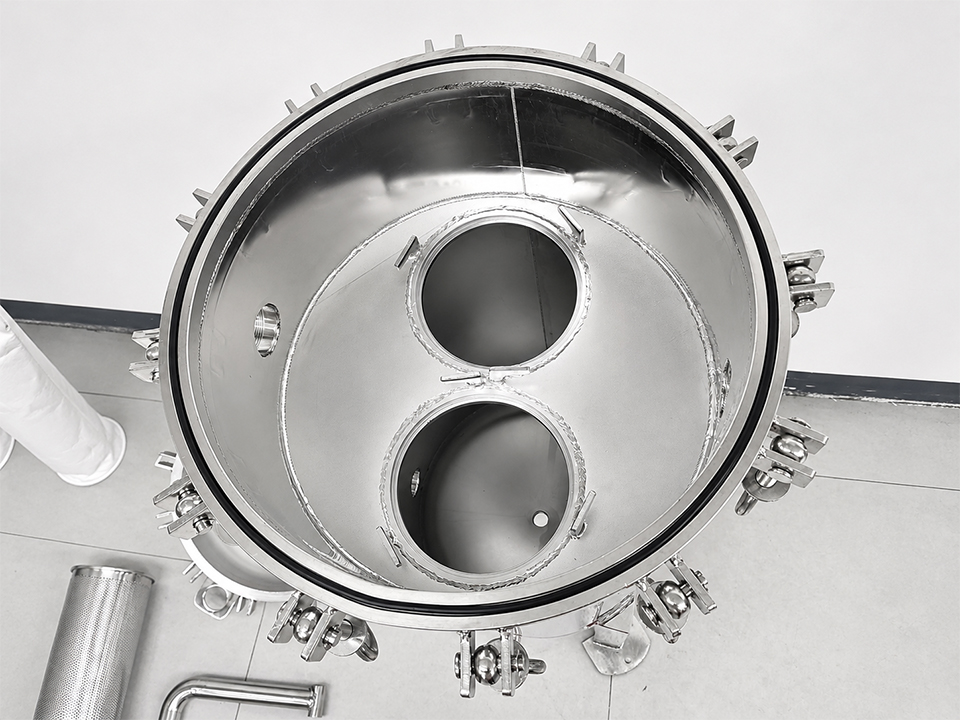
Multi-bag housings are not always symmetrical. In Rosedale’s multi-bag design, the inlet side includes a riser pipe that carries fluid from the inlet flange to the top of the housing, above the basket retainer plate, and the manual calls it “very important” to identify the inlet correctly. Connecting the lines the wrong way round on a design like this defeats the intended flow path. Check flow markings and the manufacturer’s drawing before piping, rather than assuming the larger or lower connection is the inlet.
Leaving Out the Vent, Drain or Differential Pressure Gauge
ERE’s bag housing selection guide states that every housing should have a bottom drain and a top vent, and that missing either complicates maintenance and can cause air-lock problems. It also recommends a differential pressure gauge across the housing.
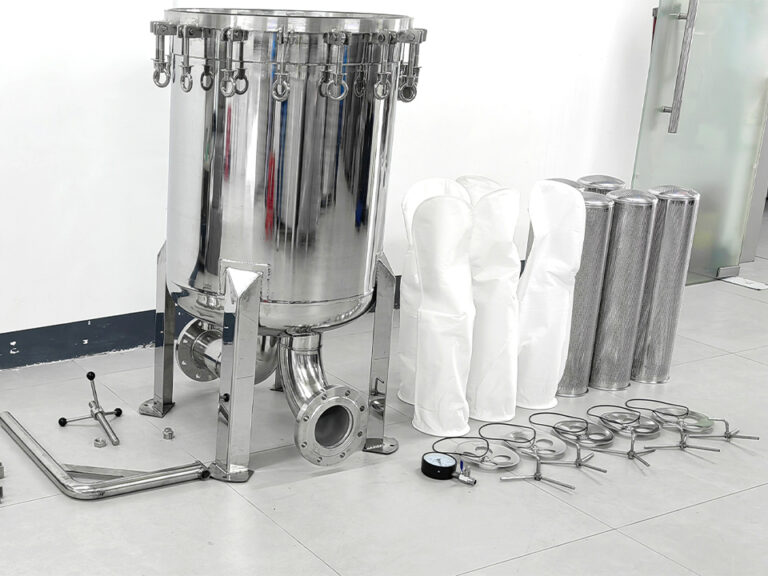
Multi-bag units make drain placement more important because there is more liquid to remove. The Rosedale unit has drains on both the inlet and outlet sides so the housing and the inlet riser can drain completely. If a design traps fluid above the retainer plate, operators may open a heavy, liquid-filled vessel, or skip draining altogether.
Underestimating Headroom, Support and Pipe Stress
ERE advises measuring ceiling height before specifying, because multi-bag housings need more clearance than single-bag units to open the lid and lift bags out. Floor mounting matters too. Rosedale’s manual calls for the support legs to be secured to the floor or platform, and Eaton’s manual says its housing must be bolted down to ensure proper piping installation.
Over-tightening connections is a separate risk. For its plastic housings, Eaton specifies hand-tight threaded joints using a strap wrench, plus a further half to one and a half turns, and warns that going beyond that can induce excessive stress. Flange bolts are tightened in an alternating sequence. Those figures belong to Eaton’s product, so apply the values in your own housing’s manual instead.
Bag, Basket and Ring Mistakes
Not Seating the Ring or Fully Extending the Bag
This is the most direct route to bypass. Rosedale’s manual says the bag ring must be firmly seated in the basket retainer plate opening and the bag fully extended to the bottom of the basket. Eaton’s procedure is the same in principle: push the bag to the bottom of the basket, push its collar onto the basket rim, then place the hold-down ring on top of the collar.
In a multi-bag housing the risk multiplies with the number of positions. Consider an illustrative example, not a real customer case: a housing with a retainer plate holds several bags, and one ring sits slightly proud of its opening after a rushed change. The gauge reads normally and the other bags are perfect, yet part of the flow can pass that one gap unfiltered. Inspect every position, not a sample.
Using a Bag That Does Not Match the Basket
ERE notes that the support basket must match the bag size exactly and that a damaged or missing basket can lead to collapse, bypass and downstream contamination. Standard liquid bag sizes are published by housing makers; Eaton lists 7 in. × 16 in. and 7 in. × 32 in. bags for its housings. Specify the ring style as well as the length and diameter.
For housings that accept ring-type bags, buyers can compare polypropylene felt filter bags with molded plastic seal rings and polyester liquid filter bags with a molded plastic ring. Both pages describe cylindrical sewn bags with a molded ring for positioning and sealing in a compatible basket or housing, and both state that dimensions and filtration ratings should be set according to the actual operating requirement. Treat that as a prompt to send your basket drawing, not as proof of fit.
Confusing Liquid Bags, Dust Collector Bags and Rigid Elements
Three different families of products are sometimes grouped under “filter bag” or “filter element” in purchasing systems:
Liquid bags with a molded ring are made to sit in a housing basket.
Dust collector bags are designed for baghouse service. For example, the sewn tubular PTFE filter bag listed for chemical dust collection has an open cuff with reinforced stitching and is positioned for dust and particle filtration, not as a ring-type liquid bag.
Rigid sintered elements use a different mounting method. The PA sintered porous filter cartridge with threaded connectors is listed in 38 mm and 48 mm diameters with M20 to M30 connection options, so it needs matching hardware rather than a bag basket.
Dropping any of these into the wrong housing is a specification error, not an installation detail. Confirm the product type, mounting method and service (liquid or gas) on the purchase order.
Lid Seal Mistakes
The lid seal carries the full vessel pressure, yet it is often treated as a consumable that “fits.” Claribag’s guide to lid seals describes several common causes of leakage:
Wrong material. It describes EPDM as generally preferred for water and mild chemicals, Buna-N as limited in chemical and heat resistance, and Viton for a wider range of chemical and high-temperature liquids.
Wrong size or profile. Seals from another housing size can leave gaps or distort, and round O-rings and flat gaskets are not interchangeable.
Dirty groove or dry seal. Residue prevents full seating, and a compatible lubricant helps avoid twisting or pinching. The guide warns against petroleum-based lubricants on EPDM or food applications.
Uneven bolting. On bolted lids, tightening in a crosswise pattern avoids skewing the lid and uneven compression.
No pressure check. Ramp pressure up gradually and inspect the lid for drips.
Reuse is a separate question. Eaton recommends replacing O-rings each time its pressurized housing is opened, because reused O-rings may result in a faulty seal. Other manufacturers may allow inspection and reuse, so follow your housing’s manual and keep spare seals on site.
Start-Up, Differential Pressure and Shutdown Mistakes
Pressurizing Without Venting Air
Eaton’s start-up sequence is to close the outlet valve, open the top vent, open the inlet valve slowly and partially, vent all air, close the vent when liquid discharges, and then fully open inlet and outlet. Rosedale advises opening the inlet to about 25 percent of normal flow first, slowly, so the bag inside the housing is not displaced. Fast filling traps air and can move bags before the seal is established.
Running Past the Differential Pressure Limit
Rosedale states that its standard basket should not exceed 15 psi differential pressure and that higher differential may rupture bags or damage downstream equipment. Eaton recommends changing bags at 20 psi for its PPL housings and says higher levels can force particulate through the media. ERE gives a typical range of 15 to 20 psi and suggests changing bags on measured pressure drop rather than a calendar schedule.
These numbers differ, which is the point: the limit comes from the specific housing, basket and bag, not from a universal figure. Ask the supplier for the change-out limit in writing, install a gauge on both sides of the housing, and treat the limit as a ceiling. Some operators set a lower working change-out point to protect product quality.
Opening the Housing Under Pressure or Full of Fluid
Eaton’s manual says never to disassemble the bag filter while there is fluid in it, and gives a sequence of closing inlet and outlet valves, opening the drain, venting and then removing the cover. Rosedale’s warning is that contents are under pressure and pressure must be relieved before opening. Add your site’s isolation and lockout rules to the written procedure, particularly where the fluid is hot or hazardous.
Is a Finer or Higher-Spec Bag the Solution?
A common assumption is that persistent contamination means the bag needs a tighter micron rating. Sometimes it does. If the sealing path is open, though, a finer bag will not help, because liquid is bypassing the media altogether. Finer media also loads faster, raising differential pressure and shortening change-out intervals, so the buyer may pay more for bags and still see contamination.
A more defensible sequence is to confirm seating, seals, basket fit and flow direction first, then review the rating. The exception is when the particle size distribution in the process has actually changed or the original rating was chosen without data. In that case a rating review is justified, ideally alongside a short pilot test on the installed housing.
What Should Buyers Specify Before Requesting a Quote?
Many installation problems begin with an incomplete purchase specification. Send the following to the bag supplier and housing supplier:
Housing model and manual: make, model, number of bag positions and bag size (for example #1 or #2), plus the basket drawing.
Process fluid: chemistry, concentration, temperature, viscosity and solids loading, so bag media and seal materials can be matched.
Operating conditions: flow rate, operating and maximum pressure, and the differential pressure change-out limit.
Bag construction: media, ring material and style, sewn or welded seams, and the filtration rating you need.
Quantity and replacement plan: initial fill, spare quantity per change-out, and delivery schedule for the first start-up.
Documents and sampling: dimensional drawings, material declarations if required for your market, and a sample to test-fit in every basket position.
Before the first start-up, run a short sign-off: ratings checked, inlet and outlet confirmed, vent and drain installed, gauges fitted, all rings seated, cover seal clean and correct, bolts tightened in sequence, air vented slowly, pressure test completed. Keep it with the housing records so each bag change repeats the same checks.
Frequently Asked Questions
What is the most common multi-bag housing installation mistake?
No reliable frequency data is available, but seating and sealing errors are the ones both Eaton’s and Rosedale’s manuals emphasize: an unseated bag ring, a bag not fully extended in its basket, or a damaged lid seal. All of them let unfiltered liquid bypass the media.
Do I need to vent a bag filter housing before start-up?
Yes. Manufacturer procedures call for opening the top vent, filling slowly, and closing the vent only when liquid discharges. This purges trapped air, which otherwise causes air locks and can displace bags. Follow the sequence in your housing’s manual.
When should bags in a multi-bag housing be changed?
Change them on differential pressure, not a fixed calendar. The limit depends on the housing: Rosedale lists 15 psi for its standard basket, and Eaton recommends 20 psi for its PPL housings. Obtain the limit for your model from the manufacturer.
Can I use a dust collector bag in a liquid bag housing?
Generally no. Dust collector bags are built for baghouse service, often with open cuffs and different mounting, while liquid housing bags use a molded ring that sits in a basket. Confirm the product type, ring style and fit with the supplier before ordering.
Will a finer micron bag fix contamination downstream of the housing?
Not if liquid is bypassing the bag. Check ring seating, basket fit, lid seal and flow direction first. A finer rating also loads faster and increases differential pressure, so change it only after the sealing path is verified.
Should lid O-rings be replaced every time the housing is opened?
It depends on the manufacturer. Eaton recommends replacing them each time its pressurized housing is opened, while others emphasize inspection. Check for cracking, flattening, discoloration or swelling at each bag change, and keep correct spares on hand.