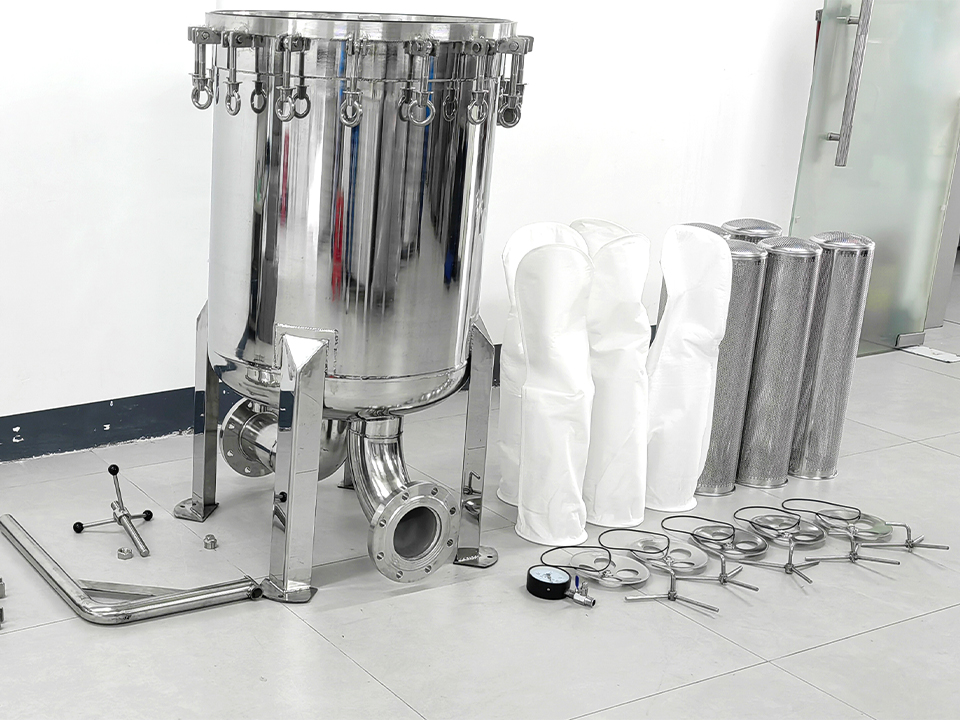
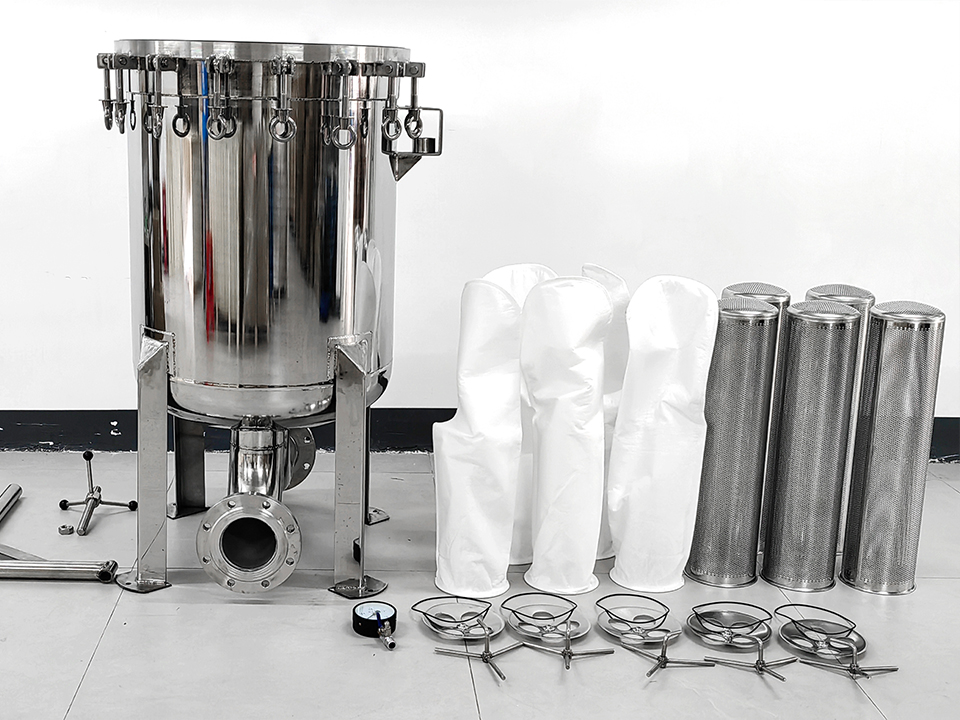
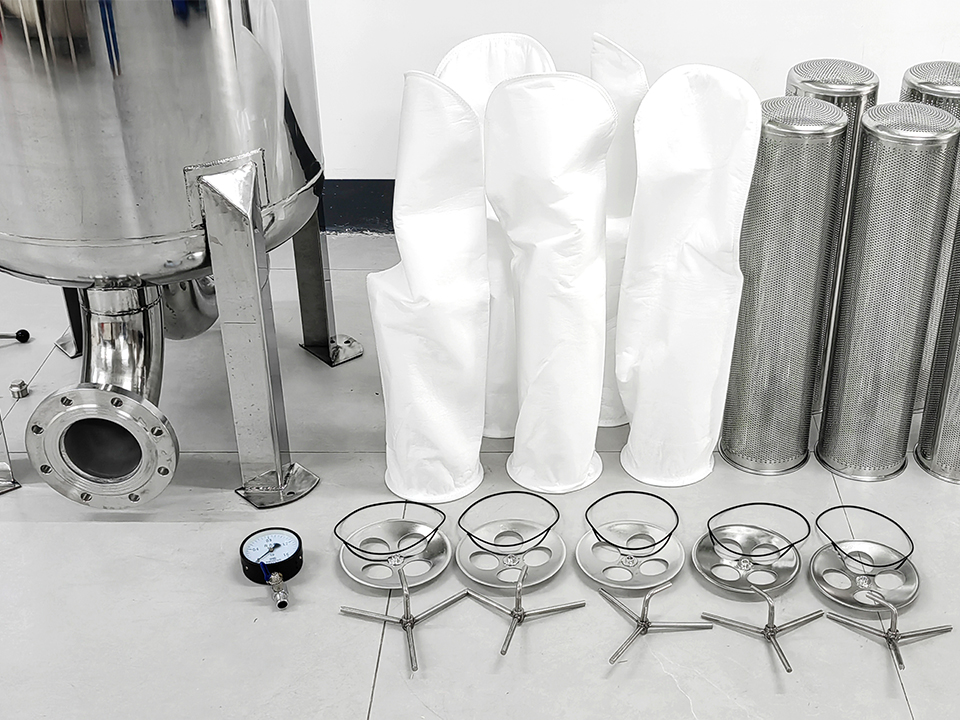
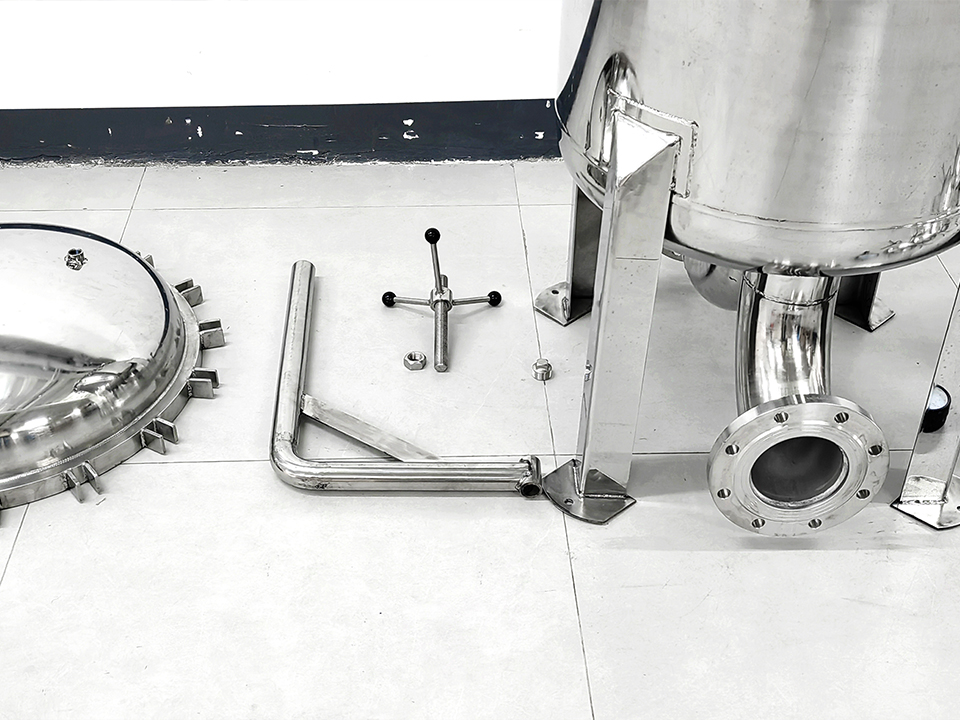
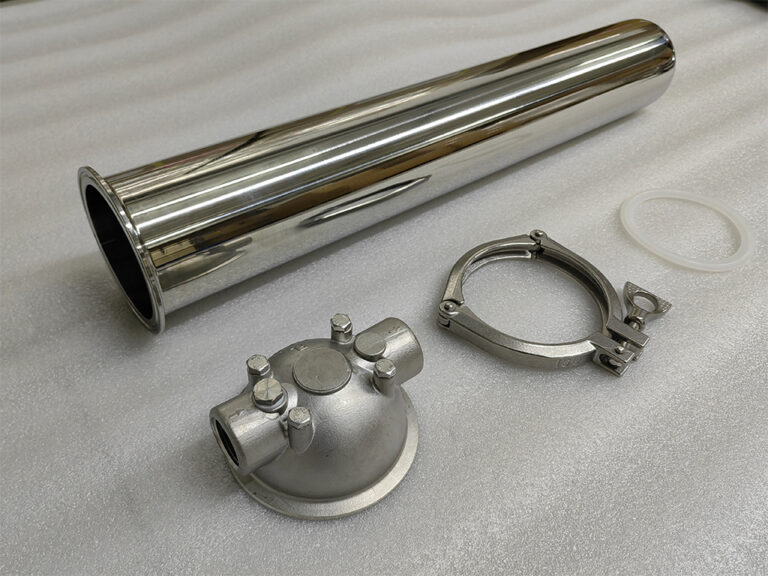
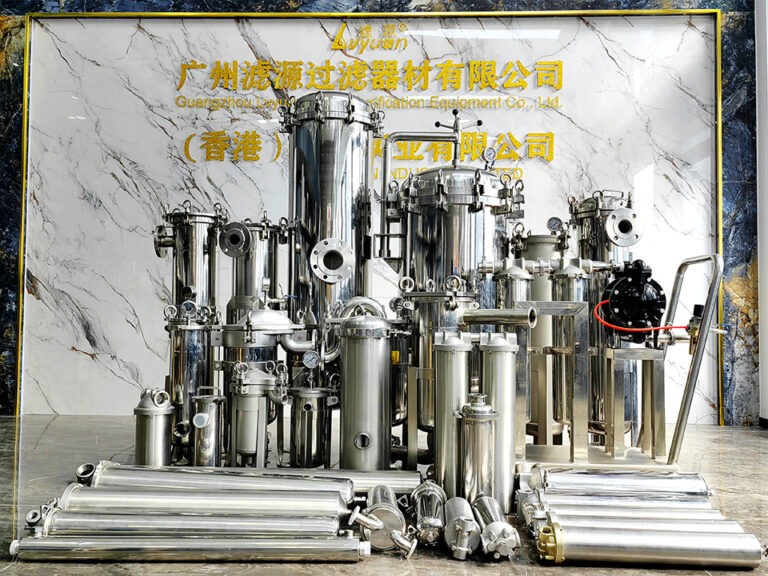
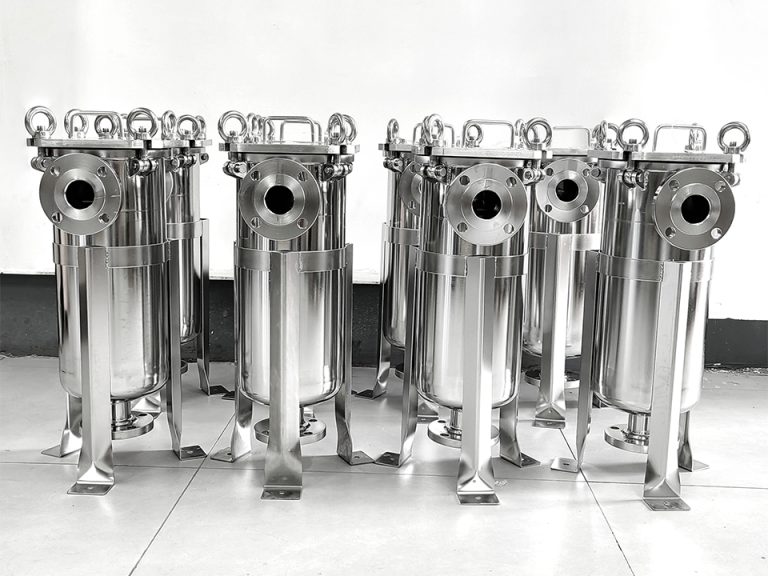
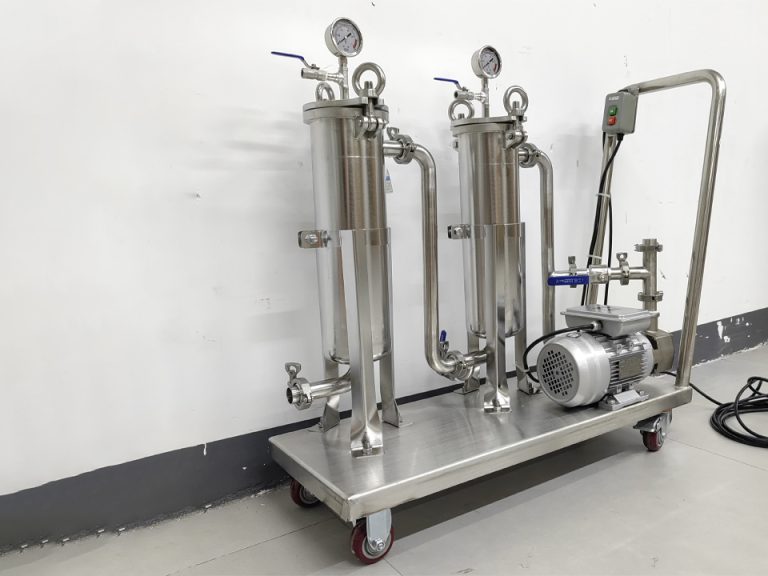
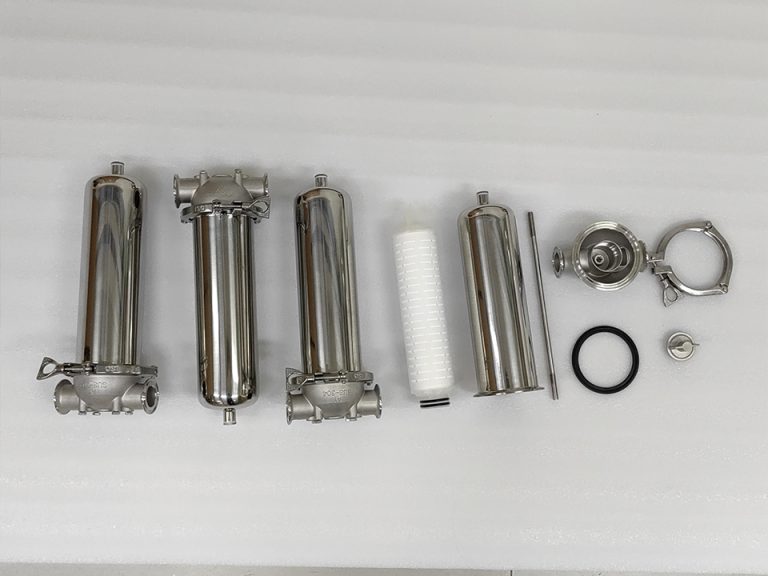
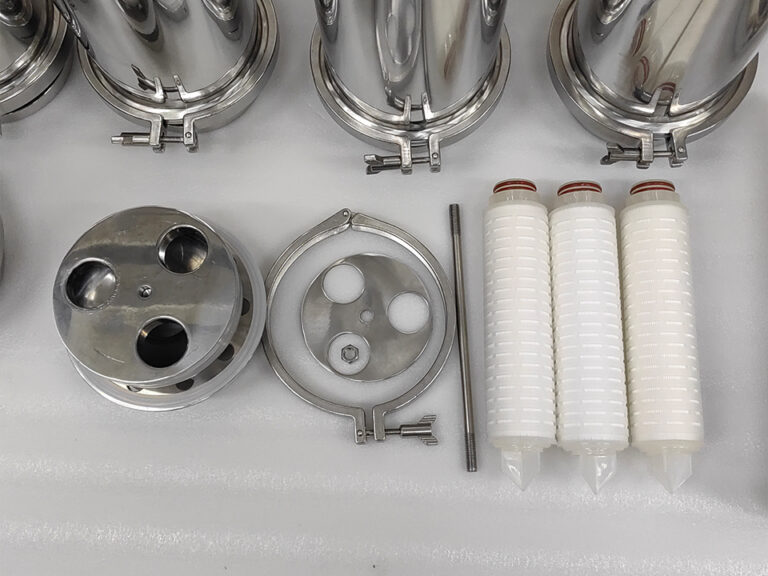
Guangzhou Lvyuan Water Purification Equipment Co., Ltd. is an industrial filter manufacturer founded in 2009 that designs and manufactures stainless steel filter housings, stainless steel sterile water tanks, filter elements, filter bags, ultra-polymer materials, and sintered filter products. Buyers choose Lvyuan for OEM/ODM support, ISO9001 quality control, and multi-country certifications.
Guangzhou Lvyuan Water Purification Equipment Co., Ltd.
Troubleshooting Filter Housing Fouling in Wastewater Plants
Filter housing fouling in a wastewater plant usually announces itself through rising differential pressure, falling flow, or cartridges that reach their changeout point in half the planned time. Replacing the cartridge restores flow for a while, but it does not explain why the filter loaded so quickly. In most cases the cause sits upstream, in the housing hydraulics, or in a mismatch between the element and the foulant.
This guide covers cartridge and bag filter housings used in effluent polishing, water reuse, membrane pretreatment, and chemical or seal-water lines. It explains how to recognise the main fouling mechanisms, how to confirm the cause before spending money, which fixes work, and when a rigid sintered porous plastic element is a sensible alternative to a disposable cartridge.
What Does Filter Housing Fouling Look Like in Practice?
Fouling is the build-up of suspended solids, oils, biological growth, or mineral scale on the filter element or inside the housing, which raises resistance to flow. The earliest signs are usually these:
Differential pressure (ΔP) rising faster than the plant’s own baseline for that duty.
Lower flow at the same pump setting, or a pump working harder to hold flow.
Cartridges that come out slimy, discoloured, or smelling of sulfide.
Turbidity or particle counts downstream that rise even though the filter is in service, which suggests bypass or unloading of captured solids.
A downstream membrane showing higher ΔP while the cartridge filter looks acceptable.
That last point matters in reuse and reverse osmosis trains. A WaterTech Online overview of RO key performance indicators lists silt density index (SDI) and differential pressure among the daily parameters operators should monitor, and says SDI should be measured across pretreatment steps, including after the cartridge filters. It also refers to an SDI below 3.0 before the membranes as a pretreatment target. Those numbers apply to membrane feed, not to every wastewater filter, but the principle carries over: measure upstream and downstream of the housing rather than relying on one gauge.
One caution on ΔP. A falling reading is not always good news. If the pump delivers less flow, ΔP drops even though the element is just as loaded. Compare ΔP at comparable flow rates, or record flow alongside it.
Common Causes of Filter Housing Fouling in Wastewater Service
Suspended solids and floc carryover
Biological solids, clarifier carryover, and coagulant or polymer floc are the most common loads on polishing filters. A sudden jump in loading usually points to an upstream upset such as sludge blanket rise, a clarifier short-circuit, or a coagulant overdose. A steady, slow rise points to a rating or sizing problem at the filter.
Fats, oils, grease, and polymer
Fats, oils, and grease (FOG) smear across pore openings rather than packing into them, so ΔP climbs quickly and the filter does not recover after a simple flush. Excess cationic polymer from dewatering or flocculation steps can behave similarly, forming a gel-like layer. Both tend to look glossy or sticky on a cut-open cartridge, and both usually need a surfactant or alkaline cleaning step rather than plain water.
Biofouling and biofilm
Warm, nutrient-rich water inside a housing that sits idle between runs is an ideal place for biofilm. Typical clues are slime on the element and housing walls, odour, and ΔP that rises even when turbidity is low. Standby housings and dead legs in piping are frequent starting points.
Scale and metal oxides
Calcium carbonate, phosphate-based scale such as struvite, and iron or manganese oxides can precipitate when pH, temperature, or oxidant levels change. If a deposit fizzes when a drop of dilute acid is applied, carbonate is a likely component. Rust-coloured or black deposits that appear after aeration or chlorination suggest iron or manganese oxidation. Confirm with a laboratory analysis before committing to a cleaning chemistry.
Wrong rating, undersized housing, or poor hydraulics
Too few cartridges for the flow means high flux per element and rapid loading. Blocked vents, a sump full of settled solids, damaged O-rings, or a poorly seated cartridge can add resistance or let unfiltered water bypass the element. These mechanical causes are cheap to fix and easy to overlook.
Troubleshooting Table: Symptom, Cause, Check, and Fix
Symptom
Likely cause
How to confirm
Typical corrective action
ΔP rises quickly, then plateaus after a flush
Loose suspended solids or floc
Inspect spent element; test upstream TSS or turbidity
Glossy or sticky deposit; oil sheen on rinse water
Control FOG source; use compatible surfactant or alkaline cleaning
Slime and odour, ΔP rising with low turbidity
Biofilm
Visible slime; microbial testing if needed
Sanitise housing and piping; avoid stagnant standby housings
Hard, crusty or fizzing deposit
Carbonate or phosphate scale
Dilute acid drop test; lab analysis
Adjust pH or antiscalant dosing; use acid-compatible cleaning
Rust-brown or black deposit
Iron or manganese oxides
Colour; lab analysis of deposit
Review oxidation points upstream; remove metals before the filter
Normal ΔP but poor downstream quality
Bypass around element or seal
Check O-rings, seating, element ends
Replace seals; confirm element fit and end-cap interface
Frequent changeouts at design flow
Housing or element undersized
Calculate flow per cartridge against datasheet
Add elements or a larger housing; reduce flux
ΔP gauge reading looks low but flow is down
Reading taken at reduced flow
Compare ΔP at matched flow
Log flow with ΔP; trend normalised values
How Should You Diagnose Fouling Before Changing Anything?
Start by confirming what is actually clogging the element. A practical sequence:
Establish a clean baseline. Record ΔP and flow with new elements installed. Without this, a reading of “high” has no reference.
Examine the spent element and housing. Note colour, texture, smell, and where the deposit sits. Surface cake suggests solids. A slick film suggests FOG, polymer, or biology. Hard deposits suggest scale.
Test the feed. Sample upstream and downstream for turbidity or TSS. Where a membrane follows, track SDI as well.
Run simple deposit tests. An acid drop identifies carbonate. A warm detergent soak indicates whether the deposit is organic. Send any unknown deposit for analysis.
Check the mechanical details. Inspect seals, vents, drains, and cartridge seating before blaming the media.
DuPont’s cleaning guidance for FilmTec elements shows a 5–10 micron polypropylene cartridge filter in a PVC, FRP, or stainless steel housing as part of its cleaning skid, and recommends cleaning RO elements when pressure drop increases by 15%. That 15% figure applies to membrane elements, not to disposable cartridges. Its value for housing troubleshooting is the method: trend normalised data and act on the change from baseline rather than on a single absolute reading.
Is a Finer Micron Rating the Answer to Fouling?
Usually not. When a filter loads quickly, the instinct is either to open the rating so it lasts longer or to tighten it for cleaner effluent. Both can backfire.
A tighter rating on an unchanged feed captures more of the particle population at the surface, so ΔP climbs sooner. A coarser rating may last longer but pass particles that foul a membrane or fail a discharge limit. Neither addresses FOG, biofilm, or scale, which are not governed by pore size at all.
Consider an illustrative example. A plant replaces 10 micron cartridges with 5 micron elements to protect a downstream membrane, and changeouts go from monthly to weekly. If the feed carries floc from a clarifier running near its limit, the better investment may be a coarser first-stage filter or an upstream correction, with the finer element placed second. The finer cartridge was not wrong, but it was asked to do the work of two stages.
Rating is also not a single standard. “Nominal” and “absolute” ratings describe different retention behaviour, so ask the supplier how the rating was determined and at what flux. Likewise, terminal ΔP differs between element designs, so use the element manufacturer’s stated changeout value rather than a generic figure borrowed from another cartridge type.
Cleaning and Maintenance: What Works and What Damages Media
Match the cleaning method to the foulant:
Loose solids: a low-pressure reverse flush or rinse, where the element design allows reverse flow.
FOG, polymer, and organics: warm water with a compatible surfactant or mild alkaline cleaner.
Scale and metal oxides: a compatible acid, with contact time and concentration set by the element manufacturer.
Biofilm: a compatible sanitising step, plus a plan to stop stagnation.
Chemical compatibility decides what is safe. Polyethylene generally tolerates many acids and alkalis but can degrade under prolonged exposure to strong oxidisers, particularly with heat. Polyamide is generally less tolerant of strong acids and oxidising agents. PTFE has very broad chemical resistance. Confirm the exact limits for the specific grade with the element manufacturer before cleaning, because concentration, temperature, and contact time all change the outcome.
Housing maintenance is equally important. Drain and clean the sump, inspect and replace O-rings on schedule, verify that vents and drains are clear, and make sure cartridges are seated properly. Log ΔP, flow, and changeout dates so the next fouling episode can be compared against history.
When Do Sintered Porous Plastic Elements Make Sense?
Rigid sintered porous plastic elements make sense when the same housing is fouled repeatedly by solids or organics that a compatible cleaning step can remove, and when the cost and waste of frequent disposable changeouts are significant. They are not a cure for every fouling problem, and they do not replace upstream control.
In a sintered element, plastic particles are fused into a self-supporting porous body. Unlike a wound or melt-blown cartridge, the structure stays rigid, which can support reverse flushing or chemical cleaning when the manufacturer’s pressure and compatibility limits are respected. The trade-offs are a typically higher unit cost than a disposable polypropylene cartridge, the need for a defined cleaning procedure, and the risk that fine particles embed in the pore structure and resist cleaning.
Choosing the base polymer
Material
Typical fit in wastewater service
Key checks
UHMW-PE
General particle filtration of water and process liquids
Solid-liquid separation in industrial water streams
Temperature and pressure limits
PTFE
Aggressive chemistry or higher temperature
Wetting for aqueous service, end-fitting and cost
PA (nylon)
Fine particle filtration in a narrow rating range
Acid and oxidiser compatibility
The supplier’s published ranges give a starting point. Lvyuan’s UHMW-PE sintered porous filter cartridge tubes are listed with ratings from 0.2 to 140 μm and diameters from 10 to 120 mm. The sintered HDPE porous filter tube is described for solid-liquid separation, with a 1–100 μm range, operation below 80°C, and pressure resistance below 0.5 MPa. For aggressive chemistry or higher temperatures, the sintered PTFE porous filter cartridge lists 0.1–100 μm ratings, a -190°C to 260°C temperature range, and several end-fitting options including M20, M30, 222, and 226. For fine filtration, the PA sintered porous plastic filter cartridge is listed at 0.5–10 μm in 38 mm or 48 mm diameters. These are the supplier’s stated ranges; confirm them against your own flow, ΔP, temperature, and chemistry before ordering.
Flat and annular formats
Not every filtration point uses a tube. Some equipment uses a flat or molded element. Sintered PE porous filter plates can be cut to size for filtration and fluid distribution, round sintered PE filter plates suit assemblies that need a flat disc, and sintered porous PE ring filters are molded annular elements for equipment designed around that geometry. In each case the buyer should specify thickness, pore characteristics, and sealing method against the actual operating medium, since one universal rating does not exist.
One caution on wetting
Porous polyethylene and PTFE are typically hydrophobic unless treated. For aqueous wastewater service, ask whether the element is surface-treated or needs pre-wetting, because a dry hydrophobic element can show high initial ΔP or poor flow that looks like fouling but is not.
Fouling in Auxiliary Equipment Around the Housing
Housing performance also depends on the equipment around it. If your plant doses dry chemicals through vacuum conveying, the filter protecting the vacuum source can load with fines and starve the feeder. UHMW-PE vacuum feeder filter cartridges are one format designed for that type of equipment. Automated backwash and isolation valves often exhaust compressed air through small silencers, and a clogged exhaust can slow valve response; porous plastic pneumatic silencers are supplied for pneumatic exhaust filtration and noise reduction. These are secondary checks, but a slow valve can disrupt backwash cycles and be mistaken for a filter problem.
How Can You Prevent Fouling From Recurring?
Control it upstream. Stabilise clarifier performance, polymer and coagulant dosing, and FOG sources before adding filtration capacity.
Stage the filtration. Put a coarser filter ahead of the fine one so each element handles the particle range it is suited to.
Size for flux. Add elements or housing size rather than running fewer cartridges at the edge of their flow rating.
Trend, don’t react. Track ΔP against flow, and set alarms from the element manufacturer’s terminal value.
Prevent stagnation. Drain or sanitise standby housings and eliminate dead legs.
Clean on a schedule that fits the foulant, and stop if cleaning no longer recovers ΔP to a stable baseline.
Keep spares matched to the housing, including seals and end fittings.
What Should You Specify Before Requesting a Replacement or Custom Element?
An accurate quotation depends on the details that actually drive fouling. Prepare:
Feed description: source, TSS or turbidity range, presence of FOG, polymer, or coagulant, and any upset conditions.
Chemistry and temperature: pH range, oxidants or biocides, cleaning chemicals, and maximum temperature.
Hydraulics: design and peak flow, clean ΔP, allowable terminal ΔP, and operating pressure.
Housing details: element length, outside diameter, end-fitting type, sealing method, and number of positions.
Performance target: required retention, downstream limit or membrane requirement, and whether staged filtration is possible.
Cleaning plan: whether the element will be reverse-flushed or chemically cleaned, and by what method.
Quantity and sampling: annual volume and whether trial samples are needed.
Ask suppliers for samples to test in your own housing before committing to a volume order, and agree beforehand what ΔP recovery and run length will count as success. Any supplier performance claim should be checked against your own data.
Frequently Asked Questions
What causes filter housing fouling in wastewater plants?
The main causes are suspended solids and floc carryover, fats, oils, and grease, polymer residues, biofilm, mineral scale, and iron or manganese oxides. Undersized housings, wrong ratings, bypass, and blocked vents can add to or mimic fouling.
How do I know whether to clean or replace a filter element?
Check the element manufacturer’s cleanability and terminal ΔP. If cleaning restores ΔP to near the clean baseline at matched flow, cleaning is working. If recovery shrinks with each cycle, replace the element.
What differential pressure should trigger a changeout?
There is no universal value. Terminal ΔP depends on element design, housing, and process, so use the manufacturer’s stated limit and your own baseline. Compare readings at matched flow, because lower flow can make ΔP appear to improve.
Does a finer micron rating reduce fouling?
Not generally. A tighter rating on the same feed usually loads faster, and it does not prevent FOG, biofilm, or scale. A staged setup with a coarser first filter often performs better than a single fine element.
Can sintered plastic filters handle wastewater?
They can suit certain duties where solids or organics are removable by cleaning and the polymer is compatible with the water chemistry, temperature, and pressure. Verify chemical resistance, wetting behaviour, and cleaning limits with the manufacturer first.
How do I tell biofouling from scaling?
Biofouling usually produces slime, odour, and rising ΔP at low turbidity. Scale is hard or crusty and may fizz in dilute acid if it is carbonate. Laboratory analysis of the deposit is the reliable confirmation.
Which chemicals are safe for cleaning polyethylene or polyamide elements?
It depends on grade, concentration, temperature, and contact time. Polyethylene is generally tolerant of many acids and alkalis but sensitive to strong oxidisers over time, while polyamide is less tolerant of strong acids and oxidisers. Get written limits from the supplier.