Guangzhou Lvyuan Water Purification Equipment Co., Ltd. is an industrial filter manufacturer founded in 2009 that designs and manufactures stainless steel filter housings, stainless steel sterile water tanks, filter elements, filter bags, ultra-polymer materials, and sintered filter products. Buyers choose Lvyuan for OEM/ODM support, ISO9001 quality control, and multi-country certifications.
Guangzhou Lvyuan Water Purification Equipment Co., Ltd.
Max Temperature Ratings for Filter Housings During CIP
There is no single maximum temperature that makes a filter housing “CIP-ready.” The usable limit is set by the weakest part of the assembly, which is usually the gasket, the filter element, or the pressure rating at temperature, and rarely the stainless steel body itself. Caustic washes in clean-in-place (CIP) cycles commonly run at 60 to 85 °C, so a housing with a published maximum of 80 °C, 120 °C or 150 °C can be either comfortable or marginal. The answer depends on what is installed inside it and how the cycle is run. This guide explains how to read a temperature rating, which components limit it, how different housing types compare, and what to put in an RFQ so the rating you buy matches the cleaning cycle you actually run.
What Does a Filter Housing’s Maximum Temperature Rating Actually Mean?
A maximum temperature rating is the highest fluid temperature a manufacturer states for a specific housing configuration. It is normally paired with a maximum pressure and depends on the gasket and other components fitted. It is not a property of “stainless steel” in general.
Manufacturer documentation shows how specific these ratings are. Donaldson’s PF-EG sanitary filter housing brochure lists a working pressure and temperature of 10 bar at 150 °C, stated as based on an EPDM gasket, and notes that higher-temperature gaskets are available on request. The same brochure lists EPDM gaskets for its smaller models and silicone for larger ones, so even within one product family the seal material, and therefore the basis of the rating, should be confirmed for the exact model.
Three questions turn a number on a datasheet into something usable:
At what pressure? Temperature and pressure ratings are a pair. A temperature figure quoted without its pressure is incomplete.
With which seal and element? The rating may assume a particular gasket, and often excludes the filter element.
For how long, and how often? A datasheet maximum rarely states whether it covers a 20-minute CIP hold repeated daily, continuous service, or an occasional steam event. Ask.
Which Temperatures Does CIP Actually Require?
Most hygienic CIP cycles combine a rinse, an alkaline wash, often an acid wash, and a final rinse or sanitizing step. According to Aquasyn’s engineering note on CIP, caustic washes commonly run at 60 to 85 °C and acid washes at 50 to 70 °C, while pre-rinses are kept cold or lukewarm so protein soils do not bake on. The same note describes hot-water sanitizing at above 80 °C.
CIP stage
Commonly cited temperature
What it means for the housing
Pre-rinse
Cold to lukewarm
Low thermal stress; also the point where loose soil reaches the filter
Caustic wash
60–85 °C
Usually the hottest chemical step; tests gasket and element limits
Acid wash
50–70 °C
Lower temperature, but some elastomers are attacked by acids
Hot-water sanitize
Above 80 °C
Can exceed the caustic step; check the rating covers it
Temperatures are from the Aquasyn note above. They are typical ranges, not a validated cycle. Your own cycle, set by your soil, product and quality system, governs.
Steam-in-place (SIP) is a separate requirement. Aquasyn describes steam sterilization as the step that normally follows CIP in biopharma. Steam conditions sit well above typical caustic wash temperatures, so a housing specified for caustic CIP should not be assumed suitable for SIP. State both duties separately in the RFQ.
Which Components Set the Real Temperature Limit?
Gaskets and seals
Seals are the usual limiting component. Aquasyn notes that temperature sets the life of every elastomer in the circuit, and that a gasket compound which is fine with a given caustic at ambient temperature may be marginal at 80 °C. It also flags that acid cleaners can be aggressive on some elastomers.
The variables that matter are the elastomer family, chemical concentration, temperature, exposure time and number of cycles. The trade-off is that a seal chosen for higher temperature may resist your cleaning chemistry less well than a lower-rated one, so a higher temperature number does not settle compatibility. Ask the supplier for the gasket material, its compatibility data for your exact chemistry, and any food-contact compliance you need. Donaldson’s brochure, for example, references 21 CFR 177.2600 for its gasket materials.
Filter elements
The element is often the lowest-rated part. Polymer pleated cartridges, bags, stainless mesh and sintered metal behave very differently. Sintered and mesh metal elements are generally less temperature-sensitive than polymer media, but the seals and housing still set an overall limit. For polymer elements, ask for the maximum temperature and the allowable differential pressure at that temperature, because allowable differential pressure typically falls as temperature rises. CIP flow, especially if it is reversed or unusually high, can load an element differently from normal filtration.
Body, connections and pressure at temperature
The pressure rating of the vessel applies at a stated temperature. Clamp bands, flanges and bolted covers add gasketed joints, each with its own seal. Liquid trapped in a closed housing expands as it heats, so confirm venting and drain arrangements for the heat-up phase.
Gauges, vents and drains
Pressure gauges, vent valves and drain fittings often carry their own temperature limits, lower than the vessel’s. Lvyuan’s sanitary clamp cartridge housing, for instance, lists a top pressure gauge and vent port in its specification, so those fittings belong on your verification list.
How Do Temperature Ratings Compare Across Housing Types?
The table shows maximum temperatures as published on Lvyuan’s product pages, retrieved in November 2026, alongside editorial notes on what each means for CIP duty. These are the manufacturer’s stated maximums. They are not CIP validation, and each is conditional on the configuration.
Housing type
Published maximum (product page)
CIP considerations
Mobile filtration cart
80 °C (176 °F) at 6 bar (87 psi), subject to cartridge, seal and operating conditions
Pump, cartridges and seals share the circuit; little margin against an 85 °C caustic step
Flanged basket strainer
180 °C (356 °F) at 10 bar (150 psi), depending on body material, gasket and service
Higher figure depends on gasket selection; bolted cover and flanges are not hygienic-clamp design
Quick-access basket strainer
120 °C (248 °F) at 10 bar (145 psi)
Similar category, different published figure
Side-entry bag housing
120 °C at 10 bar
Bag media may limit the system below the housing figure
Sanitary clamp cartridge housing
Not stated on page
Clamp connections suit hygienic circuits; request rating with gasket and element
Single-cartridge housing, threaded ports
Not stated on page
Confirm suitability of threaded ports for your cleaning standard
Flanged sintered cartridge housing
Not stated on page (page lists gas, steam or liquid use)
Request temperature and pressure rating in writing, especially for steam
Several points follow from the table.
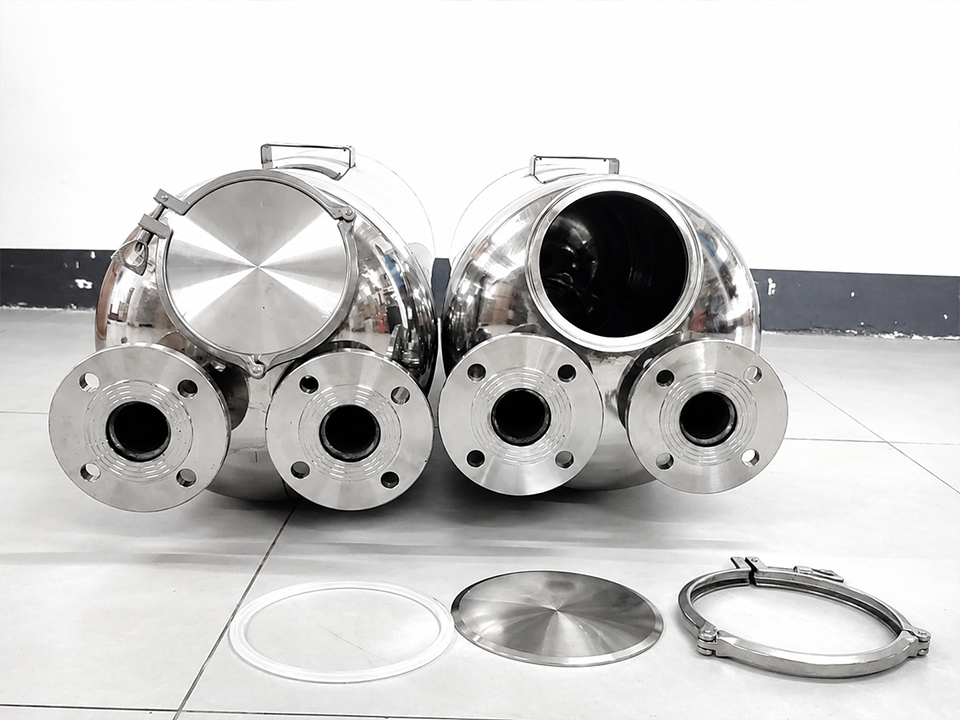
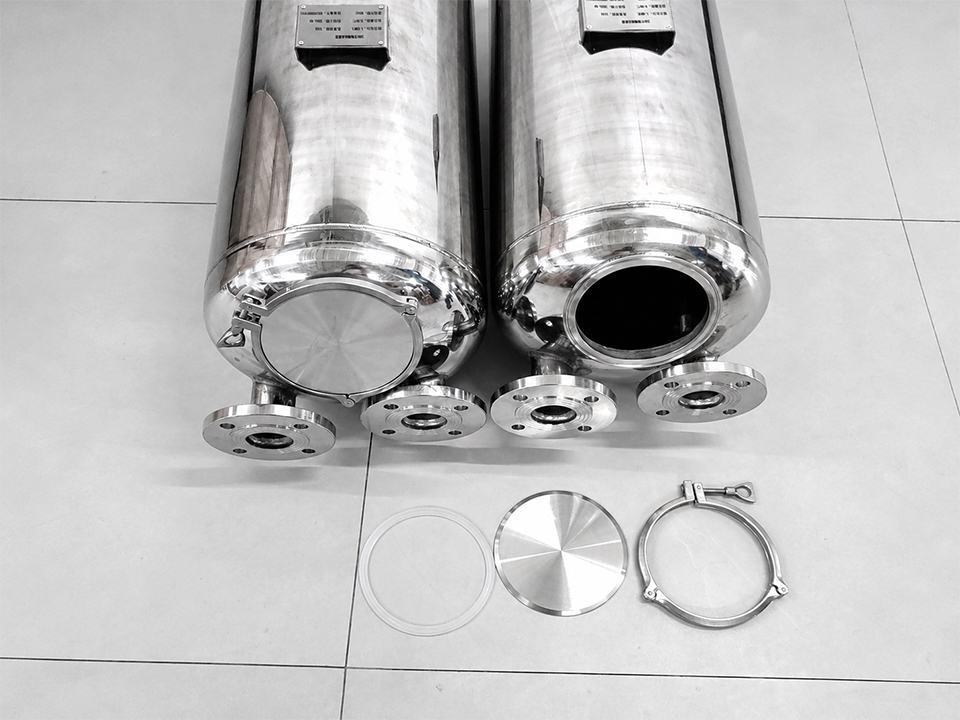
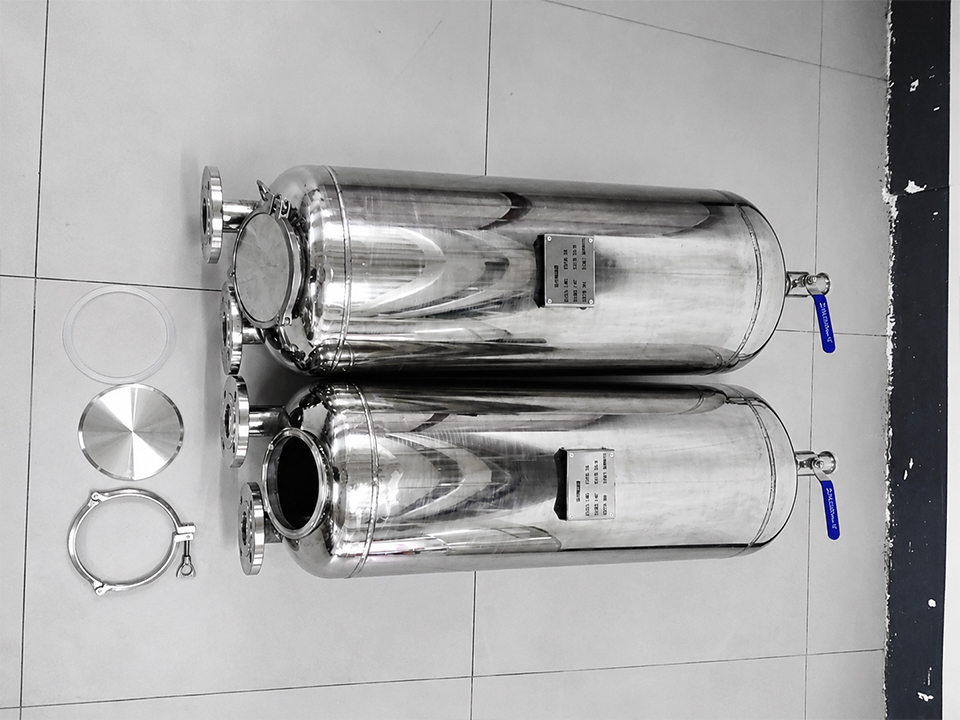
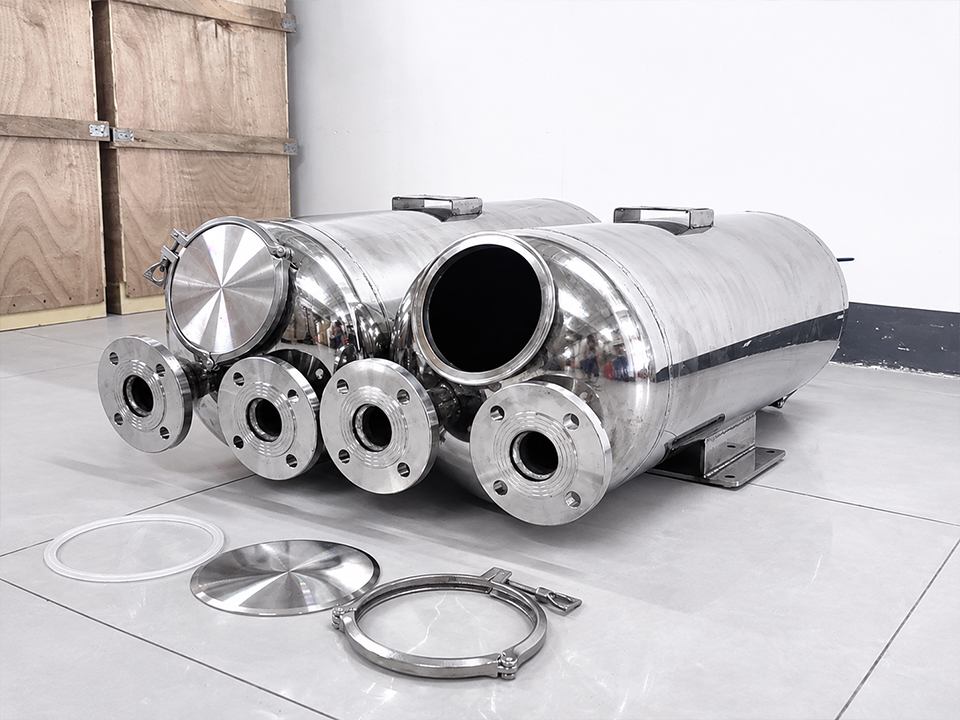
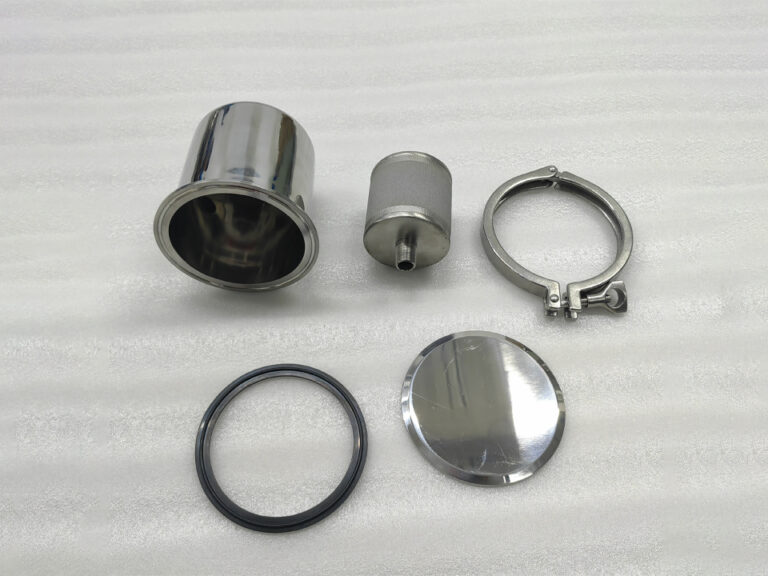
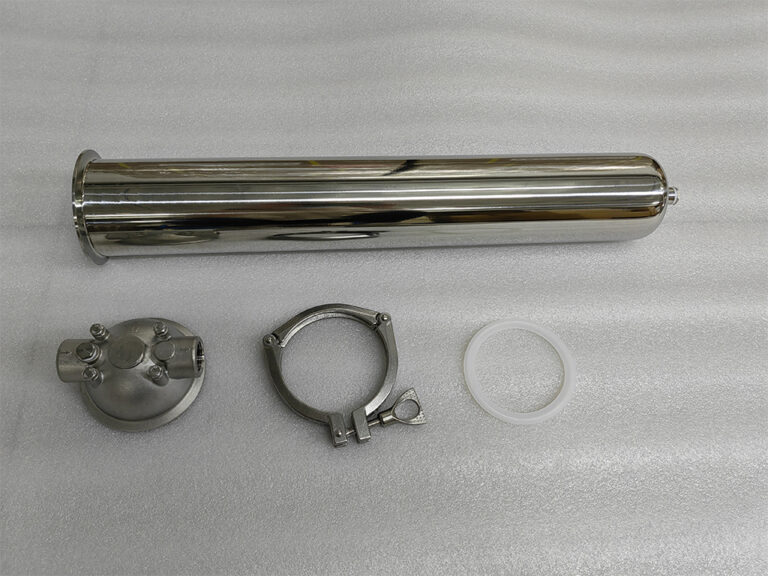
For hygienic recirculating lines, buyers usually start with clamp-connected cartridge designs. The stainless steel sanitary cartridge filter housing uses a polished vessel, sanitary clamp connections and a clamp-band closure. A single-cartridge filter housing with clamp closure and threaded ports is a more compact option for industrial liquid filtration, but threaded joints can retain residues, so confirm they meet your cleaning requirements. Neither page publishes a temperature rating, so request one in writing.
Where steam or higher-temperature service is in scope, the flanged sintered cartridge filter housing is listed for gas, steam or liquid filtration with a removable sintered metal element and flanged ports. Because the page does not state a rating, the temperature and pressure limits, and the gasket material behind them, need to be confirmed.
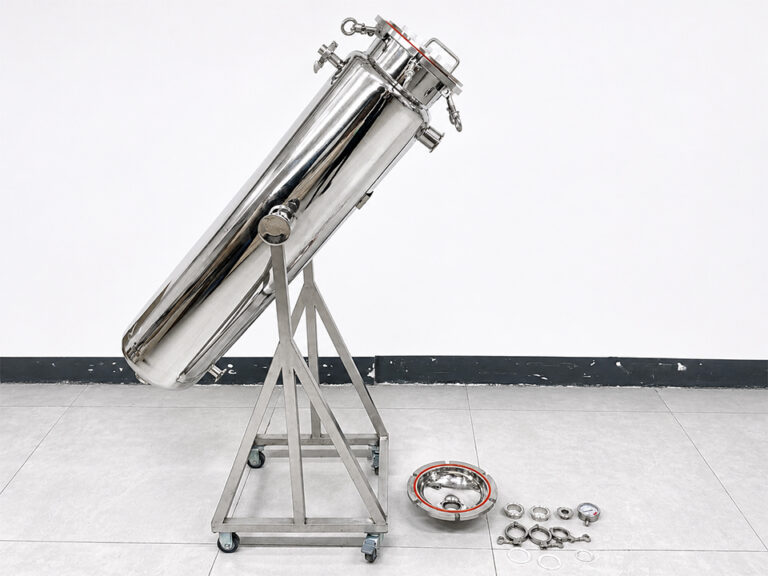
For portable duty, the mobile stainless steel filtration cart publishes a conditional maximum of 80 °C and 6 bar, with PP pleated, PES, PTFE or stainless steel cartridges as options. A cart is a system: pump, valves and instruments sit in the circuit alongside the housing, so the lowest-rated item governs.
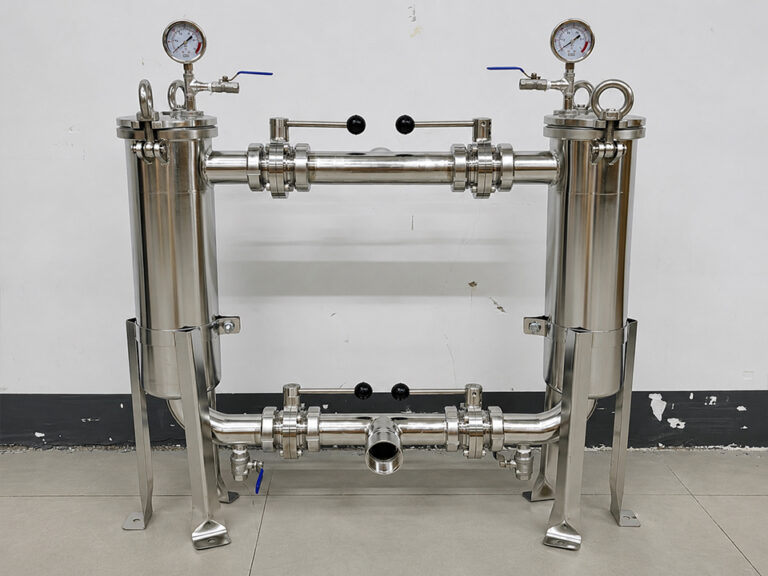
Strainers show why per-model checking matters. The stainless steel basket strainer states up to 180 °C, subject to seal material and pressure rating, while the industrial basket strainer with quick-access cover states up to 120 °C. Both are simplex strainers with removable baskets, so the difference is a reminder that published maximums attach to configurations. Both are described for solids removal in industrial pipelines rather than as hygienic-clamp designs.
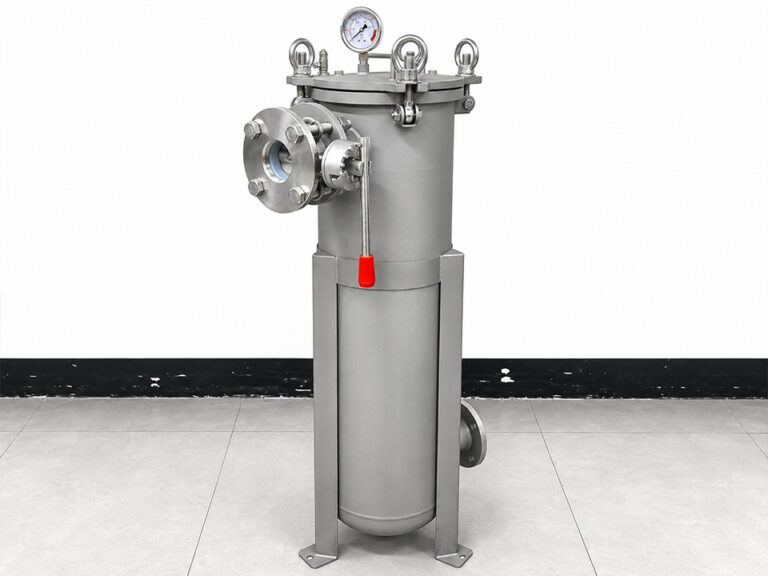
For liquids that need bag filtration, the side-entry stainless steel bag filter housing is published at up to 120 °C and 10 bar. The bag material and its support basket may have a lower limit than the housing, so ask for the bag’s own rating.
Why a Higher Temperature Rating Is Not Automatically Better for CIP
A higher published maximum is useful headroom, but it is not a goal in itself. Three reasons:
Cleaning is a trade-off, not a temperature race. Aquasyn cites Sinner’s circle: cleaning depends on temperature, chemistry, mechanical action and time, and reducing one means increasing another. If the housing’s limit is lower than you would like, longer contact time or higher flow may recover cleaning performance.
Hotter can make cleaning worse. The same source notes that heating protein soils too early can denature them and bind them more tightly to stainless steel.
Hotter shortens seal life. Running the cycle at the very top of the seal’s range can mean more frequent gasket replacement and more downtime.
The practical approach is to specify the housing to your validated cycle plus a margin agreed with your engineering and quality teams, not to buy the highest number. This holds for most caustic-based hygienic CIP. It does not hold where SIP or high-temperature sanitizing is part of the process, because those duties set a higher floor.
What Typically Goes Wrong When CIP Exceeds a Housing’s Limits?
The following are failure modes inferred from how each component behaves under heat and chemicals. They are not measured field frequencies:
Gasket hardening or compression set, followed by weeping at the clamp or cover after a few cycles.
Gasket chemical attack, where the seal tolerates temperature but not the cleaner.
Polymer element deformation or collapse when temperature and differential pressure combine.
Pressure rise from trapped, heated liquid in a closed housing.
Instrument damage from gauges or vent valves rated below the cycle temperature.
Residue retention in crevices, threaded ports, and strainer cover joints when the design is not drainable or hygienic.
What Should You Specify in an RFQ for a CIP-Duty Filter Housing?
An accurate quote needs the cleaning duty, not only the filtration duty. Provide:
CIP chemistry: cleaning agents, concentrations and acid or caustic sequence. This determines gasket compatibility.
Maximum temperature, hold time and cycle frequency: this separates a short daily wash from continuous hot service.
Pressure and flow during CIP: these affect element loading and the pressure rating needed at temperature.
SIP or hot-water sanitizing: state them separately, with temperature and duration.
Element installed or removed during CIP: and the media type if installed.
Connection type and finish: clamp, flange or thread, and any surface-finish requirement.
Instrumentation: gauge, vent, drain and any sensors that stay in the circuit.
Documentation: material certificates, test records and food-contact compliance, if your market needs them.
What Should You Verify Before Selecting a Supplier?
Ask for these in writing, for the exact configuration you will buy:
Maximum temperature and the pressure at that temperature.
Gasket material and compatibility with your cleaning chemistry.
Whether the figure covers CIP, SIP, or continuous service.
Element temperature and differential pressure limits.
Ratings of the gauge, vent and drain components.
Then compare the answers with your cycle sheet. If any item is lower than your CIP maximum, or equal to it with no margin, ask for a higher-rated gasket or element option before ordering. Where a supplier does not publish a rating, as with several of the housings above, treat the written confirmation as a required part of the quotation.
Frequently Asked Questions
What is the maximum temperature a filter housing can handle during CIP? It depends on the configuration. The limit is set by the lowest-rated component, usually the gasket or element, and is stated together with a pressure. Published figures range widely, so confirm the rating for your exact model.
What temperature is typical for CIP cleaning? Caustic washes commonly run at 60 to 85 °C and acid washes at 50 to 70 °C, per a published CIP engineering note. Your validated cycle governs, and hot-water sanitizing can exceed the caustic step.
Is a stainless steel housing automatically safe for hot CIP? No. The stainless steel body is rarely the limiting part. Gaskets, filter elements, gauges and vent fittings often have lower temperature limits, and the pressure rating applies at a stated temperature.
Does a CIP rating mean a housing can handle steam sterilization? Not necessarily. Steam-in-place is a separate duty at temperatures well above typical caustic washes. Ask for written confirmation of steam suitability, including the gasket and element rating.
Which gasket material is used for hot CIP? EPDM is used in some sanitary housings. Donaldson’s PF-EG line uses a standard EPDM gasket on its published rating. Suitability still depends on your cleaning chemistry, temperature and cycle count, so request supplier compatibility data.
Should the filter element stay in the housing during CIP? It depends on the element and the process. If it stays, its temperature and differential-pressure limits must cover the cycle. If it is removed, the housing and seals alone set the limit. Decide this before requesting a quote.
What should I send a supplier to get an accurate CIP rating? Send cleaning chemicals and concentrations, maximum temperature and hold time, cycle frequency, pressure and flow, any SIP or sanitizing step, connection type, and element media.