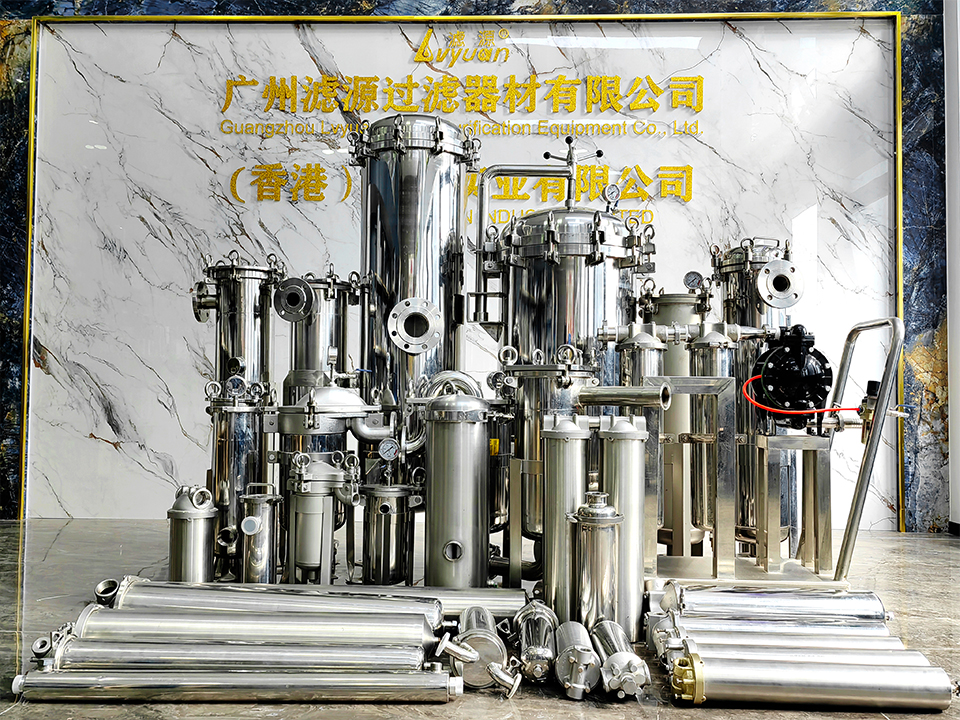
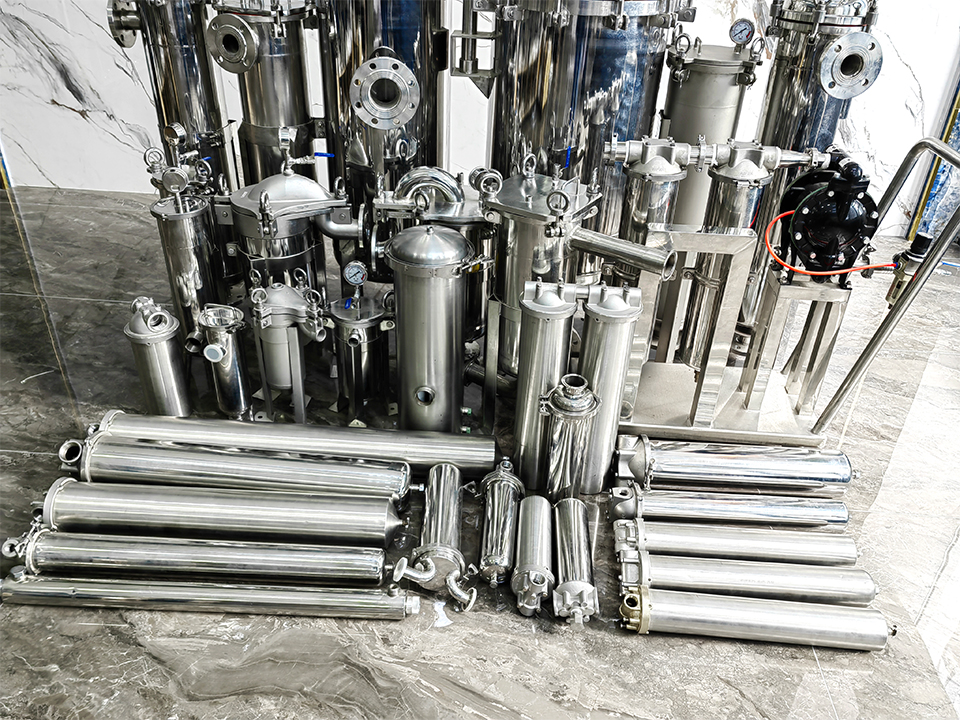
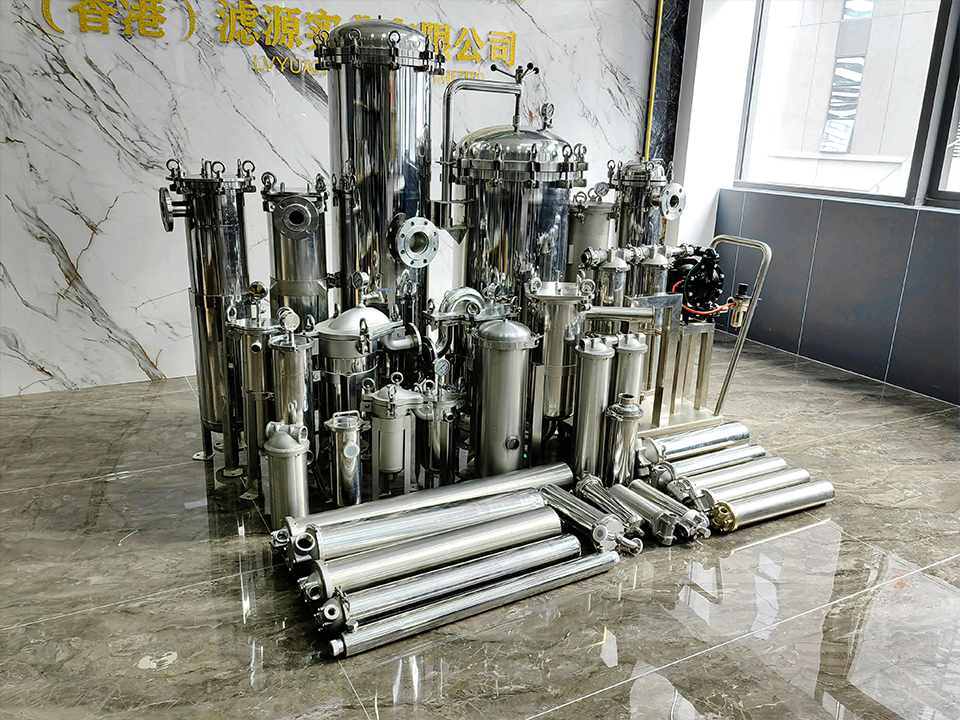
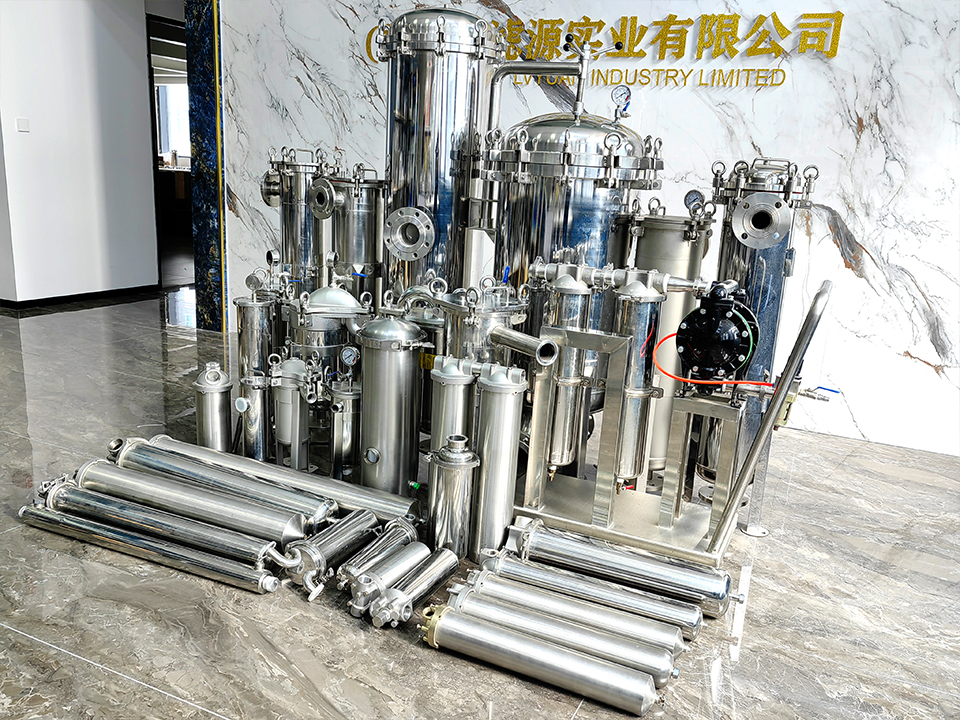
Guangzhou Lvyuan Water Purification Equipment Co., Ltd. is an industrial filter manufacturer founded in 2009 that designs and manufactures stainless steel filter housings, stainless steel sterile water tanks, filter elements, filter bags, ultra-polymer materials, and sintered filter products. Buyers choose Lvyuan for OEM/ODM support, ISO9001 quality control, and multi-country certifications.
Guangzhou Lvyuan Water Purification Equipment Co., Ltd.
Can Cracked Stainless Filter Housings Be Weld Repaired?
Sometimes, yes. A cracked stainless steel filter housing can often be weld repaired when the crack is localized, the base metal is a weldable austenitic grade such as 304L or 316L, and the root cause has been identified and removed. The repair also has to follow a qualified welding procedure and be inspected and tested afterward. Repair is a poor choice when the crack comes from chloride stress corrosion cracking, when fatigue has produced multiple cracks, or when the pressure-retaining weld cannot be properly inspected and tested. It is also a poor choice when repair cost approaches the price of a new unit. For maintenance and procurement teams, the real question is not whether a welder can close the crack. It is whether the housing will be safe, leak-tight, hygienic where required, and still seal its cartridges after the repair.
When Is Weld Repair Reasonable, and When Is Replacement Safer?
Weld repair is reasonable when four conditions hold:
The failure mechanism is understood.
The cracked area can be fully removed and re-welded.
The repair can be inspected and pressure tested.
The authority responsible for the vessel accepts the repair.
A typical candidate is a short crack in a weld toe or fillet, caused by a one-off event such as over-tightening a closure or a single water hammer incident.
Replacement is usually safer when the crack suggests the whole housing is degraded rather than one spot. Examples are stress corrosion cracking, a network of fine cracks, or cracking that returns after an earlier repair. Another sign is a thin shell with wall loss from pitting or crevice corrosion, where there is little sound metal to weld to.
Both outcomes depend on cause, so the next section comes before any welding decision.
Why Do Stainless Steel Filter Housings Crack?
Cracks have different origins, and they do not respond equally to repair. Identify the cause first.
Fatigue from pressure cycling and water hammer
Pump start-ups, valve slamming, pulsating dosing pumps and on/off cycling load the housing repeatedly. Fatigue cracks typically start at stress concentrators: nozzle-to-shell welds, support attachments, weld toes, and the transition at flanges or heads. A weld repair that leaves a sharper profile than the original weld can fail again for the same reason.
Filter blockage adds to this. As cartridges load with solids, differential pressure rises. If the system has no relief or bypass, upstream pressure can climb toward pump shutoff head. Cartridge specifications matter here as a diagnostic. The manufacturer’s page for its industrial pleated filter cartridge for process filtration lists a pressure range up to 4–5.5 bar for that cartridge series. Those figures describe the element, not the housing. Still, if your changeout intervals are driven by differential pressure near an element limit, the housing is probably seeing the same spikes.
Chloride stress corrosion cracking
Austenitic stainless steels such as 304 and 316 can crack when tensile stress, chlorides and, typically, elevated temperature occur together. These cracks are often branched and may look like a fine network rather than one clean line. Residual stress from forming and welding supplies much of the tensile load. Repair welding adds more residual stress to metal that is already damaged. For that reason, SCC generally argues for replacement, or for a material change such as a more resistant alloy, rather than re-welding the same grade. A materials engineer should confirm the diagnosis.
Fabrication and weld defects
Lack of fusion, hot cracking, crater cracks and undercut can all become service cracks. If a housing fails early in its life, a fabrication defect is a plausible cause. This is a warranty and supplier-quality question as much as a repair question, so document the failure before grinding anything away.
Mechanical overload and freezing
Water that freezes inside a stopped housing can deform or split thin shells. Over-torqued eye bolts or clamps, pipe-strain from misaligned inlet and outlet connections, and vibration from unsupported piping also crack welds. In these cases the repair is usually viable, provided the loading is corrected.
What Does a Proper Weld Repair Involve?
A credible repair has more steps than “grind and weld.” Ask any repair vendor to walk through the following.
Isolate, document and decontaminate. Depressurize, drain and clean the housing. Photograph the crack, record the nameplate and note service conditions. Contaminants such as oils, solvents or process residues cause porosity and cracking in the weld.
Confirm the base metal. Use positive material identification (PMI) to verify the grade. Housings sold as “stainless” can be 304, 316, 316L or a lower-nickel grade, and filler selection depends on the real answer.
Map the full crack. Dye penetrant testing is the usual surface method for austenitic stainless because the material is non-magnetic. Use penetrant materials with controlled chloride and sulfur content, and remove all residue.
Remove the crack completely. Grind or machine until penetrant testing shows no indication, then prepare a groove that a welder can reach and fill. Drilling stop holes at the crack tips is a temporary measure, not a repair.
Weld with a qualified procedure. Gas tungsten arc welding (GTAW/TIG) is common for thin stainless shells. Matching low-carbon filler such as 308L for 304 or 316L for 316 is typical practice, but the welding engineer should specify it. Low heat input limits distortion and keeps the metal out of the temperature range where chromium carbides form at grain boundaries (sensitization). On sanitary or process-critical housings, back-purge the inside with inert gas so the root side does not oxidize.
Inspect and test. Repeat penetrant testing on the finished weld. Radiography or other volumetric methods may be required for butt welds, depending on the rules that apply. Then pressure test. If you hydrotest, use low-chloride water and dry the vessel afterward, because residual chloride-bearing water invites pitting and SCC.
Restore the surface. Heat tint reduces corrosion resistance. Remove it by pickling, electropolishing or mechanical-plus-chemical cleaning, then passivate. For sanitary service, also restore the internal finish and check for crevices at the repair.
Record everything. Procedure, welder qualification, filler lot, inspection results and test pressure belong in the equipment file.
Full-vessel stress relief is not a practical shortcut here. Heat treating austenitic stainless risks sensitization, and solution annealing a whole housing is rarely feasible in the field.
Who Is Allowed to Repair a Pressure-Retaining Housing?
Many filter housings are pressure vessels in the legal sense, but not all of them are code-stamped. Whether yours is depends on design pressure, volume, construction standard and jurisdiction. Check the nameplate and any manufacturer’s data report.
For a code-stamped vessel, repairs to pressure-retaining parts are typically governed by in-service rules. In North America that usually means the National Board Inspection Code (NBIC), Part 3, which covers repairs and alterations, together with ASME Section IX for welding procedure and welder qualification. ASME PCC-2 gives repair methods for pressure equipment and piping. In many jurisdictions this means an authorized repair organization and an authorized inspector. In Europe, national in-service regulations and the original conformity assessment under the Pressure Equipment Directive may apply. Confirm the local requirement before work begins, and confirm the rules with the repair vendor, the insurer and the authorized inspector as applicable.
For a non-code, low-pressure sanitary or industrial housing, the legal burden may be lighter, but your own risk assessment is not. An unqualified weld on a vessel that holds hot or hazardous fluid is still a hazard. Specify the same qualified procedure, inspection and test.
Repair or Replace? A Decision Table
The table below is a qualitative screening guide, not a substitute for engineering judgment. It contains no measured data.
Crack scenario
Likely cause
Repair viability
Main conditions or risks
Typical decision
Short crack at one weld toe, clean metal around it
Mechanical overload, one-off pressure event
Often viable
Correct the loading; full crack removal; retest
Repair with inspection and pressure test
Crack at nozzle or support weld after repeated cycling
Fatigue at a stress concentrator
Conditional
Repair may fail again unless geometry, supports or pressure pulsation are fixed
Repair only with a design fix; otherwise replace
Branched or fine network cracks, often near welds
Chloride SCC
Poor
Residual stress and chloride exposure remain; adjacent metal likely affected
Replace; consider a more resistant alloy
Through-wall leak at a pit or crevice
Localized corrosion
Poor to conditional
Remaining wall thickness is uncertain; more pits likely nearby
Measure thickness; usually replace
Crack near the closure flange, lid seat or cartridge seat
Overload or fabrication defect
Conditional
Distortion may compromise sealing faces; flatness must be checked
Repair only if sealing surfaces can be verified
Early-life crack in a new housing
Fabrication defect
Not a maintenance repair
Warranty and root-cause review come first
Document, then return or replace under supplier terms
Repeat crack at an earlier repair
Cause never removed
Poor
Residual stress and weld quality already questioned
Replace
Is the Cheapest Repair Really the Lowest-Cost Option?
Not necessarily. A low repair quote usually covers the weld, not the total cost of the decision. Total cost includes:
Inspection and testing.
Surface restoration.
Documentation.
Downtime.
Product loss if the repair fails in service.
The cost of repeating the repair.
Consider an illustrative example, not a real customer case. A plant repairs a cracked weld on a stainless process housing and returns it to service. The crack was caused by pump pulsation, and no one dampened the pulsation. The weld passes penetrant inspection, but the housing cracks again beside the new weld within the next production season. The weld was sound. The repair addressed the symptom, not the cause.
The reverse also applies. Replacing a housing is not automatically the safer or cheaper path if the failure was a one-off overload and a qualified repair is quick and well documented. A sensible rule is to repair when the cause is understood and removable, and to replace when the cause is systemic or when repair cost approaches replacement cost.
How Do Weld Repairs Affect Cartridge Fit and Sealing?
Weld shrinkage and distortion can move sealing surfaces. Near the closure flange, lid seat or cartridge seat, even a small change can create a bypass path. Unfiltered liquid then goes around the element. After any repair near those areas, check flange flatness, O-ring groove or gasket seat condition, and the bottom seat that locates the cartridge.
Cartridge end connections are the next check. Cartridges commonly use DOE (double open end), 222 or 226 adapters, in flat or fin styles, and they are sold in multiple lengths. The manufacturer’s replaceable pleated filter cartridge page, for example, notes multiple end connections and seal options. If a repair changes seat position or alignment, a connection style that seated before may no longer seal.
Seal material is a separate item. Silicone, EPDM, FKM and NBR options are typical for pleated cartridges, and the right choice depends on fluid and temperature. Where you can specify seals, the pleated fiber membrane cartridge page shows a range of seal and end-connection options that illustrate the choices to compare. Always test a fit with the actual element before production use.
Which Operating Conditions Should You Re-Verify Before Restart?
A repaired housing returns to the same system that cracked it. Reconfirm the operating envelope rather than assuming it is unchanged.
Temperature. Product pages from this manufacturer list different limits by cartridge type. The 10 inch pleated sediment cartridge is listed up to 65–80°C and 4–5.5 bar differential pressure, while the polyester pleated filter cartridge is listed up to 60°C. The lowest limit among housing, seals and cartridge governs the system. Warm, chloride-bearing service is also where SCC risk is highest, so temperature matters for the housing as well.
Fluid chemistry. Chloride content, cleaning chemicals and sanitizers affect both the housing alloy and the cartridge media. Compatibility depends on fluid, temperature and construction, as the manufacturer’s own pages acknowledge. Confirm each element for your fluid.
Pressure behavior. Check pump shutoff head, relief setting and whether differential-pressure monitoring exists. Water hammer and deadheading are common causes of recurring cracks. If you are re-specifying elements as part of the restart, the industrial pleated water filter cartridge range lists pressure up to 4–5.5 bar and varied media, which makes it easy to compare against your actual operating point.
Cartridge format. If the old housing used open-center end caps and standard lengths, a format such as the PE pleated water filter cartridge with open-center end caps and multiple length options may suit a replacement or OEM supply need. The same fit checks apply.
What Should You Document and Ask Before Approving a Repair?
Before authorizing weld repair, gather the information below. It lets an engineer or repair shop assess the job, and it makes a replacement quote easier if repair is rejected.
Housing identity: manufacturer, model, serial number, nameplate data, and any manufacturer’s data report.
Material and thickness: confirmed base metal grade (PMI) and remaining wall thickness near the crack.
Design and operating conditions: design pressure and temperature, actual operating range, pump type, and any known surges.
Fluid: chloride content, cleaning or sanitizing chemicals, and whether the service is sanitary or hygienic.
Crack evidence: photos, location, length, whether it is through-wall, and any earlier repairs.
Cause hypothesis: fatigue, SCC, overload, corrosion or fabrication defect, and what will be changed to prevent recurrence.
Acceptance requirements: required non-destructive testing, pressure test, surface finish, documentation, and who must approve the work.
Schedule and alternatives: downtime tolerance, availability of a spare or replacement housing, and cartridge format and length to be used afterward.
Then ask the repair vendor four questions:
Which procedure and welder qualification apply?
How will distortion near sealing surfaces be controlled and checked?
What testing will you perform and document?
What do you recommend if the root cause cannot be confirmed?
A vendor who cannot answer these clearly is a risk, regardless of quote price.
Frequently Asked Questions
Can you weld a cracked stainless steel filter housing? Often yes, if the base metal is weldable, the crack is localized, and the cause is removed. Use a qualified procedure, inspect with dye penetrant, and pressure test. Stress corrosion cracking or fatigue networks usually point to replacement.
What filler metal is used to repair 304 or 316 stainless housings? Matching low-carbon fillers such as 308L for 304 or 316L for 316 are common practice. The welding engineer should confirm the choice after verifying the actual base metal grade, because housings are not always the grade assumed.
Does a weld repair need an authorized inspector? It depends on whether the housing is a code-stamped pressure vessel and on local rules. In many jurisdictions, repairs to pressure-retaining parts require an authorized repair organization and inspector. Check the nameplate and consult the local authority.
How do I know if a crack is stress corrosion cracking? SCC cracks are often fine, branched and found near welds or stressed areas in warm, chloride-bearing service. Visual inspection alone is unreliable. A materials engineer or metallurgical lab should confirm the diagnosis before repair.
Do I need to passivate after repairing stainless steel? Yes, in most cases. Welding leaves heat tint and can disturb the protective oxide layer. Remove the tint, then passivate, and restore the finish where hygiene or corrosion resistance matters.
Will a repaired housing still seal cartridges properly? Not always. Weld shrinkage near the lid seat, flange or cartridge seat can cause bypass. Check flatness, seal seats and cartridge fit with the actual element, including end connection type and length, before returning the housing to service.
When is replacing a cracked housing cheaper than repairing it? Replacement often wins when cracking is systemic, the repair needs extensive inspection and testing, downtime is costly, or repair cost nears a new unit. A cheap repair is not the lowest cost if it fails again.