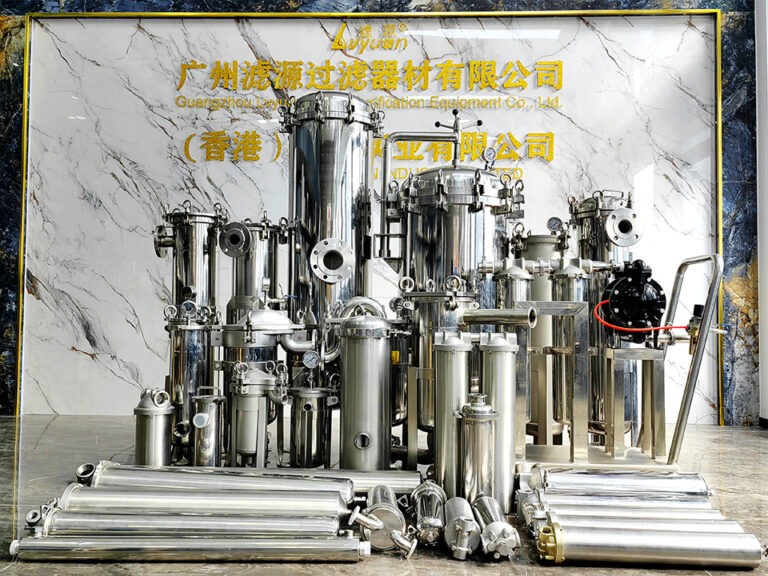
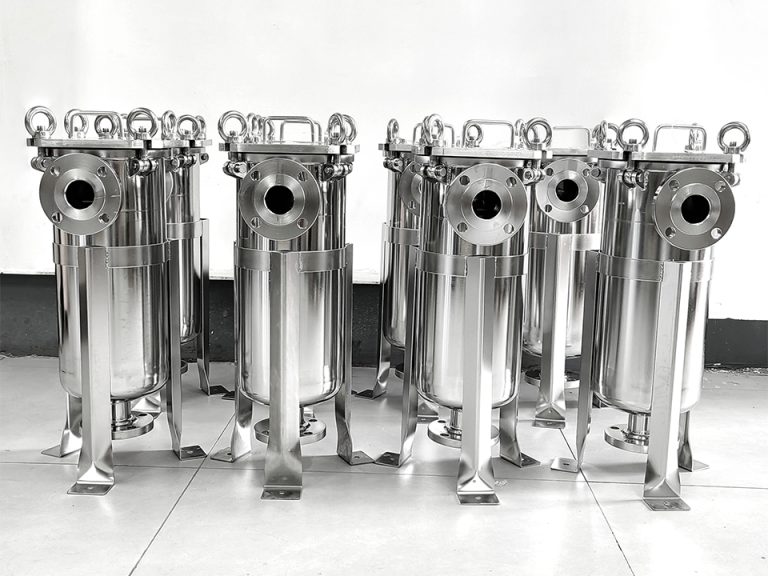
Guangzhou Lvyuan Water Purification Equipment Co., Ltd. is an industrial filter manufacturer founded in 2009 that designs and manufactures stainless steel filter housings, stainless steel sterile water tanks, filter elements, filter bags, ultra-polymer materials, and sintered filter products. Buyers choose Lvyuan for OEM/ODM support, ISO9001 quality control, and multi-country certifications.
Guangzhou Lvyuan Water Purification Equipment Co., Ltd.
Inspection Intervals for Pressure Vessel Filter Housings
In day-to-day service, the inspection points on a filter housing are the cover seal, bag or cartridge seating, gauges, and vent and drain valves. The pressure shell itself is examined far less often. Buyers still ask for a single interval, and no single number fits every housing. The right schedule depends on three inputs: the manufacturer’s operating manual, any pressure-equipment rules where the housing is installed, and how severe the duty is. This guide separates routine checks from formal pressure examinations, shows how different housing designs change the routine, and lists what to specify before purchase so that inspection stays practical for the plant that has to do it.
Who Sets the Inspection Interval for a Filter Housing?
No universal interval applies to every pressure vessel filter housing. Three sources set the schedule, and each governs a different part of the job:
The manufacturer’s manual governs consumable and sealing parts: bags, cartridges, O-rings, gaskets and closure hardware.
Pressure-equipment regulation or an adopted code governs formal examination of the pressure-retaining parts, where it applies.
The owner’s risk assessment governs everything in between, including how closely to watch corrosion, thermal cycling and pressure pulsation.
How Great Britain’s Pressure Systems Safety Regulations Apply
In Great Britain, the Pressure Systems Safety Regulations 2000 are the clearest example of how frequency is decided. Regulation 8 says the user of an installed system must have a written scheme for periodic examination by a competent person covering protective devices and pressure vessels where a defect may give rise to danger. The scheme must specify the nature and frequency of examination, and a competent person must review it at appropriate intervals. The regulation sets no fixed number of years for the vessel. A competent person decides, based on the actual duty.
The more useful point for filter buyers is scope. The regulations apply to systems containing a “relevant fluid”, which includes steam, and gases or liquids above 0.5 bar over atmospheric pressure that meet a vapour-pressure test. A stainless steel bag housing on cold process water at several bar does not meet that test, because the water’s vapour pressure stays well below the threshold. Steam does meet it, whatever the pressure. Hot liquid is the grey area. Water’s vapour pressure passes 0.5 bar gauge at roughly 111 °C (a figure calculated from steam tables, not stated in the regulations), so a housing rated to 120 °C and run near that temperature on hot water could fall inside the definition. Solvents and other fluids need their own check.
This text is the regulations as originally made, and they apply only in Great Britain. Confirm the current version and the rules in your destination market with a competent person before relying on this summary.
Where API 510 Fits
API 510 inspection intervals are a common benchmark in process plants. Summaries of the code describe default maximums of 10 years for internal inspection and 5 years for external inspection of vessels, with a risk-based inspection route as an alternative. The code is written for refining and chemical-processing owner-users, so a filter housing falls under it only if the site’s inspection program or local rules bring it in. For most filter housings, treat API 510 as a reference for how formal vessel inspection is structured, not as a requirement.
The Four Inspection Layers
Separating the layers prevents two common errors: treating a bag change as a pressure examination, and treating a pressure examination as a substitute for routine checks.
Layer
Typical trigger
What is checked
Who normally does it
Operating checks
Per shift or daily round, plus continuous differential pressure (ΔP) reading
Inlet and outlet gauge readings, weeping at the cover and ports, vent and drain valve condition
Operator
Service-point inspection
Every bag or cartridge change
Cover seal or O-ring, closure hardware, support basket, sealing faces, bag or cartridge seating
Maintenance technician
Detailed external examination
Set by site risk assessment, often aligned with planned shutdowns
Frequency set by a competent person or applicable code
Items listed in the written scheme or inspection plan
Competent person or authorized inspector
The triggers above are starting points for a risk assessment. They are not code requirements, and a regulated system may need more.
What to Check at Every Bag or Cartridge Change
The change-out is the cheapest inspection opportunity, because the housing is already depressurized and open. Eaton’s bag filter housing manual says to release pressure through the pressure relief valve before removing a bag, and to carry out housing maintenance during regular bag exchanges. Use the same discipline for any brand.
At each change, check:
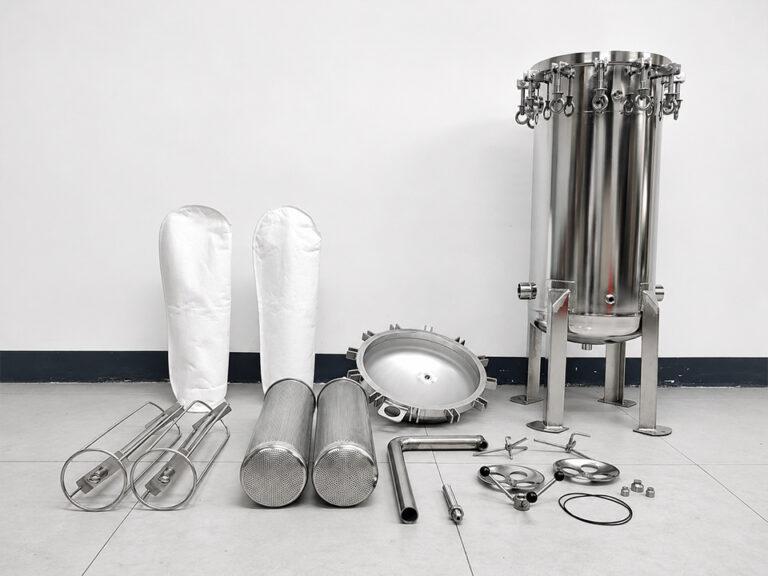
Cover seal or O-ring. Look for flattening, cracks, swelling, nicks or embedded debris. A seal that has swollen after chemical exposure will not reseat correctly even if it looks intact.
Closure hardware. Check eye-bolt pins and threads, clamp-ring condition and nuts for wear, galling or bending.
Sealing faces and gasket groove. Look for scratches, weld spatter, pitting or deposits where the seal sits.
Support basket. Check for dents, torn perforations or distortion. The basket carries the differential-pressure load, so a deformed basket can let a bag fail or bypass.
Bag collar or cartridge seating. Confirm the bag ring or cartridge end seats evenly, because bypass is invisible from the outside.
Gauges, vent and drain. Confirm the gauge returns to zero and the valves operate freely.
Using Differential Pressure as the Leading Indicator
ΔP tells you more about the filter than a calendar does. Eaton recommends changing the bag at a differential pressure of 1.5 bar for its housings. Other housings and media may differ, so use the figure in the manual for your equipment. Record the clean ΔP at commissioning as a baseline. A slow rise points to loading. A sudden fall after a steady rise suggests a ruptured bag or bypass and warrants an immediate check, not a wait for the next scheduled stop. This only works if both gauges are accurate, so include gauge calibration in the detailed examination.
How Housing Design Changes the Inspection Routine
Closure style, size and temperature rating decide where wear concentrates. The figures below come from Lvyuan’s product pages and should be confirmed for the exact model and order configuration.
Housing type
Closure and size
Listed limits (product page)
Where inspection effort concentrates
Tri-clamp single bag
Quick-opening clamp, #1 or #2 bag
10 bar, 95 °C
Tri-clamp gasket seating, clamp hardware, because it is opened often
Domed-cover single bag
Swing eye-bolts, #1 to #5 bags
10 bar, 120 °C
Eye-bolt pins and threads, cover gasket, basket seat
Side-entry single bag
Swing eye-bolts, side inlet, bottom outlet
10 bar, 120 °C
Bag seating on side-entry flow, cover seal
Top-entry single bag
Swing eye-bolt, flanged top inlet, gauge and vent
10 bar, 120 °C
Bag seating, gauge and vent function
Multi-bag
Swing eye-bolt, 3 to 12 bags, flanged
10 bar, 50–300 m³/h
Lid and lifting device, many bag seals, vent and drain valves
20-inch Big Blue style
Quick clamp ring, threaded ports
Pressure and temperature not listed
O-ring, clamp ring, thread condition
Process steam
Bolted cover, DN50–DN150 flanges
10 bar, 150 °C
Flange gaskets, element ΔP, condensate drain
Single-Bag Designs
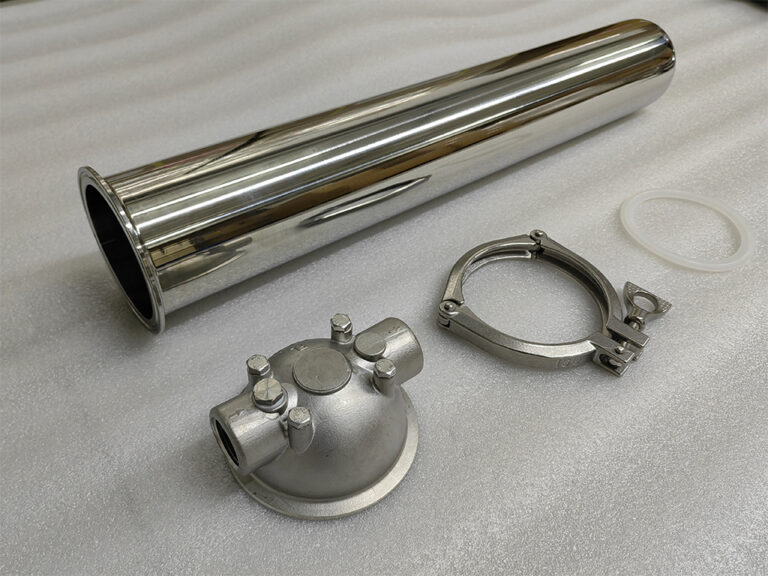
A sanitary tri-clamp bag filter housing opens quickly, which suits frequent bag changes. The same feature means more opening cycles, so the gasket and clamp see more wear than on a bolted vessel. Its listed maximum temperature is 95 °C, which stays below the hot-water threshold discussed earlier.
For higher-temperature duty, a domed-cover single bag housing and a side-entry stainless steel bag housing use swing eye-bolt closures and list up to 120 °C. At the top of that range, the regulatory scope question above becomes real, so confirm the process fluid and temperature early. A top-entry stainless steel bag housing feeds liquid into the bag from above and includes a pressure gauge and vent connection on the product page. The gauge and vent are inspection points that belong on the checklist.
Multi-Bag and Cartridge Housings
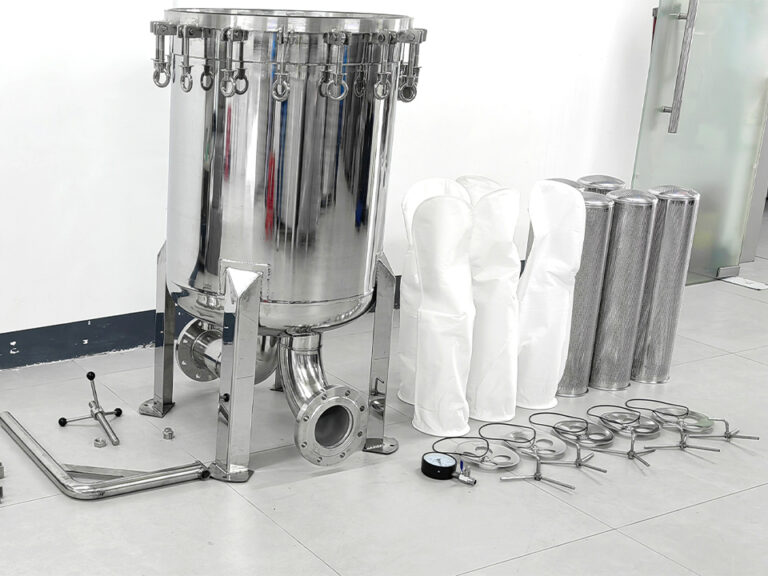
A stainless steel multi-bag filter housing multiplies the inspection points. With up to 12 baskets and bag seals, one poorly seated bag may pass unfiltered liquid while the ΔP still looks normal, because the other bags carry the flow. Sampling downstream or checking each bag seat at change-out is more reliable than gauge readings alone. The heavy lid also makes a lifting device and hinge condition part of the safety check.
Operators using cartridge formats, such as a 20-inch Big Blue stainless steel cartridge housing, should focus on the O-ring and clamp ring. The product page lists threaded ports and a clamp-ring closure but no pressure or temperature rating, so ask the supplier for rated pressure and temperature in writing before specifying it for a duty that needs a formal inspection plan.
Steam Filter Housings Need a Tighter Plan
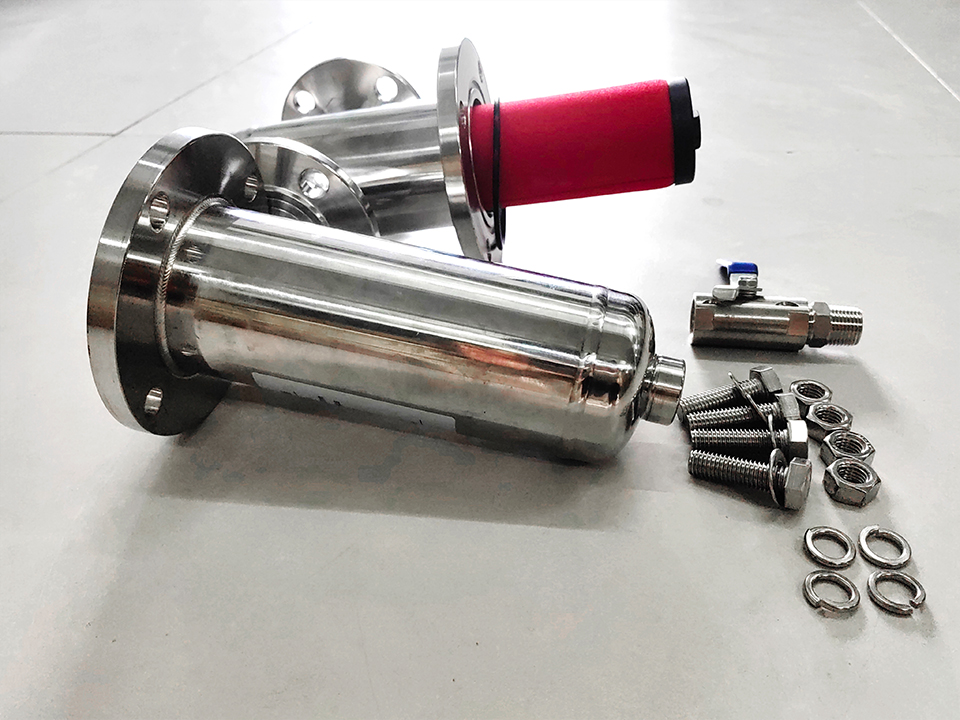
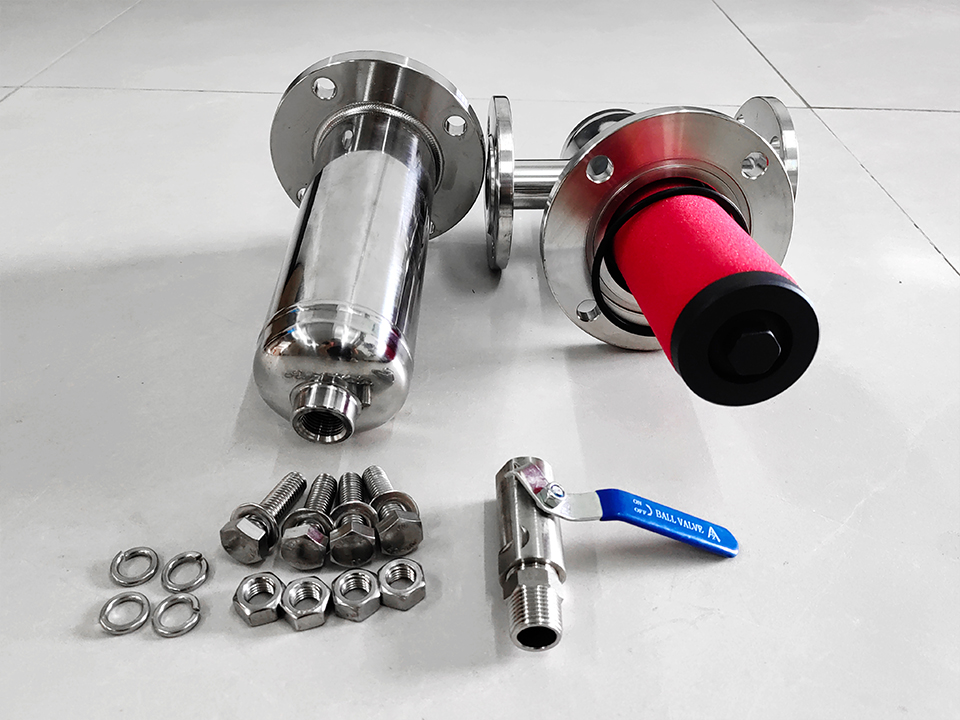
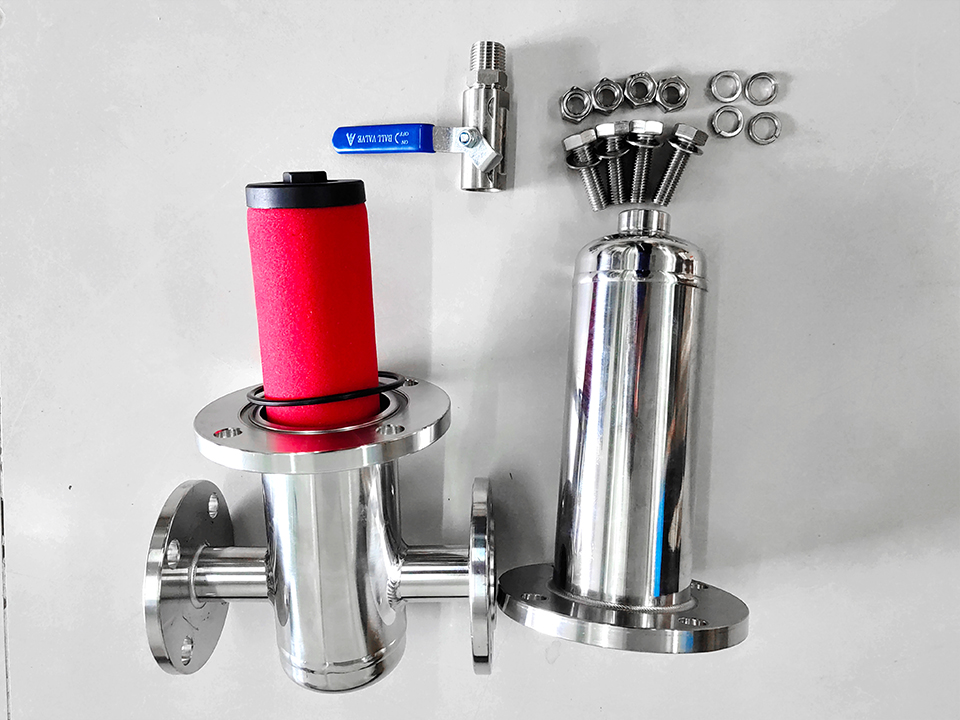
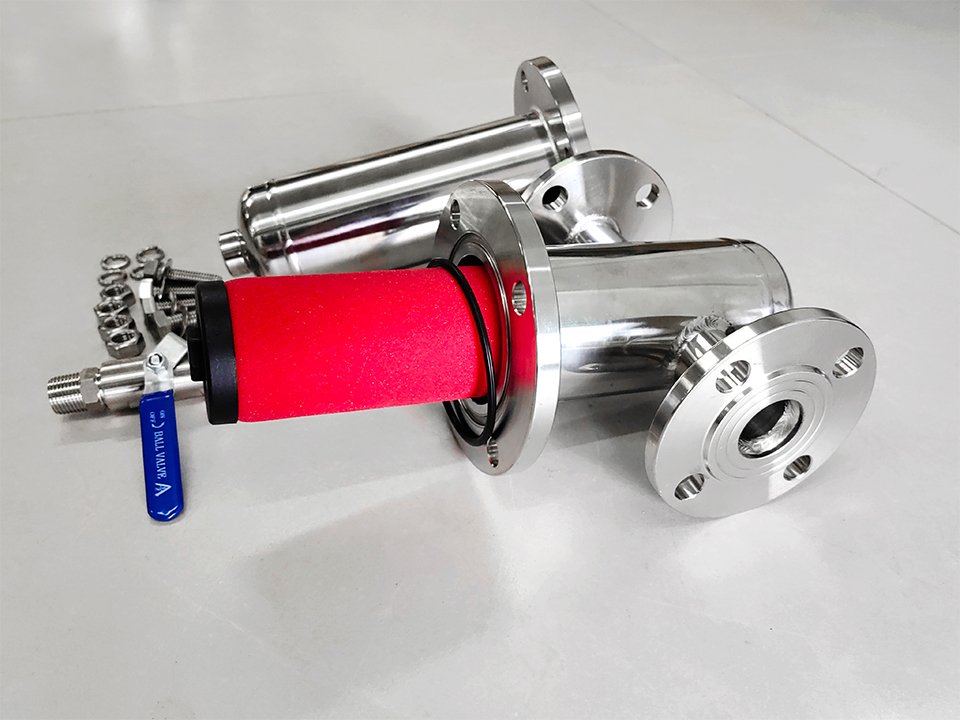
Steam is named as a relevant fluid in the Great Britain regulations regardless of pressure, so a process steam filter is the housing type most likely to fall inside a formal examination scheme. An OEM stainless steel steam filter housing is listed with a bolted cover, DN50–DN150 flanged connections, up to 10 bar and 150 °C, with a pressure gauge, vent and drain ports. In steam service, check these points:
Flange bolting and gaskets. Thermal cycling relaxes bolted joints, so re-check them after start-up cycles and during shutdowns.
Element condition and ΔP. Sintered or pleated metal elements are cleaned or replaced on ΔP and on the steam-quality requirement.
Condensate drain. A blocked drain lets condensate pool, which can damage elements and distort ΔP readings.
Pressure relief and gauges. Under the Great Britain regulations, protective devices fall within the written scheme, so confirm which devices are covered.
Why a Calendar-Only Schedule Misleads
Two assumptions deserve qualification. The first is that a fixed calendar interval is enough. The second is that a housing rated to 10 bar is low risk, simply because 10 bar sounds modest. Neither holds once duty severity is considered.
These factors move a housing from a relaxed interval to a tight one:
Pressure cycling and pulsation. Reciprocating pumps and frequent start-stop operation fatigue seals, bags and welds more than steady flow does.
Temperature and thermal cycling. Repeated heating and cooling changes seal compression and can loosen bolted joints.
Fluid chemistry. Chlorides, acids and cleaning chemicals can attack stainless steel, and 304 and 316L differ in tolerance. Seal elastomers swell or harden in some solvents.
Consequence of failure. A leak of hot or hazardous fluid, or bag bypass into a pharmaceutical or food product, justifies more frequent checks than coarse prefiltration of utility water.
There is also a trade-off in the other direction. Every opening is a chance to pinch a seal or strip a thread. Opening a housing purely to inspect it, when ΔP and leak checks are normal, can add risk without adding information. For most single-bag housings the sensible compromise is to inspect internals at change-out and keep the detailed shell examination on a risk-based schedule.
An illustrative example, not a customer case: Two identical stainless steel single-bag housings are installed. One protects an RO prefilter on cool water at steady flow. The other filters a hot cleaning solution at near its temperature limit, fed by a pulsing pump. Same part number, very different intervals. The second needs more frequent seal checks, closer flange and bolt checks, and an early decision on whether a pressure-equipment scheme applies.
What Should Buyers Specify Before Requesting a Quote?
Inspection cost is partly decided at purchase. Give the supplier the following so the housing can be quoted with inspection access and documentation in mind:
Specification
Why it matters for inspection
Process fluid, concentration and cleaning chemicals
Determines material grade (304 or 316L) and seal elastomer, and sets corrosion risk
Operating and maximum pressure and temperature
Decides whether a pressure-equipment regime applies, and sets the design rating needed
Pressure cycling or pump type
Affects seal life, bag support needs and inspection frequency
Bag or cartridge size, micron rating and flow
Sets ΔP baseline and change-out frequency
Closure type and opening frequency
Frequent changes favour quick-opening closures, with more seal wear
Connections, gauges, vent and drain
Defines the operating-check points
Destination market and required documents
Determines pressure-equipment marking, test certificates and material certificates needed on arrival
Spare seal and gasket kit
Prevents a stopped line waiting for a seal
Also ask the supplier to confirm in writing the design pressure and temperature, available test and material documentation, and the maintenance instructions supplied with the housing. Those documents form the basis of any written scheme or site inspection plan, and they are far easier to collect at order than after installation.
Frequently Asked Questions
How often should a pressure vessel filter housing be inspected?
There is no single interval. Check gauges and leaks routinely, inspect seals and closures at every bag or cartridge change, and set shell examinations by risk assessment. Where regulation or a code applies, a competent person or inspector sets the formal frequency.
Does a bag filter housing need a statutory pressure examination?
It depends on location, fluid and temperature. In Great Britain, cold liquid service typically falls outside the “relevant fluid” definition, while steam falls inside it. Other countries have different rules, so confirm locally with a competent person.
When should I change a filter bag based on differential pressure?
Follow the manual for your housing and media. Eaton, for example, recommends changing bags at 1.5 bar differential. Record the clean ΔP at commissioning, and investigate any sudden pressure drop as a possible bag failure or bypass.
How often should housing O-rings and gaskets be replaced?
No universal interval exists. Inspect at every opening and replace any seal that is flattened, cracked, swollen, nicked or hardened. Seals exposed to heat, solvents or frequent cycling usually need replacing more often than those on cool water.
What should I do before opening a filter housing?
Stop flow, release pressure through the vent or relief valve, drain the vessel, and let hot fluid cool to a safe temperature. Eaton’s manual specifically calls for releasing pressure before removing a bag. Follow the site lockout procedure.
Do steam filter housings need a different inspection plan?
Yes. Steam is a relevant fluid under Great Britain’s regulations, and thermal cycling affects bolted joints and gaskets. Plan for flange bolt checks, element ΔP monitoring, condensate drain checks and examination of protective devices by a competent person.