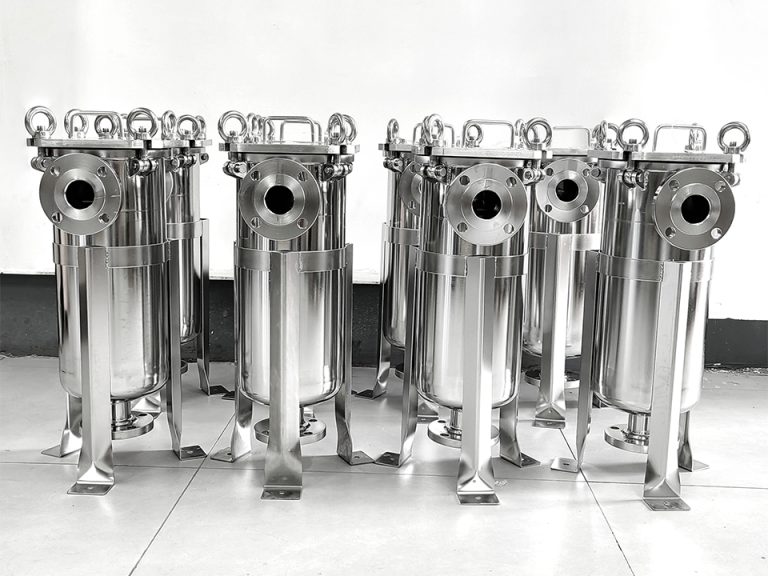
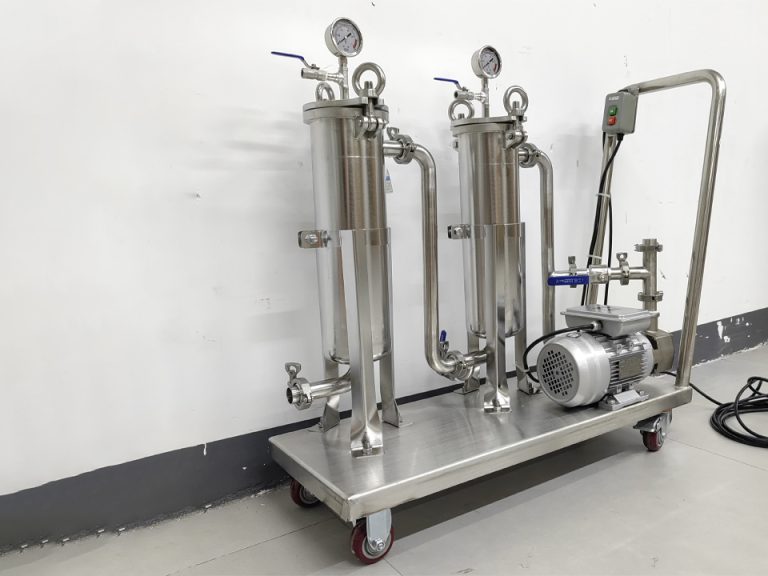
Guangzhou Lvyuan Water Purification Equipment Co., Ltd. is an industrial filter manufacturer founded in 2009 that designs and manufactures stainless steel filter housings, stainless steel sterile water tanks, filter elements, filter bags, ultra-polymer materials, and sintered filter products. Buyers choose Lvyuan for OEM/ODM support, ISO9001 quality control, and multi-country certifications.
Guangzhou Lvyuan Water Purification Equipment Co., Ltd.
Long-Term Storage Rules for Filter Housings and Cartridges
A filter that sits in a warehouse for two years is not automatically a filter you can install. Housing seals can harden or crack, packaging can fail, residue can dry inside pores, and a threaded end can pick up damage that only shows up as a leak at commissioning. For buyers who hold spare parts, build equipment to order or stock for distribution, storage is part of the specification, not an afterthought. This guide covers what degrades during storage, how the rules change by housing, seal and media type, and which packaging and inspection details to agree with a supplier before you buy stock.
What Actually Degrades During Long-Term Storage?
In most stored filtration kits, the seals and packaging fail before the filter media does. Elastomer O-rings and gaskets age, packaging protects against contamination only while it stays intact, and polymer parts react to heat and light. Rigid sintered metal and plastic elements are chemically stable, but they can be damaged mechanically or loaded with contaminants.
Five risks account for most storage losses:
Seal aging. Rubber ages even in storage, depending on the polymer and the environment.
Contamination. Dust, oil vapor, solvent fumes and odors reach unprotected media and sealing faces.
Moisture and corrosion. Condensation can cause rust spotting on carbon-steel fittings, staining on stainless parts, and microbial growth on wetted or damp media.
Heat and light. Polymer elements and housings with polymer components can distort or embrittle under sustained heat or UV.
Mechanical damage. Crushed cartons, chipped plate edges, damaged threads and scratched sealing faces are common causes of installation failures.
Storing Seals: The Weakest Link in a Housing Kit
A stainless steel housing body can wait for years. Its O-ring or gasket cannot wait as long, so the seal shelf life usually sets the usable shelf life of the whole kit.
Temperature between +5 °C and +25 °C, with +25 °C not exceeded.
Relative humidity below 65%.
No heat sources or water condensation.
Protection from UV and ozone, preferably in airtight, light-tight packaging.
A check of the storage area for chemicals that could attack the rubber.
The same source lists initial storage periods by elastomer group before a technical inspection is needed:
Elastomer group
Example materials (per source)
Initial storage period
Possible extension after inspection
Group A
NR, SBR, BR
5 years
2 years
Group B
NBR, CR, IIR
7 years
3 years
Group C
EPDM, FKM, silicone
10 years
5 years
These are general elastomer storage periods, not guaranteed shelf lives for any specific gasket. The source says storage can be shorter if conditions are poor, and it recommends inspecting parts for cracks, cuts and discoloration before returning them to service. Treat the table as a planning reference. Your supplier’s compound-specific guidance takes precedence.
For purchasing, this has three consequences:
Match seal material to storage plan, not only to process fluid. If a spare kit may sit for five or more years, a Group C material such as EPDM or FKM gives more margin than a Group A rubber. Chemical compatibility with the process fluid still has to be confirmed first.
Keep seals in their own sealed bags. Do not leave them loose in a housing or in a box with metal parts and lubricants.
Date-code them. If gaskets are not date-marked, you cannot apply any storage-period rule.
Rules for Storing Stainless Steel Filter Housings
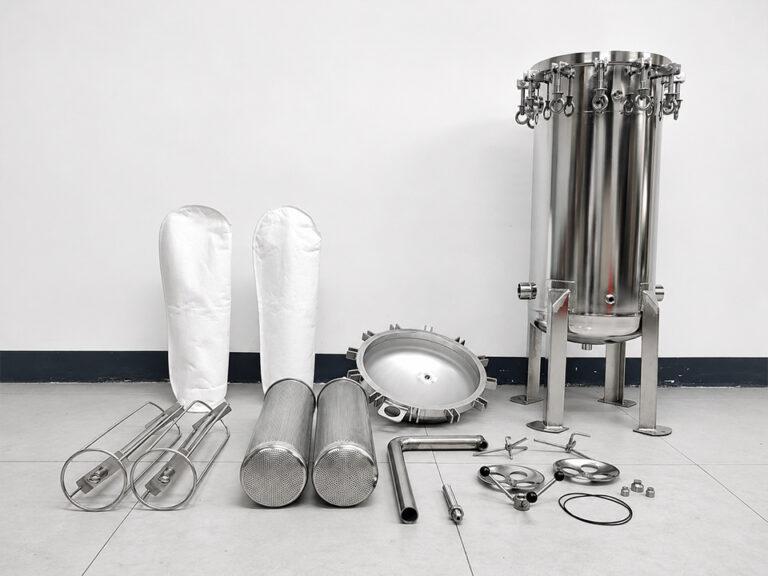
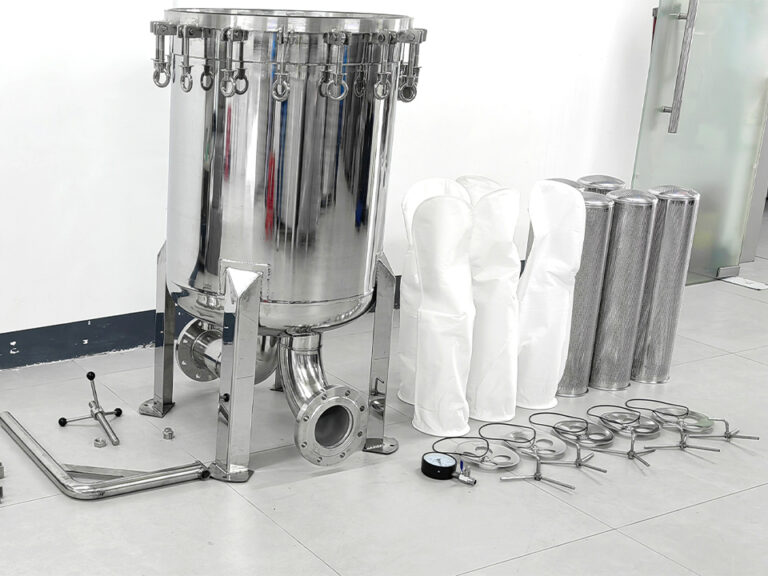
Housings are robust, but the sealing faces, threads, clamps and ports are not. The following practices come from general engineering handling logic, not a specific standard, so confirm them against your housing maker’s manual.
Drain, rinse and dry before storage. Residual process liquid in dead zones, such as under the lid, in drain ports and around vent connections, is the main cause of staining and odor in stored housings. If the housing was used with chloride-bearing fluids, rinse thoroughly and dry completely, because chloride residues sitting in crevices can attack stainless steel.
Plug and protect openings. Fit caps or plugs on inlets, outlets, vent and drain ports, and keep protective covers on machined sealing faces. Dust and scratches on a sealing face often cause leaks that get blamed on the gasket.
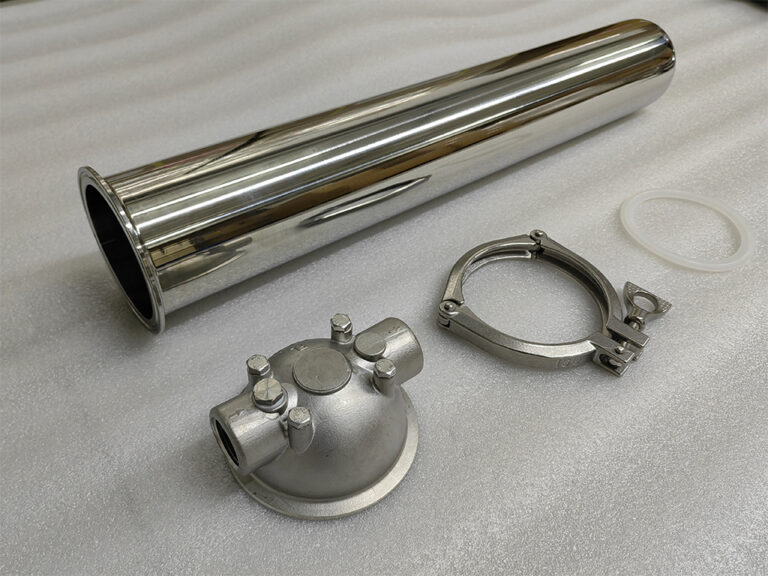
Store lids and seals unclamped. Do not leave a closed housing with its lid torqued and the gasket compressed for years. Elastomers held under load for long periods can take a compression set. Store the gasket separately, flat and unstressed.
Keep housings off the floor and apart from carbon steel. Rust particles from carbon-steel racks or grinding dust can leave surface contamination on stainless steel. Use clean, non-ferrous or padded supports.
Protect accessories. Pressure gauges, sight glasses, valves and clamps should be packed and labeled with the housing, not stored in a separate bin where they get lost.
Storing Cartridges: Why the Right Method Depends on Media and Status
Many storage guides say to keep everything dry, sealed and cool. That is correct for new, unopened cartridges, but it fails as a universal rule.
New, unused cartridges should stay in their original sealed packaging in a cool, dry area away from sunlight. One consumer filter maker, for example, specifies 4–40 °C and an original sealed package for its unopened cartridges. That range applies to that product only. Industrial cartridges have their own limits, and a cartridge with a printed date code should be stored in date order.
Used cartridges kept for reuse can follow different rules. A filtration supplier’s storage protocol for cartridge filters says its cartridge filters should be stored wet between uses, and that some units can be kept in the housing under nitrogen or CO₂ pressure. It also advises removing O-rings when the filters are stored in ethanol or acids. That guidance comes from beverage filtration and applies to the cartridge types that supplier describes. It shows that the right method depends on the media, the process and how long the gap is.
This is the main assumption to qualify. “Dry, sealed and cool” is the right default for new stock. For used elements, “dry and clean” or “kept wet under a protective atmosphere” can each be correct, depending on the media and what you are trying to prevent. A used element that dries with product residue in its pores may be harder to clean later. A damp element in a closed housing may grow microbes. Decide per application, and write the rule into the maintenance procedure.
Storage Rules by Element Type
Sintered and mesh elements are chemically robust but mechanically and chemically specific. The table summarizes the main storage risks. These are qualitative guidelines and not tested limits for any particular product. Always confirm limits with the manufacturer.
Element type
Main storage risk
Practical rule
Confirm with supplier
Sintered stainless steel or nickel alloy
Residue drying in pores; chloride or salt contamination; threaded-end damage
Clean and dry used elements; cap ends; keep in sealed sleeves
Cleaning method, passivation state
Perforated mesh cartridge
Bent core or flange; mesh damage
Store upright or supported along the length; no stacking weight
Flange or end-cap protection
Sintered titanium
Thread and end damage; contamination
Protect threads; keep in clean packaging
Thread type; reuse after cleaning
Sintered bronze
Surface tarnish in humid or sulfur-bearing air
Sealed, dry storage; consider desiccant
Whether oxidation matters for your use
Sintered PE / UHMW-PE
UV, sustained heat, deformation, dust pickup
Opaque or boxed storage, shaded, below the element’s thermal limit
UV stabilization, thermal limit
Sintered PTFE
Contamination of porous surface; mechanical damage
Keep clean and sealed; avoid solvents and oils nearby
Packaging and cleanliness grade
Flat plates (metal or plastic)
Edge chipping; warping under uneven load
Store flat with separators; no point loads
Thickness and flatness tolerance
Sintered metal elements
Metal elements tolerate longer storage than polymer ones, but they should not be stored dirty. Stainless steel sintered powder filter cartridges have a rigid porous body with fine pore structure. Process residue left to dry inside that structure can reduce permeability or make later cleaning harder. Clean used elements first, using the cleaning method suited to the contaminant, and then dry them fully.
Sintered titanium filter cartridges are listed with threaded connections in sizes from M20 to M32. Thread damage is a more likely storage failure than corrosion, so fit protective caps and keep each element in its own sleeve. For stainless steel perforated mesh filter cartridges, the perforated support core and mesh combination can be dented or distorted by stacking weight, so support them along the length and avoid loading cartons on top of them.
Porous sintered bronze filter discs are a copper-tin alloy. Copper alloys can tarnish in humid or sulfur-bearing air, so keep them in sealed bags, ideally with desiccant. Whether surface oxidation affects your application, such as pneumatic flow restriction versus fuel filtration, is a question for the application engineer. Custom sintered metal filter plates can be large and irregularly shaped. Store them flat on separators, protect the edges, and avoid unsupported spans.
Sintered plastic elements
Polymer elements need protection from heat and light. A peer-reviewed study on temperature and light intensity effects on HDPE photodegradation quantified how UV dose and temperature drive property loss in HDPE up to embrittlement. The study tested solid HDPE and did not test porous filter elements, so treat it as a directional reference. Whether a given sintered PE element contains UV stabilizer is something to ask the supplier, not something to assume.
That makes opaque or boxed storage the safer default for UHMW-PE sintered porous filter cartridge tubes and sintered PE porous filter plates. Thermal limits also matter in storage. The sintered HDPE porous filter tube page lists operating conditions below 80 °C. A storage temperature limit is a separate figure that your supplier should confirm. Even so, warehouse spaces, trucks and sealed shipping containers can run much hotter than ambient air in summer, and any peak that approaches the element’s thermal rating should be treated as a risk.
Sintered PTFE porous filter cartridges have a much wider operating range (the product page lists -190 °C to 260 °C), so thermal damage in storage is a lesser concern. The main risk is contamination of the porous surface by oils, solvents and dust, so keep the packaging sealed.
For OEM spares, UHMW-PE vacuum feeder filter cartridges are supplied with threaded or molded end interfaces, so protect those interfaces from impact. Medical and hygiene-critical parts need stricter rules. A self-sealing suction canister filter works by shutting off airflow on liquid contact, so any moisture exposure in storage compromises the part. Cleanliness, packaging and any sterility requirements should be defined by the device manufacturer’s quality system, not left to general warehouse practice.
What to Do Before and During Storage
Before storing used equipment: isolate and depressurize the system, drain the housing, remove cartridges, and rinse. Decide whether each element will be stored wet or dry (see above). Remove seals and inspect them. If they are reusable, bag and label them. Tag each housing and cartridge with its service history.
For new stock: log the receipt date and lot or date code, store in original packaging, and rotate on a first-in, first-out basis.
During storage: a routine low-effort inspection is better than a calendar shelf life that nobody checks. Sample a few units at a set interval and look for cracked or sticky seals, discolored polymer, corrosion spots, damaged threads and packaging breaches.
Before installation: inspect the seal again, check sealing faces, confirm threads turn freely, and look at the media for discoloration or contamination. If a seal shows cracks, cuts or discoloration, replace it. Fitting a new seal costs very little compared with a leak or a contaminated batch.
Example: A Spare-Parts Order That Looked Fine on Paper
This is a hypothetical scenario, not a real customer case. A plant buys 40 spare cartridges and six housings for a line it will not commission for 18 months. The cartridges arrive in cartons, and the housings arrive with the gaskets already fitted and the lids closed. Everything is stored in a warm mezzanine near a motor room. At commissioning, several gaskets have flattened and one housing has a minor sealing-face scratch. The cartridges are fine, but the packaging has been crushed on the bottom layer. Every problem was avoidable with three RFQ lines: separate packed seals, individually sealed cartridges with a stacking limit, and a protected sealing face.
What Should Buyers Specify Before Requesting a Quote for Stocked Filtration Parts?
Include these items in the RFQ when the parts will be held for a long period:
Planned storage duration and environment. State how long the parts will be held and whether the site is air-conditioned, humid, coastal or outdoors.
Seal material and date marking. Name the elastomer, or ask for the supplier’s recommendation, and request lot or date coding.
Packaging for each item. Ask for individual sealed bags or sleeves, end caps on threaded interfaces, and divided cartons for plates and tubes.
Palletizing and stacking limits. Request a maximum stacking height and carton labeling.
Cleanliness and documentation requirements. For medical, food or high-purity uses, state them up front.
Supplier storage guidance. Ask for written storage temperature, humidity, light and maximum storage period for each material, and ask what inspection the supplier recommends before use. Some suppliers may only provide operating ratings, so ask early.
Sample retain. Keep one retained unit from the lot to compare against stored stock later.
Frequently Asked Questions
How long can filter cartridges be stored? There is no universal period. Duration depends on media, packaging, storage conditions and the manufacturer’s guidance. Rigid sintered elements usually last longer than fibrous or seal-dependent parts. Check date codes, keep original packaging, and inspect before use.
Should used filter cartridges be stored wet or dry? It depends on the media and process. One filtration supplier’s protocol keeps its cartridges wet between uses, while many industrial sintered elements are cleaned and dried. Follow the manufacturer’s cleaning and storage procedure for the specific element.
Do O-rings in filter housings expire? Yes. Rubber ages even in storage. Sealing-industry guidance based on ISO 2230 gives initial storage periods of 5, 7 or 10 years depending on elastomer group, with inspection before use. Storage conditions can shorten those periods.
Can I store a cartridge inside its housing? Short term, sometimes, and some processes use this deliberately. For long-term storage it is riskier because compressed seals can set and trapped moisture can cause corrosion or microbial growth. Store housings drained, open or unclamped, with seals separate.
Is sintered metal filter storage different from polymer filter storage? Yes. Metal elements mainly need cleaning, drying, thread protection and corrosion control. Polymer elements also need protection from UV and heat, and from deformation. Both need contaminant-free packaging.
What temperature and humidity should filter parts be stored at? Elastomer guidance cites +5 °C to +25 °C and humidity below 65% without condensation. For cartridges and sintered elements, the safe range depends on the product, so ask the supplier for written storage limits.
What should I check before installing stored filters? Inspect seals for cracks, cuts and discoloration. Check sealing faces and threads for damage. Look at the media for contamination, discoloration or deformation. Verify date codes against your inventory rules, and replace any seal you doubt.