Guangzhou Lvyuan Water Purification Equipment Co., Ltd. is an industrial filter manufacturer founded in 2009 that designs and manufactures stainless steel filter housings, stainless steel sterile water tanks, filter elements, filter bags, ultra-polymer materials, and sintered filter products. Buyers choose Lvyuan for OEM/ODM support, ISO9001 quality control, and multi-country certifications.
Guangzhou Lvyuan Water Purification Equipment Co., Ltd.
Under-Sink RO OEM Customization Guide for Office Product Lines
Office water products are bought differently from household ones. One under-sink reverse osmosis (RO) unit may serve a whole pantry, and facility staff or a service contractor, rather than the owner, replace the filters. A brand may ship the same model to dozens of sites with different water quality. An OEM program for this market therefore has to address demand profile, serviceability, certification claims and water waste. Cosmetic changes such as the housing color or logo do not cover these. This guide covers which parts of an under-sink RO system can be customized, how to choose between tank and tankless designs, how to specify pre-filtration, which certification claims to settle early, and what to put in an RFQ.
How Does an Office Under-Sink RO System Differ from a Residential One?
An office under-sink RO system serves shared taps with irregular peak demand and is maintained by people who do not own it. These conditions should drive the specification more than the choice of housing or faucet style.
Four differences matter most to a product line:
Demand pattern. Use is concentrated around the morning, lunch and meetings, rather than spread evenly through the day.
Maintenance ownership. Filter changes depend on a facility team or service contract, so tool-free replacement, clear labeling and change indicators have real value.
Site variability. A multi-site rollout can face different feed-water pressure, hardness and chlorine levels. Pretreatment options therefore need to be configurable.
Documentation expectations. Corporate buyers often ask for performance data and certification evidence before approving a product.
Which Parts of an Under-Sink RO System Can Be Customized?
OEM customization typically covers architecture, membrane and flow control, cartridge stages, connectors, dispensing, monitoring and branding. The table below shows what each area affects and what to verify. It is a qualitative planning aid, not supplier-verified data. Available options depend on the manufacturer.
Customization area
Common OEM options
Why it matters in an office
Verify with the supplier
Architecture
Tank, tankless, with or without booster pump
Determines peak-demand behavior, footprint and power needs
Delivered flow at your real feed pressure and temperature
Membrane and flow control
Membrane size and rating, flow restrictor, flush behavior
Private label, manuals, performance data sheet, packaging
Supports distributor and end-user trust
Which claims are certified for the exact configuration
Tank or Tankless: Which Architecture Fits Office Demand?
Neither architecture wins by default. A tank buffers peak demand from a slow membrane, while a tankless design produces water on demand in a smaller footprint but depends on the membrane and pump being sized correctly.
Factor
Tank-based
Tankless
Peak-demand behavior
Delivers a stored volume quickly, then recovers slowly
Flow depends on membrane output and feed or pump pressure
Footprint
Needs space for the tank
More compact
Power requirement
Often none
Many designs use a booster pump, so power and noise need review
Standing water
Water sits in the tank between uses
Less stored water
Efficiency testing
May have both recovery and efficiency ratings
Has a recovery rating only
Typical risk
Tank pressure and stagnation issues
Undersized membrane or low feed pressure at the site
The efficiency point comes from the standard itself. The EPA WaterSense specification for point-of-use RO systems treats the recovery rating of a system without a storage tank as its efficiency rating. This keeps the comparison between architectures consistent.
Consider a hypothetical 40-person office with one pantry tap. Most draws happen in two or three windows a day. A tankless unit can suit this if the supplier shows flow at the building’s actual pressure, because a membrane rated at a lab pressure may deliver noticeably less on a weak supply line. A tank unit may be the safer choice where line pressure is low and no power is available at the cabinet. This is an illustrative example, not a customer case.
A rated daily output figure is only meaningful with its test conditions. Ask for the pressure, temperature and TDS at which it was determined. Compare that with your target sites before treating it as a capacity guarantee.
How Should You Specify Pre-Filtration and Cartridge Stages?
Pre-filtration protects the RO membrane from sediment and from chlorine or other oxidants that polyamide thin-film membranes generally do not tolerate well. It is the stage where OEM buyers have the most flexibility, and where a poor specification causes early membrane failure. Confirm chlorine tolerance limits in the membrane manufacturer’s datasheet.
Sediment stage
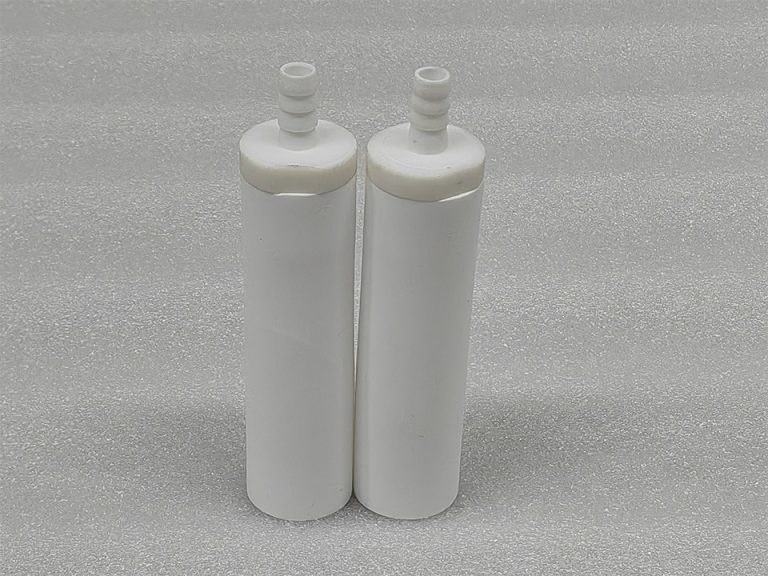
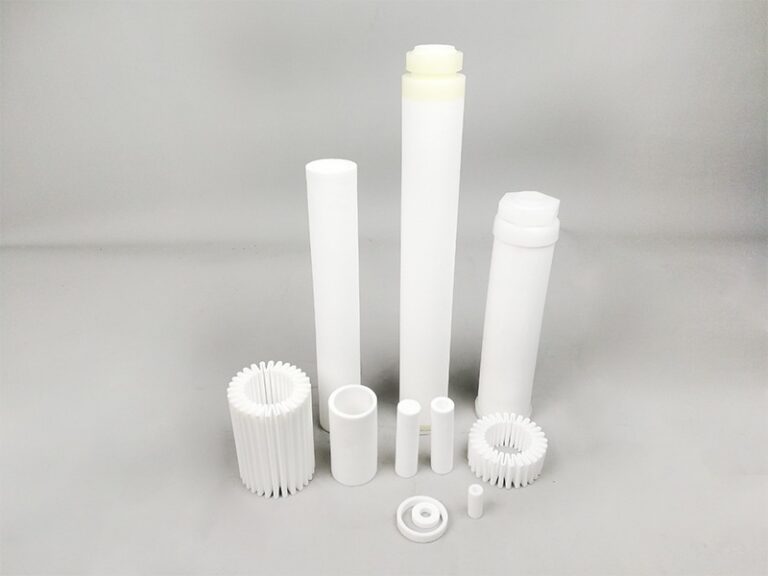
Polypropylene (PP) melt blown cartridges capture particles through the thickness of the media. The 20-inch PP melt blown cartridge with a 226/Fin end from Lvyuan lists RO pretreatment among its uses. Its product page lists micron ratings from 1 to 100 customized, with 1, 3, 5 and 10 micron highlighted. It also lists 222 and 226 end-cap styles and silicone, EPDM, NBR or Viton gasket options.
The variables to decide are:
Micron rating. A finer rating protects the downstream stages better. It also loads faster and raises pressure drop.
End-cap and gasket choice. These determine fit with your housing or filter head and chemical compatibility.
Change interval. A clogged sediment stage cuts feed pressure to the membrane, which matters most for tankless designs.
The listed formats are 20-inch and longer industrial lengths. Many under-sink systems use shorter or compact proprietary cartridges. These pages are therefore most relevant where your design adopts standard-format housings, or where you need a reference for the pretreatment stage. Ask any supplier whether the length you need is available.
Carbon stage
Activated carbon addresses chlorine and taste-related contaminants. Some designs combine stages in one element. The 30-inch PP cotton and activated carbon composite cartridge is one example. Its page describes an outer PP cotton layer for particulate and an inner carbon core for adsorption, with OEM configuration available.
The trade-off is that combining stages saves space and one connection point. It also couples the change interval of the two media, so the shorter-lived one sets the schedule. Separate stages let you tune each interval but add fittings and potential leak points. More stages are not automatically better.
Connector and housing interface
Connector geometry decides whether a replacement cartridge seals properly. The PP melt blown cartridge with a basket-style end connector shows how end-connector style is treated as a distinct specification, separate from the media. When you document your own cartridge, state the end-cap type, the O-ring material and whether third-party replacements are meant to fit. This is also a commercial decision, because a proprietary interface protects replacement-filter revenue.
Which Certification Claims Should You Settle Before Tooling?
Decide the target claims and markets before finalizing the design, because certification applies to a tested configuration. NSF/ANSI 58 is the American National Standard for point-of-use RO systems. NSF’s summary says its requirements address material safety, structural integrity, TDS reduction, efficiency rating, recovery rating, contaminant reduction performance and information for the end user. It lists TDS reduction as the required claim. Optional claims include lead, arsenic, fluoride, nitrate and cyst reduction.
For water efficiency, the voluntary EPA WaterSense specification sets a higher bar than the standard alone. Per Version 1.0 of the specification (November 2024), a labeled system must:
be certified to NSF/ANSI 58 and have an automatic shut-off device;
reach an efficiency rating of at least 30 percent;
reduce TDS by at least 75 percent; and
pass a membrane life test based on ASSE 1086.
The specification covers complete systems, not replacement filters or membranes sold as components. Check with your certification body whether swapping a membrane, restrictor or cartridge supplier after testing requires re-evaluation. WaterSense is a US program, so confirm separate requirements for other target markets rather than assuming the same claims transfer.
Is the Highest Recovery Rate Always the Best Setting?
No. Maximizing recovery to cut water waste can shorten membrane life on hard feed water, so the right recovery setting depends on site water quality.
The conventional assumption is that less reject water is simply better. Water waste is a real issue. The EPA’s WaterSense supporting statement says typical POU RO systems run at efficiencies between 10 and 20 percent, which implies roughly four to nine gallons sent to drain per gallon of treated water. Efficiency still has limits. A trade-press explanation of RO efficiency and recovery notes that once efficiency gets too high, hardness and scale can damage the membrane element.
For an office line this means:
A restrictor or flush setting suited to soft feed water may scale a membrane quickly on hard water.
Multi-site programs should either offer more than one restrictor and pretreatment option or define a feed-water range the product is approved for.
Warranty terms should reference that feed-water range.
What Drives Cost and MOQ in Customized Office RO Lines?
The main cost drivers are the number of customized components, tooling, certification testing, and cartridge or membrane choice. Typical drivers are:
Tooling. Custom housings, manifolds and covers need molds. Cosmetic changes to existing parts cost far less than new structural parts.
Certification testing. Each distinct configuration may need its own testing, so a wide range of variants raises cost.
Electronics. TDS displays, leak sensors and indicator modules add component and software validation cost.
Replacement-cartridge economics. Proprietary cartridge formats can raise unit cost but support recurring revenue.
Packaging and documentation. Private-label manuals, labels and performance data sheets are low in unit cost but need accurate claims.
I have not stated MOQ or lead-time figures because they vary by supplier and component. Ask each supplier to quote them separately for standard, semi-custom and fully custom configurations.
When Does an Office Outgrow Under-Sink RO?
Under-sink RO fits one or a few taps. If a floor or building needs larger volumes, buyers move to centralized treatment with larger pretreatment cartridges. These are typically industrial formats, such as a 40-inch 5 micron PP high flow melt blown cartridge, which its page positions for RO pretreatment and industrial prefiltration in compatible high-flow housings. A line covering both under-sink and central systems needs separate specifications and a clear boundary between them.
What Should Buyers Specify Before Requesting a Quote?
A complete RFQ lets suppliers quote the same scope and exposes hidden costs early. Include:
Target markets and claims. Which certifications and elective contaminant claims you need, and the regions where you will sell.
Architecture. Tank or tankless, with or without a pump, and the available power at the installation point.
Capacity and efficiency targets. Daily output with its test conditions, plus the recovery or efficiency rating you want to report.
Cartridge stages. Stage order, media type, micron rating, format, end-cap and O-ring materials, and replacement interval.
Dispensing and monitoring. Faucet type, indicators, leak detection and automatic shut-off.
Branding scope. Logo, color, manuals, packaging and data sheets.
Volume and timing. Pilot quantity, annual forecast, delivery schedule and sample requirements.
Quality documentation. Inspection plans, material declarations, and test reports you need with each batch.
Common mistakes to avoid include quoting on rated output without feed conditions, adding stages without checking pressure drop, and selecting a connector without confirming replacement availability. Another is promising contaminant-reduction claims that the tested configuration does not support.
Frequently Asked Questions
What can an OEM customize on an under-sink RO system? Typically architecture, membrane and flow control, cartridge stages, connectors, faucet or dispenser, monitoring features and branding. Structural parts need tooling, while labels and packaging are cheaper. Confirm which options affect certified performance.
Is a tankless under-sink RO system better for offices? Not always. Tankless units save space and avoid stored water, but they depend on membrane output and feed or pump pressure. A tank buffers peak demand. Compare delivered flow at the site’s real pressure.
Which certification matters most for under-sink RO? In the US, NSF/ANSI 58 is the main standard for point-of-use RO systems. WaterSense adds a voluntary efficiency label. Other markets have their own requirements, so confirm them per region before tooling.
What does the WaterSense RO label require? Version 1.0 requires NSF/ANSI 58 certification, an automatic shut-off, at least 30 percent efficiency, at least 75 percent TDS reduction and a membrane life test based on ASSE 1086.
Why does pre-filtration matter for RO membranes? Sediment stages protect the membrane from particles and carbon stages address chlorine, which polyamide membranes generally tolerate poorly. A clogged sediment cartridge also reduces feed pressure, which hurts tankless output. Verify limits with the membrane supplier.
What should be in an RFQ for a custom office RO line? Target markets and claims, architecture, feed-water data, capacity targets, cartridge stage details, monitoring features, branding scope, quantities, timing and quality documentation. Missing feed-water data is a common cause of inaccurate quotes.