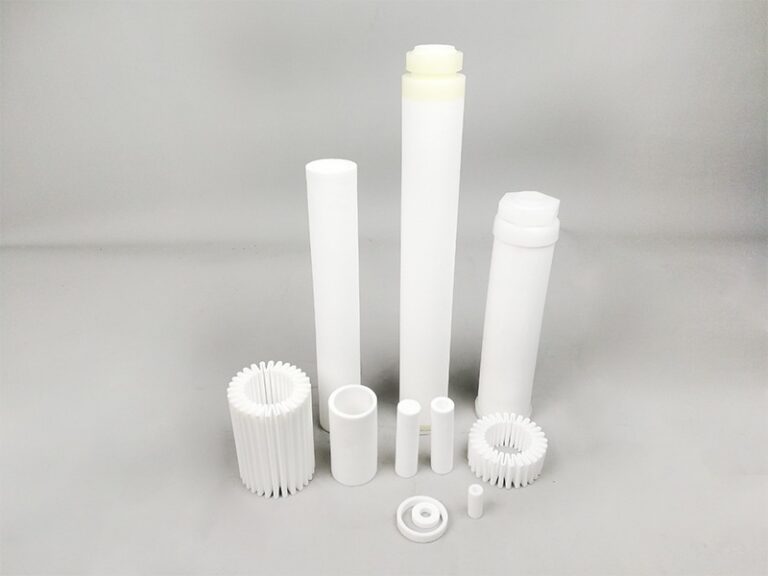
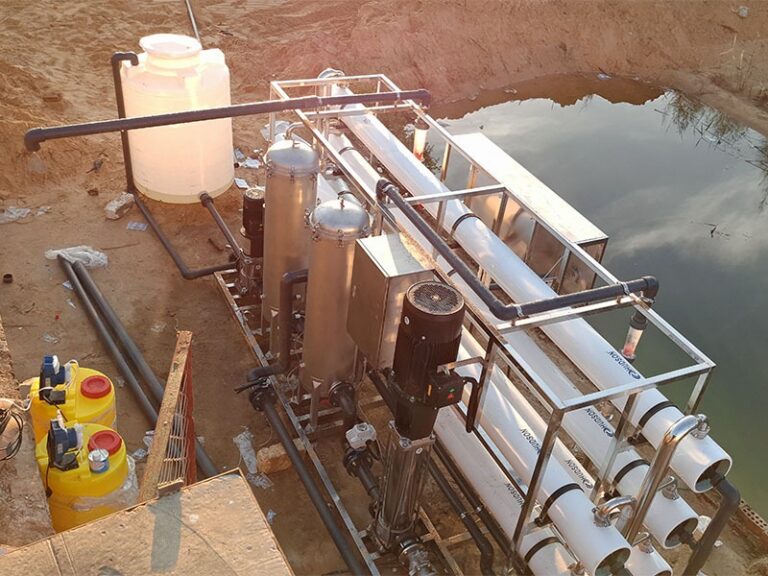
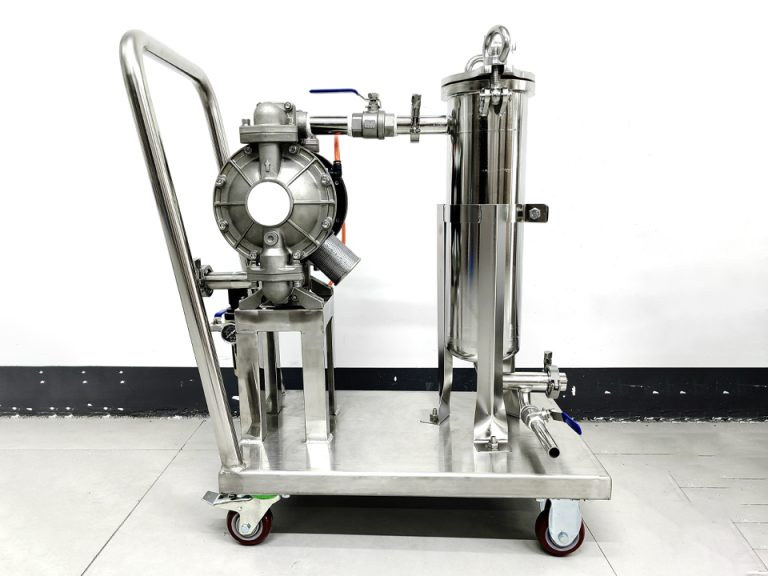
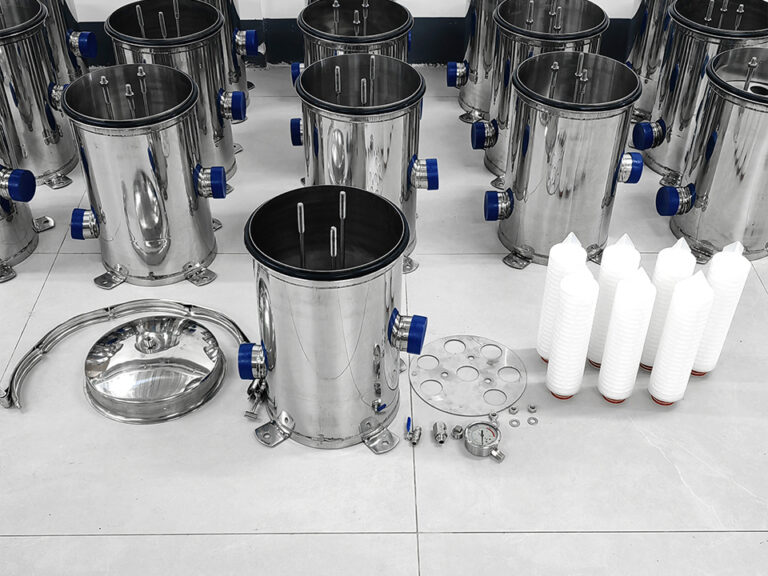
Guangzhou Lvyuan Water Purification Equipment Co., Ltd. is an industrial filter manufacturer founded in 2009 that designs and manufactures stainless steel filter housings, stainless steel sterile water tanks, filter elements, filter bags, ultra-polymer materials, and sintered filter products. Buyers choose Lvyuan for OEM/ODM support, ISO9001 quality control, and multi-country certifications.
Guangzhou Lvyuan Water Purification Equipment Co., Ltd.
Industrial cartridge filters remove suspended solids from liquids before they reach a membrane, pump, spray nozzle, heat exchanger or finished product. They look similar on a shelf, but a melt blown, string wound, pleated or sintered cartridge can behave very differently once it sees real process fluid. Two cartridges with the same micron rating may load, plug and bypass in completely different ways. For procurement and engineering teams, the practical question is rarely “which type is best?” It is “which construction, media, rating and end-cap style fit this liquid, this contaminant load and this housing?” This guide explains the main cartridge types, how they differ, and what to confirm with a supplier before ordering.
How Are Industrial Cartridge Filters Classified?
Industrial cartridge filters are classified by four independent attributes: construction (how the media is arranged), media material, retention rating, and housing interface (length, diameter, end caps and seals). Treating these as one decision is a common source of specification errors.
MMP Filter’s comparison of melt blown, wound and pleated cartridges makes a useful distinction: melt blown, wound and pleated are constructions, not materials. Polypropylene, polyester, nylon, cotton or glass fiber describes the media. The construction describes how that media is arranged, and the arrangement largely determines dirt-holding behavior, pressure drop and service life.
The most useful first split is depth versus surface filtration:
Depth filters (melt blown, string wound) trap particles throughout the thickness of the media.
Surface filters (most pleated cartridges) capture particles mainly at the media face, using folded media to create a large filtration area.
Hybrids (pleated-depth cartridges) combine a thick depth medium with pleated geometry.
Dutch Filtration’s selection guidance notes that surface filters are generally preferred when the particle size distribution is narrow. Depth filters have less filter area, which is why most cannot match pleated cartridges on flow rate.
Main Types of Industrial Cartridge Filters
Melt Blown Cartridges
Melt blown cartridges are made by extruding molten polymer, most commonly polypropylene, into fine fibers collected on a rotating mandrel. The result is a graded depth structure. They suit sediment removal, RO pre-filtration and general process liquids where particle sizes vary. Their advantages are low unit cost and good dirt-holding capacity on moderately contaminated feeds. Their limits are lower flow capacity per cartridge than a pleated element, and ratings that vary in meaning between suppliers.
String Wound Cartridges
String wound cartridges are yarn wound around a central core in a controlled pattern to form graded layers. Pall’s cartridge overview describes them as depth filters available in materials such as cotton, glass fiber, polypropylene, polyester, nylon and PPS. The core is usually 304 or 316 stainless steel. Yarn and core choice are the main specification levers: they set chemical compatibility, temperature capability and tolerance for heavier sediment or viscous liquids. String wound cartridges are generally treated as disposable prefilters.
Pleated Cartridges
Pleated cartridges fold sheet media around a support core. This packs far more filtration area into the same body diameter than a plain cylindrical wall would. Pall’s guidance states that pleated filters suit fluids with a narrower particle size distribution, and applications needing high flow rates with low pressure drop. This is the most varied family. The folded sheet can be a polypropylene or polyester nonwoven, or a membrane such as PES, PVDF, nylon or PTFE. Retention can be nominal or absolute, covered below.
Buyers who want to see how a pleated range is organized by media, length and end style can review Lvyuan’s pleated filter cartridges for industrial liquid filtration. The range includes polypropylene, PES, PVDF, PTFE, polyester, activated carbon fiber and high-flow formats. Customization to match existing housings is also offered.
Pleated-Depth and High-Flow Cartridges
Pall also describes a pleated-depth hybrid made from thick melt blown media with a tapered pore structure. It aims to combine the dirt-holding capacity of depth filters with the flow capability of pleated ones. Large-diameter high-flow cartridges extend the same logic: more area per housing slot, fewer cartridges, and a smaller housing for a given flow. The trade-off is that high-flow elements use different housings and seals. Moving to them is a system decision, not a cartridge swap.
Specialty Cartridges: Activated Carbon and Sintered Elements
Activated carbon cartridges address dissolved chlorine, organics, taste and odor, which particulate cartridges do not remove. Sintered metal or porous plastic elements are rigid, can often be cleaned or backwashed, and suit high-temperature, high-pressure or aggressive-media duties, usually at a higher initial cost. Buyers typically choose these for a specific process need, not as general-purpose prefilters.
Comparison of Common Cartridge Types
The table below is qualitative. It describes typical tendencies, not guaranteed performance, and individual products vary by media, rating and manufacturing quality.
Cartridge type
Filtration mode
Typically suits
Main strengths
Main limits
Verify with supplier
Melt blown
Depth
Sediment, RO prefiltration, mixed particle sizes
Low cost; good loading on moderate sediment
Lower flow per cartridge; rating basis varies
Nominal or absolute basis; media grade
String wound
Depth
Heavy sediment, chemicals, oils, viscous liquids
Wide yarn and core choices; economical
Fiber migration risk in some designs; usually disposable
Yarn, core material, temperature limit
Pleated (nonwoven media)
Surface or nominal depth
Higher-flow prefiltration, narrower particle range
Large area; lower pressure drop
Can blind quickly on dirty feeds
Media, rating basis, end style
Pleated (membrane media)
Surface
Fine or polishing filtration, chemically demanding liquids
Defined retention; many media options
Higher cost; needs a clean upstream stage
Membrane type, wetting behavior, test data
Pleated-depth hybrid
Depth plus pleat area
Wide particle range at higher flow
Strong capacity with good flow
Less common formats
Housing compatibility, rating data
Activated carbon
Adsorption plus particulate
Chlorine, VOC, odor, color
Removes dissolved species
Finite adsorption capacity
Carbon type, contact time, particulate load
Sintered metal or plastic
Rigid depth
Heat, pressure, aggressive media, reusable service
Cleanable; mechanically strong
Higher initial cost; cleaning validation needed
Pore grade, cleaning method, material grade
How to Choose Pleated Media: PP, PES, PVDF, PTFE and Nylon
Within the pleated family, media choice matters more than cartridge length. Compatibility depends on the actual liquid, temperature and cleaning chemicals. Treat the table below as a screening guide, not a compatibility chart.
Media
Common role
Points to confirm
Polypropylene (PP)
General aqueous prefiltration, RO and DI pretreatment, many compatible process liquids
Temperature, solvent and oxidizer exposure, rating basis
Polyester
Sediment and general liquid duty, with a different chemical profile from PP
Fluid chemistry, temperature, construction
PES membrane
Fine filtration where a hydrophilic membrane is wanted, such as water and food or beverage lines
Fine filtration of aggressive or chemically demanding liquids
Exact membrane grade, temperature and pressure limits
PTFE membrane
Very demanding chemical environments, gases or solvents
Hydrophobic behavior in aqueous service; wetting procedure
Nylon membrane
Selected process fluids requiring a hydrophilic membrane
Compatibility with acids, oxidizers and the process liquid
Lvyuan’s 30 inch polypropylene pleated filter cartridge is an example of the all-polypropylene format. It uses PP media, core, cage and end caps for water and compatible process liquids, with 222/Fin ends and optional 226/Fin. The product page notes that allowable differential pressure falls as temperature rises. A headline pressure figure should therefore be read as a design maximum, not a limit that holds across the whole temperature range. That is a sound reading habit for any cartridge datasheet.
For finer retention or more aggressive liquids, the 5 inch compact PVDF pleated cartridge pairs a PVDF membrane with polypropylene support parts in a short body. The pictured version uses a 222/Flat connection with dual O-rings. The page states that actual rating, temperature and pressure limits depend on the specific PVDF membrane and construction. Confirm those values against the chosen specification.
Buyers who have not settled on media can start from a configurable platform such as the 10 inch pleated cartridge with selectable PP, PES, PTFE, PVDF or nylon media. The page makes a point worth repeating: its broad micron range describes the product series, not a rating available with every media type.
What Is the Difference Between Nominal and Absolute Ratings?
A nominal rating means a cartridge removes a manufacturer-stated percentage of particles at or above a given size. An absolute rating implies a much higher and more tightly defined removal efficiency at that size. The Cary Company’s cartridge guide says nominal cartridges may capture only about 75% at the stated micron rating, while absolute-rated cartridges often reach 99% or more. It adds that many systems place nominal filters upstream with absolute filtration at the end.
These terms have no single universal definition. One supplier’s “5 micron nominal” may not match another’s. When comparing quotations, ask for:
The efficiency percentage at the stated micron size.
The test method and test fluid used to obtain it.
Whether the figure is a lot-release value or a typical value.
Without that data, two quotes at the same micron number are not like-for-like.
Is a Finer, Pleated Cartridge Always the Better Choice?
No. A pleated or finer-rated cartridge is not automatically the lower-cost option. Pleated media offers a large surface area, but it can blind quickly when the feed carries a wide spread of particle sizes or heavy loading. In that situation a depth cartridge, or a coarser pleated cartridge upstream of a finer one, often gives longer total service life at lower cost per cubic meter filtered.
The right comparison is cost per volume of liquid processed to the target cleanliness. That includes cartridge price, change-out frequency, labor, downtime and disposal, not just the unit price on the quotation. Staged filtration, with a coarse stage taking the bulk of the solids and a fine or absolute stage polishing, is frequently the more economical design. The caveat is that staging adds housings, pressure drop and complexity, so it pays off mainly where contaminant loading is significant.
Frequent plugging is also diagnostic. As Dutch Filtration points out, a filter that plugs earlier than expected can indicate an upstream process problem. Switching cartridge type may then mask the real cause.
Length, Diameter, End Caps and Seals
The cartridge must fit the housing before it can filter anything. Check these interface points against the existing housing or drawing:
Length: 5, 10, 20, 30 and 40 inch lengths are common. Multi-round housings take several cartridges, so confirm the element count.
Outside diameter:Pall lists a 30 inch Profile Star cartridge at 2.75 inch OD, while Lvyuan’s polyester pleated listings span 2.5 to 4.5 inch. Do not assume “standard” means identical.
End configuration: Double open end (DOE) cartridges seal at both ends and rely on gaskets or adapters. Single open end (SOE) cartridges seal at one end with O-rings and are closed at the other. 222 and 226 are common SOE styles, with fin or flat tips. Cary’s guide explains that fin end caps sit in the top retaining plate of multi-cartridge housings, and that a closed end cap lets a DOE cartridge work as an SOE.
Seal material: The gasket or O-ring elastomer must match the liquid, temperature and cleaning agents. An incompatible seal can fail before the media does and cause bypass.
Core and support: Polypropylene, stainless steel and other cores differ in temperature and pressure tolerance.
A sample cartridge, a drawing or the housing model number reduces the risk of ordering the wrong interface. This is why OEM and replacement programs often start from a sample.
Common Specification Mistakes
Choosing by micron number alone. Rating basis, contaminant loading, pressure drop and chemical compatibility all affect real performance.
Expecting particulate cartridges to remove dissolved contaminants. Pleated sediment cartridges do not remove dissolved chlorine, odor or chemicals unless they incorporate media designed to do so.
Ignoring temperature derating. Allowable differential pressure typically drops as operating temperature increases.
Using a general-purpose cartridge in regulated applications. Food, beverage, pharmaceutical and high-purity duties need documented materials, manufacturing controls and validation. Do not assume a generic industrial cartridge qualifies.
Skipping the upstream stage. A fine pleated cartridge placed directly behind a heavily loaded feed will blind quickly.
What Should Buyers Specify Before Requesting a Quote?
An accurate RFQ lets the supplier evaluate both the cartridge and the system, instead of matching a catalog size. Provide the following:
RFQ field
Why it matters
Liquid, viscosity and temperature
Determines media, seal and core compatibility and flow behavior
Contaminant type and approximate size range
Decides depth versus pleated and whether staging is needed
Target micron rating and rating basis
Defines retention and the efficiency data you should request
Flow rate, operating and differential pressure
Sets cartridge count, area and replacement trigger
Housing model, cartridge length and OD
Prevents fit problems
End caps and seal material
Prevents bypass and seal failure
Quantity, order pattern and target market
Affects pricing, MOQ discussions and documentation needs
Compliance or documentation requirements
Flags food-contact, pharmaceutical or other certification needs early
Sample or drawing of the existing cartridge
Speeds compatibility checks for replacement or OEM work
Ask the supplier to state MOQ, lead time, test data and available documentation in writing against your specification. Request a sample for validation before committing to volume.
Frequently Asked Questions
What are the main types of industrial cartridge filters?
The main types are melt blown, string wound, pleated, pleated-depth hybrid, activated carbon and sintered cartridges. Melt blown and string wound are depth filters, pleated cartridges are mainly surface filters, and activated carbon and sintered elements serve specific process needs.
What is the difference between depth and pleated cartridge filters?
Depth filters trap particles throughout the media thickness and handle mixed particle sizes well. Pleated filters fold the media to create a large surface area, giving lower pressure drop and higher flow. They suit narrower particle distributions and cleaner feeds.
Should I choose a nominal or absolute rated cartridge?
Choose absolute-rated cartridges where defined retention matters, such as final polishing or membrane protection. Nominal cartridges often serve as lower-cost prefilters. Request efficiency percentages and test methods, because definitions vary between suppliers.
What do 222 and 226 mean on a cartridge filter?
They are SOE end-cap connection styles, commonly understood to refer to the O-ring sizes used for sealing, and usually come with a fin or flat tip. They must match the housing adapter, so confirm with a drawing or sample.
Can pleated filter cartridges be cleaned and reused?
Some constructions can be cleaned, but many are disposable. Reusability depends on media, construction and contaminants. Cleaning can change retention or damage the cartridge, so confirm methods and limits with the supplier before planning around reuse.
What information does a supplier need to quote a cartridge filter?
At minimum: the liquid, contaminant, target micron rating, flow rate, pressure, temperature, cartridge length and OD, end caps, seal material and quantity. A sample cartridge or drawing lets the supplier check compatibility with the housing.
Does a pleated cartridge remove chlorine or dissolved chemicals?
Not unless it includes media designed for adsorption, such as activated carbon fiber. Standard polypropylene or polyester pleated cartridges retain suspended particles and do not remove dissolved chlorine, odor or chemicals.