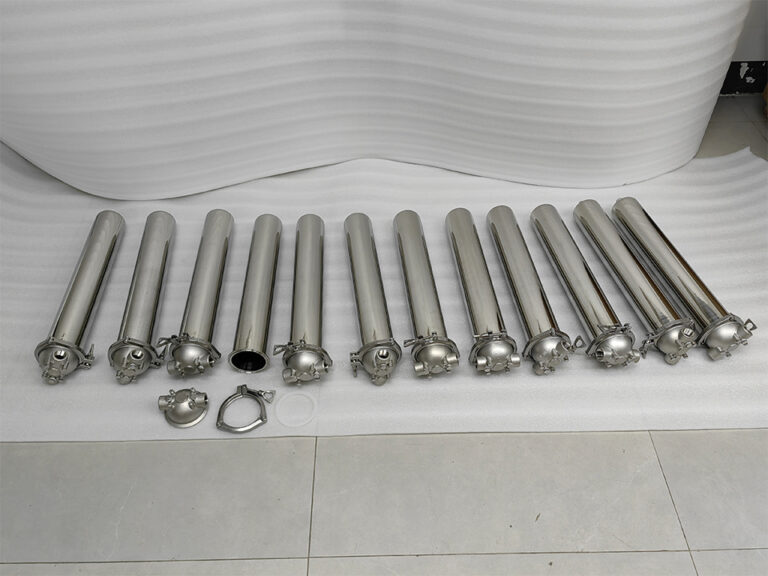
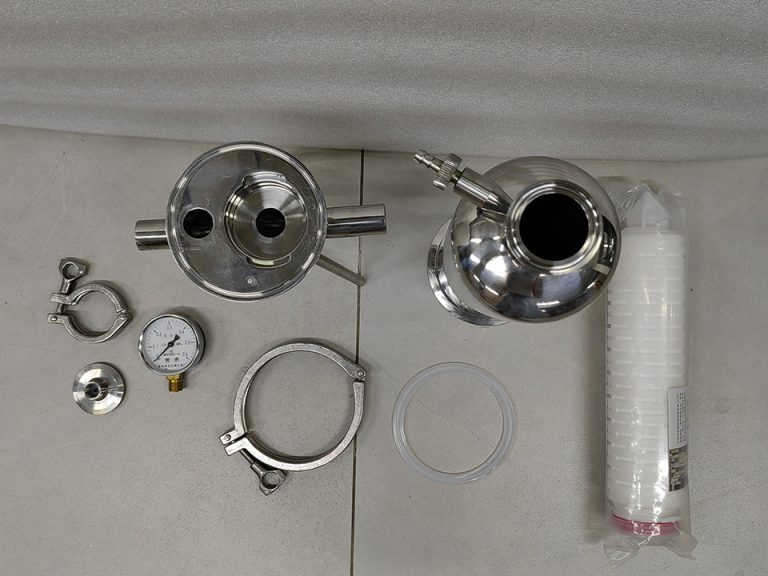
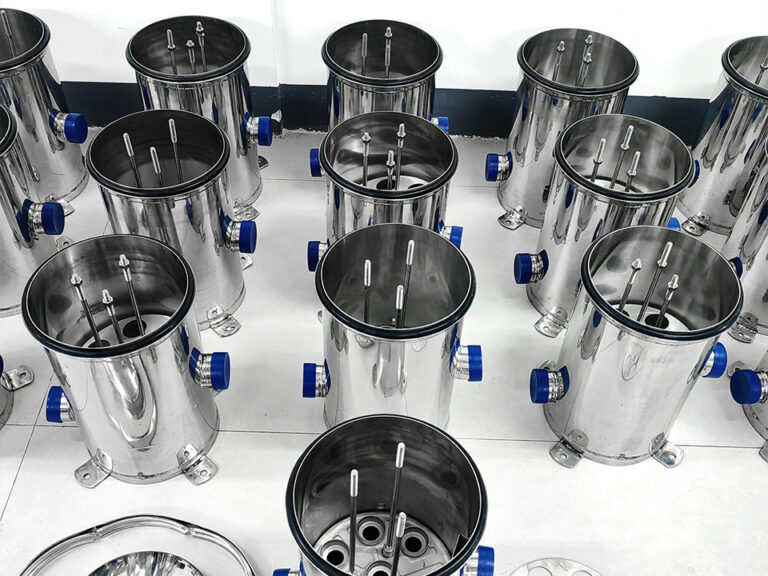
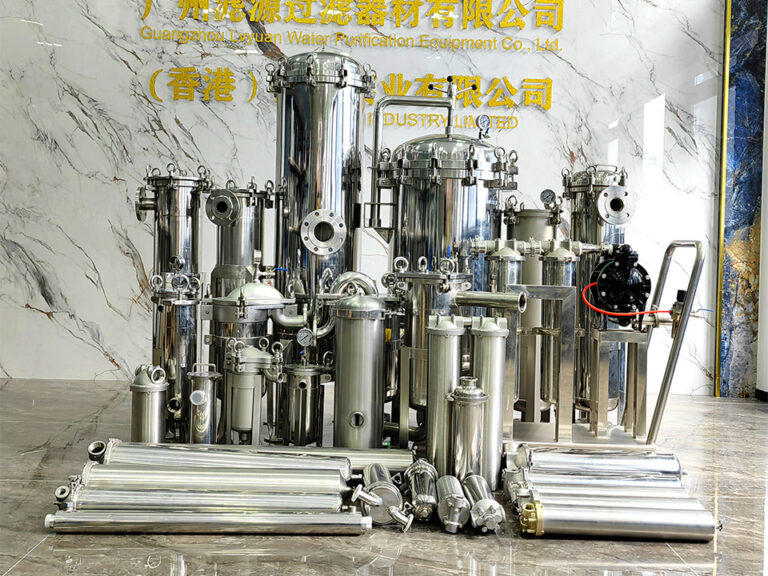
Guangzhou Lvyuan Water Purification Equipment Co., Ltd. is an industrial filter manufacturer founded in 2009 that designs and manufactures stainless steel filter housings, stainless steel sterile water tanks, filter elements, filter bags, ultra-polymer materials, and sintered filter products. Buyers choose Lvyuan for OEM/ODM support, ISO9001 quality control, and multi-country certifications.
Guangzhou Lvyuan Water Purification Equipment Co., Ltd.
Filter Housing Standards for Seawater Desalination Plants
No single published standard covers “filter housings for seawater desalination.” What buyers actually work with is a stack of requirements:
the RO membrane supplier’s feed-water guidance
a wetted material that can survive chlorides
a pressure-vessel design basis
compatibility with dosing and cleaning chemicals
a housing that operators can open, vent and drain without trouble
The decision that goes wrong most often is the material. A housing marked SS316L is stainless, yet the membrane manufacturer’s own guidance places 316L at the minimum tier for low-salinity service, not at the level it recommends for seawater. This guide shows how to build a defensible specification, where stainless steel housings fit around a desalination plant, and what to include in an RFQ.
What Do “Filter Housing Standards” Mean in a Desalination Project?
In practice, a desalination housing specification combines five layers, and each layer has a different owner:
Process requirement. What the cartridge must retain and how it is monitored. This comes from the RO membrane supplier.
Wetted material. Resistance to chloride pitting and crevice corrosion in the shell, head, nozzles, internals, fasteners and seal seats.
Pressure-containing design. Design pressure, temperature and the code basis (for example ASME or the European Pressure Equipment Directive, depending on project and destination). The plant owner, EPC contractor or process engineer sets this. This article does not define code obligations for any specific jurisdiction.
Chemical compatibility. Metals and elastomers must tolerate biocides, antiscalants, dechlorination chemicals and cleaning solutions.
Serviceability. Differential-pressure monitoring, venting, draining and fast cartridge change-out.
If treated permeate will be used as drinking water, the owner’s specification may also require drinking-water-contact certification for wetted components. Confirm that requirement at tender stage rather than after fabrication.
What Must a SWRO Cartridge Filter Housing Actually Do?
The housing exists to hold the cartridge filter that protects the high-pressure pump and membranes. According to DuPont’s FilmTec Reverse Osmosis Membranes Technical Manual, a cartridge filter with an absolute pore size below 10 µm is the suggested minimum pretreatment for every RO system, and 5 µm absolute is recommended. The same manual advises 1–3 µm absolute where colloidal silica or metal silicates create a fouling risk.
That guidance translates into housing requirements:
A differential-pressure gauge or tapping points. The manual calls for a gauge across the cartridge filter. It says cartridges should be replaced before the differential pressure reaches the permitted limit, and at least every 3 months.
A cartridge interface that matches the element. Cartridge length and end-cap style (DOE, 222 or 226) must match what the plant will buy for the life of the project.
Capacity for frequent changes without bypass. The manual says that replacing cartridges more often than every 1–3 months usually points to a pretreatment problem, and that the cartridge filter is not meant to remove large quantities of solids. A housing cannot fix a weak upstream process.
Cartridge media is also part of the specification. The manual recommends a synthetic, non-degradable material such as nylon or polypropylene, and it does not recommend backflushable filters as the final safety filter.
Why Is SS316L Not Automatically the Right Housing Material for Seawater?
SS316L is a sensible default for many industrial liquids, but seawater is a different exposure. The DuPont manual treats pitting and crevice corrosion as the main risk and ties its recommendations to the salinity of the concentrate stream:
Concentrate TDS below 7,000 ppm: 316L (below 0.03% carbon) is the minimum for pipe systems.
Concentrate TDS above 7,000 ppm: 904L is recommended for pipes and bends without crevices. 254 SMO or similar (6% molybdenum or more) is recommended where crevices occur, such as flange connections, valves and pumps.
Seawater feed and brine both sit well above that 7,000 ppm line, so they fall in the higher-alloy tier. The manual’s explicit scope is piping and fittings. Applying the same logic to a filter housing is an engineering inference, but a reasonable one. A housing has a gasket seat, a closure joint, bolted or clamped flanges and stagnant pockets: the same crevice geometry the manual flags.
An illustrative example (hypothetical, not a customer case). A tender sheet asks for “SS316L filter housing, 5 µm cartridges” for the feed to a seawater RO train. A bidder quotes a polished 316L vessel at a competitive price. The unit passes inspection, but nobody matched it to the chloride level at the gasket seat. The buyer saved on unit price and took on a corrosion and replacement risk. Lowest purchase price and lowest lifecycle cost are different things here.
The conclusion is narrow: stainless steel is not wrong, but “stainless” is not a specification. The grade must be named, and it must match the exposure.
How Do the Main Housing Material Options Compare?
The table is qualitative. It does not rank materials by measured corrosion data, which varies by grade, fabrication and operating conditions.
Material option
Where it is typically considered
Main strength
Main watch-out
Verify with supplier
SS304
Non-chloride utilities, air, general process liquids
Widely available, economical
Not a choice for chloride-bearing seawater service
Exact exposure; is it truly chloride-free?
SS316L
Low-salinity duties, cleaning skids, chemical solution filtration
Low-carbon grade suited to welded fabrication
Named by DuPont as the minimum, not the seawater grade
Chloride level, temperature, crevice locations
6% Mo stainless (such as 254 SMO) and similar higher alloys
Seawater-wetted housings and fittings
Named by DuPont for crevice locations in high-TDS service
Higher material cost; fewer fabricators
Grade, mill certificates, weld procedure
FRP / GRP
Seawater feed cartridge housings
Non-metallic, so no pitting mechanism
Pressure and temperature limits; shell design basis
Design pressure, manufacturing standard, flange and nozzle design
Thermoplastics (PP, PVC, PVDF)
Small or low-pressure housings
Non-metallic
Mechanical and temperature limits
Rated pressure at operating temperature
Housing material is a project-specific choice. Pore Filtration’s RO protection page notes that plastic, GRP and stainless steel housings are all available, with the choice depending on the raw water source. That is a manufacturer statement rather than an independent standard, but it matches the broader picture: no single material wins in every position.
Where Do Stainless Steel Housings Fit Around a Desalination Plant?
A desalination plant has many filtration points beyond the seawater feed. Several suit SS304/316L better than the seawater cartridge position does.
Duty in the plant
Stainless housing fit
What to verify
Seawater-wetted RO feed cartridge filter
Only with a grade matched to seawater (see above)
Named alloy for every wetted part
Cleaning-in-place (CIP) cartridge filter
Good candidate. DuPont’s CIP schematic lists SS as one housing option, alongside PVC and FRP
Cleaning pH range, temperature, chloride in make-up water
Chemical solution filtration before dosing
Often suitable for non-seawater liquids
Chemical compatibility of metal and seals
Compressed air and gas lines
Suitable where the gas is clean and dry
Rating, media, connection size
Plant steam utilities
Suitable for steam duty
Pressure, temperature, element material
The DuPont manual shows a CIP cartridge filter as 5–10 micron polypropylene with a PVC, FRP or SS housing. It says cleaning solutions can range from pH 1 to 13, so non-corroding materials are needed throughout the cleaning system. It also recommends that a sodium bisulfite solution used for dechlorination be filtered through a separate cartridge before injection into the RO feed. Both are natural jobs for compact stainless cartridge housings, provided the chemistry is checked.
Single-Cartridge and Multi-Cartridge Housings
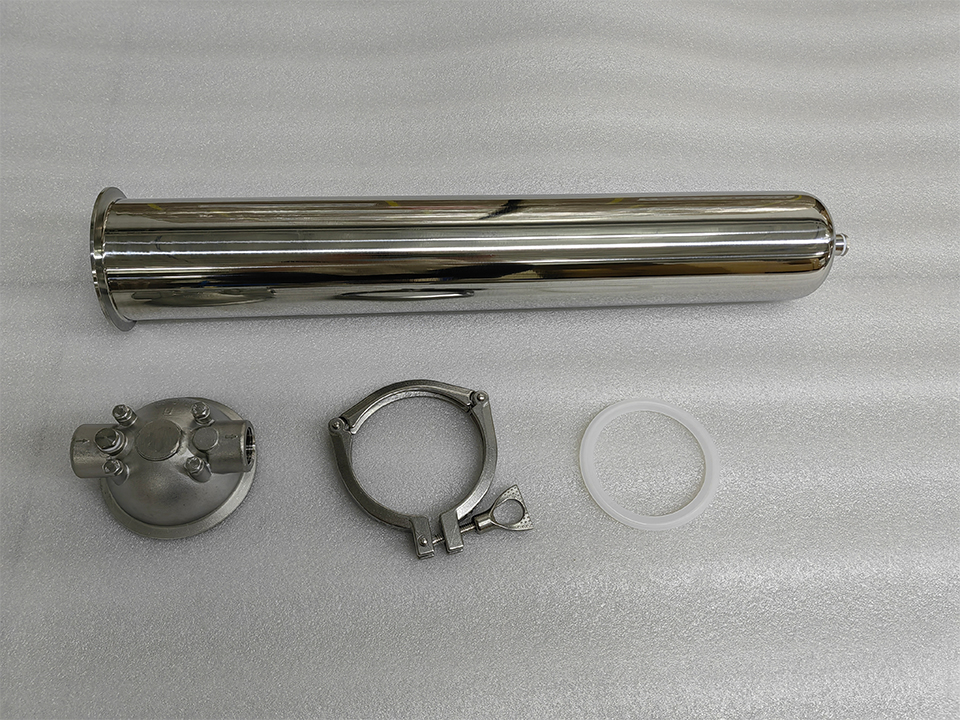
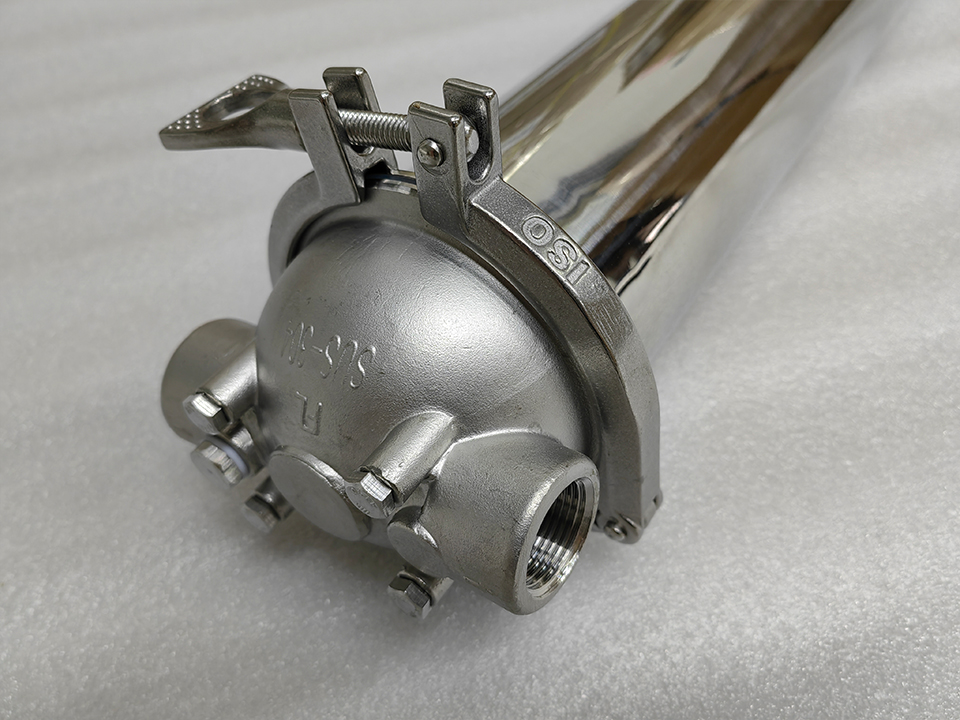
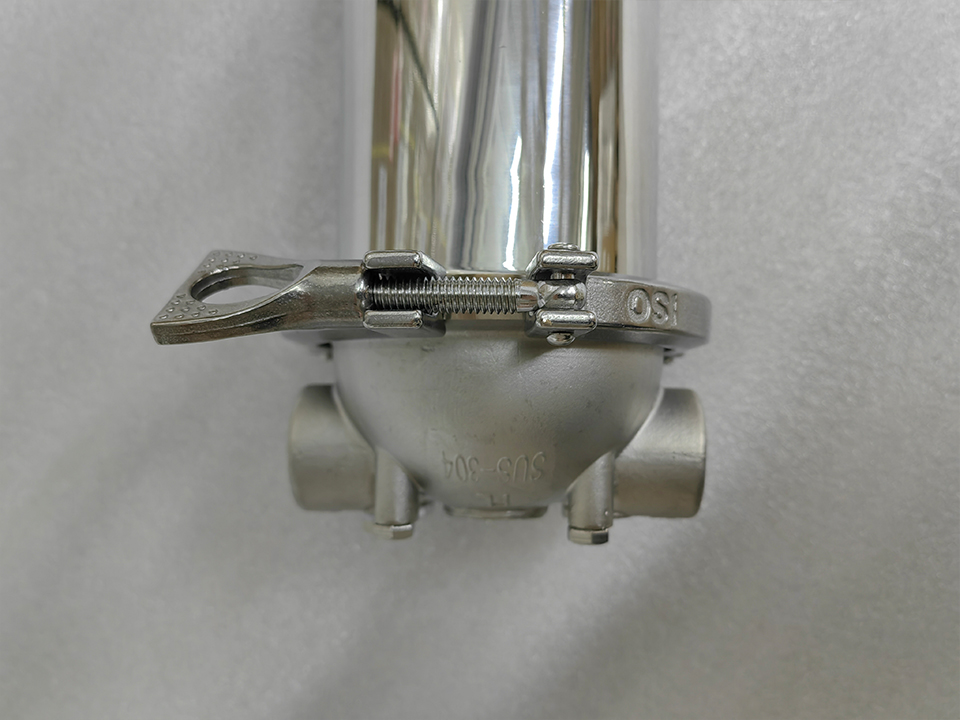
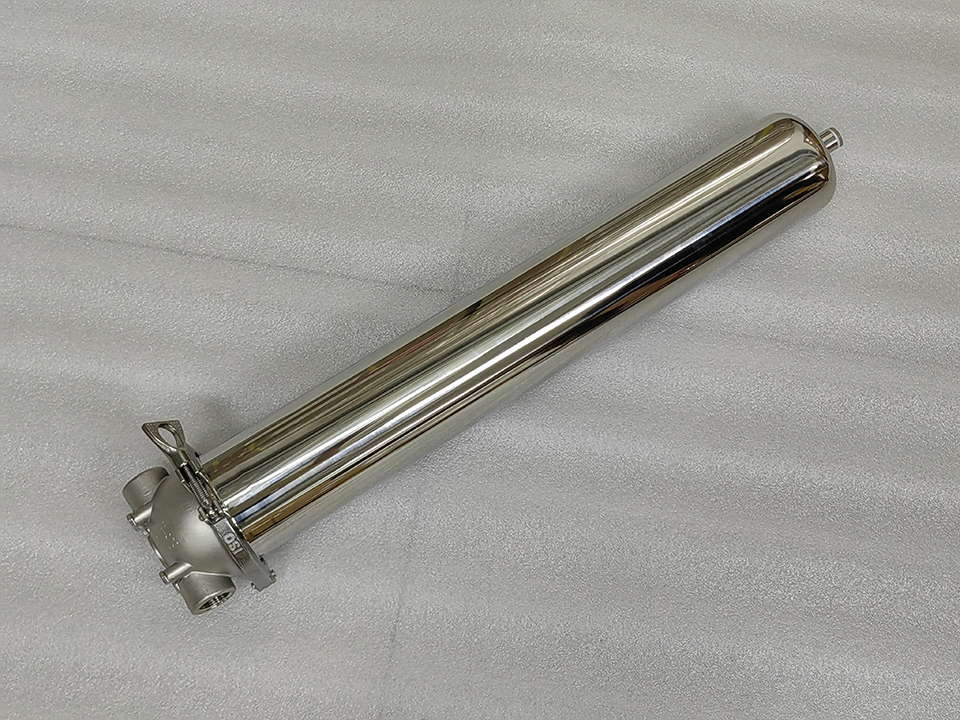
For a cleaning skid or a small dosing line, a CUNO-style single-cartridge stainless steel housing is a typical format. Its product page lists SS304 or SS316L, 10–40 inch cartridges with DOE, 222 or 226 connections, ratings from 0.1 to 200 µm, and limits of 10 bar and 120°C. Where a compact, metal alternative to a polymer Big Blue unit is wanted, the 20-inch Big Blue-style stainless steel housing lists a quick-clamp closure and threaded ports. Its page names the material only as “stainless steel,” so ask which grade is supplied.
When one cartridge cannot carry the flow, a multi-cartridge stainless steel housing combines 3, 5, 7, 11 or 19 cartridges in one vessel. The listed limits are 10 bar and 90°C, so check the temperature ceiling against warm cleaning cycles.
Bag Filter Housings
Bag housings are macrofiltration devices. They suit coarse prefiltration of utility and chemical liquids, not the final 5 µm absolute protection step in front of an RO train. Lyfilter’s single-bag formats differ mainly in how liquid reaches the bag and how the cover opens:
For high-volume liquids, the multi-bag stainless steel housing lists 3–12 bags and 50–300 m³/h, depending on bag quantity, micron rating and operating conditions.
Bag ratings are often quoted as nominal, while RO feed protection is specified in absolute terms. Ask which one the datasheet gives.
Steam and Gas Housings
Sites with steam or compressed air systems have separate duties. A process steam filter housing uses sintered or pleated stainless steel elements and lists limits of 10 bar and 150°C. A T-type stainless steel gas filter housing is a single-cartridge format for compressed air, nitrogen and compatible process gases. These are plant-utility items, not part of the seawater path.
None of the Lyfilter product pages above mention seawater or desalination service. They describe SS304 or SS316L general-industrial housings. Treat them as candidates for the duties in the table, and ask the supplier in writing about any seawater-wetted position.
Which Pressure, Temperature and Connection Details Need Checking?
The cartridge filter sits upstream of the feed pump. The DuPont manual describes feedwater flowing through the cartridge filter to the feed pump, so the housing sees the low-pressure side of the plant. Ten-bar designs may therefore be adequate, but confirm the maximum pressure the supply or booster pump can produce, including shutoff and surge conditions.
Check these items on the datasheet:
Design pressure and temperature at the actual operating point, not just the nameplate maximum.
Gasket and O-ring material against biocide, antiscalant and cleaning chemistry.
Connection standard and size against the plant piping, including flange rating and facing. Threaded ports on small housings suit skids, but they limit flow.
Number of housings. Single-cartridge units multiply quickly on large flows, which increases connections, leak points and service time.
What Fabrication and Documentation Details Belong in the Specification?
Corrosion performance depends on how a vessel is built as much as on the grade. The DuPont manual lists practices that apply directly to housings:
Design with a minimum of crevices and dead ends.
Use backing gas when welding, so the weld oxide film does not become a base for crevice corrosion.
Pickle and passivate. The manual says this gives the optimal safety against chloride attack.
Flush the plant with low-TDS water before a shutdown period.
Polishing and electropolishing, which appear as finish options on many housing pages, are separate from passivation. Confirm which is included. Exterior corrosion matters too. The manual notes humid, saline atmospheres and says coatings and regular maintenance can generally control it.
Ask for the paperwork your project requires, typically material certificates, welding records, pressure-test records and dimensional drawings. Define the required set at RFQ stage.
What Should an RFQ for a Desalination Filter Housing Include?
An accurate quotation needs process data as well as dimensions:
Feed water: salinity or chloride level, temperature range, pH and any residual oxidant. These determine the grade.
Duty position: seawater feed, CIP, chemical dosing, air or steam.
Flow and number of housings: design flow per housing and allowable differential pressure.
Cartridge or bag details: format, length, end-cap style, absolute rating, media.
Design basis: pressure and temperature, including surge, plus the governing code or owner’s specification.
Materials: named grade for each wetted component, seals and fasteners.
Fabrication: weld method, pickling and passivation, finish.
Accessories: pressure gauge, vent, drain, lifting aid for heavy lids.
Documentation and inspection: certificates, tests, third-party inspection if required.
Delivery: destination, packaging for coastal transport, spare gaskets and O-rings.
What Should You Verify Before Selecting a Supplier?
Before awarding an order, confirm the following in writing:
The exact alloy designation for the shell, head, nozzles, internals, fasteners and sealing surfaces, not a general term such as “marine grade.”
Whether higher-alloy or non-metallic options are offered when the position is seawater-wetted.
How the supplier handles welding, pickling and passivation, and what documentation accompanies delivery.
Whether the datasheet gives absolute or nominal cartridge ratings.
Which cartridge interface and gasket materials are used, and whether they match your cleaning chemistry.
Send the completed data to the supplier through the quote form on the relevant product page. Ask for any limitation in seawater service before the purchase order.
Frequently Asked Questions
Is there an official standard for seawater desalination filter housings?
No single standard dictates it. Specifications combine the membrane supplier’s feed requirements, corrosion-resistant materials guidance, a pressure-vessel design code set by the project, and chemical compatibility. The owner’s or EPC contractor’s specification usually determines which codes and certificates apply.
Can an SS316L housing be used in seawater RO service?
DuPont lists 316L as the minimum for pipe systems where concentrate TDS is below 7,000 ppm. For higher-salinity streams it recommends 904L and 254 SMO-type alloys at crevices. Seawater is above that level, so 316L needs written justification from the supplier.
What micron rating should a SWRO cartridge filter have?
DuPont recommends 5 µm absolute, with a suggested minimum of below 10 µm absolute for every RO system. Where colloidal silica or metal silicates threaten fouling, 1–3 µm absolute is recommended. Confirm the final rating against your membrane supplier’s warranty requirements.
How often should RO cartridge filters be replaced?
Replace them before differential pressure reaches the permitted limit, and at least every 3 months, per the DuPont manual. If replacement is needed more often than every 1–3 months, the manual says that usually indicates a pretreatment problem rather than a cartridge problem.
Is FRP or stainless steel better for a seawater cartridge filter housing?
Neither is universally better. FRP avoids metallic pitting but has pressure and temperature limits. Stainless steel works only if the alloy matches seawater exposure. Compare design pressure, temperature, alloy grade, documentation and maintenance access for your specific position.
Can a bag filter housing replace the cartridge filter before RO membranes?
Generally no. Bag housings suit coarse prefiltration. The final protection step before RO is usually a cartridge filter rated 5 µm absolute, per DuPont’s guidance. A bag housing may sit upstream, but check whether its rating is nominal or absolute.