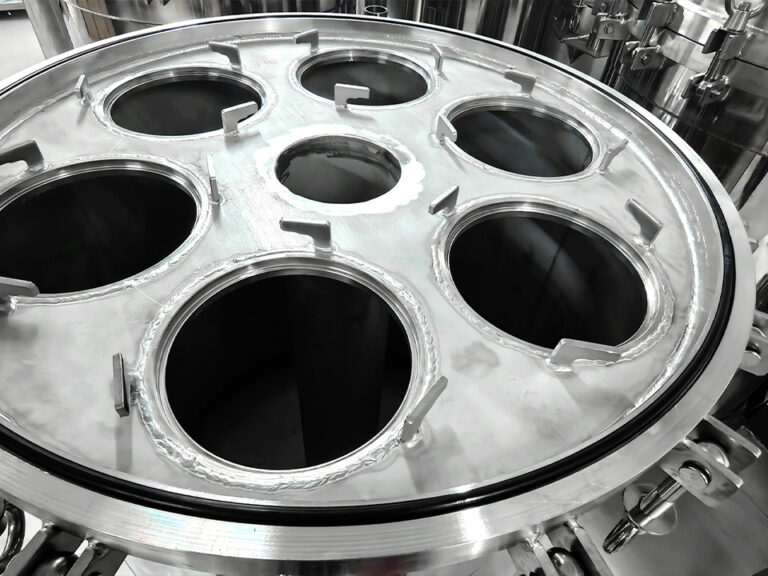
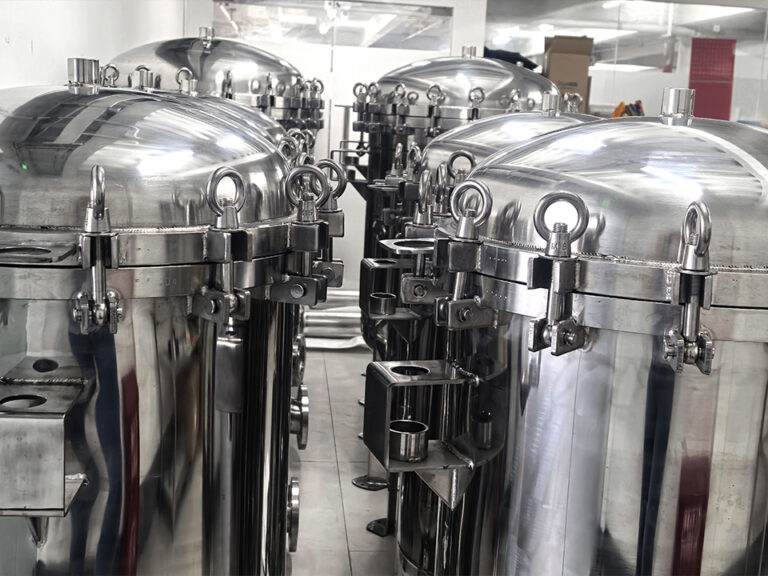
Guangzhou Lvyuan Water Purification Equipment Co., Ltd. is an industrial filter manufacturer founded in 2009 that designs and manufactures stainless steel filter housings, stainless steel sterile water tanks, filter elements, filter bags, ultra-polymer materials, and sintered filter products. Buyers choose Lvyuan for OEM/ODM support, ISO9001 quality control, and multi-country certifications.
Guangzhou Lvyuan Water Purification Equipment Co., Ltd.
High-Flow Cartridges in Oil and Gas Produced Water Treatment
Designed water is not ordinary wastewater with a little oil mixed in.
It is a changing process stream that may consist of free oil, emulsified hydrocarbons, sand, clay, iron rust items, microorganisms, therapy chemicals, range particles, dissolved salts, and naturally happening radioactive products. Its make-up can transform in between wells, developments, production stages, and also running changes.
That irregularity matters.
The U.S. Geological Study defines produced water as the biggest waste stream associated with oil and gas advancement and approximates that the USA generates almost 900 billion gallons per year. USGS likewise advises that some generated waters can have salinity levels more than ten times that of salt water, together with organic substances and aspects such as radium.
Yet lots of filtering systems are still purchased from a one-line requirements: circulation rate, micron rating, link dimension.
That is lazy design.
A high-flow cartridge can be an efficient barrier for put on hold solids removal from generated water. It can secure injection wells, disposal systems, coalescers, membranes, and reuse procedures. But it can not fix an unpredictable separator, eliminate dissolved salt chloride, damage a chemically supported emulsion, or make it through endless slugs of iron sulfide and crude oil.
So what is the cartridge in fact anticipated to complete?
Why Produced Water Treatment Is Becoming a Capacity Issue
Manufactured water volumes tend to increase as an oil area grows. Hydrocarbon manufacturing may drop while the water reduce climbs, leaving operators to take care of more fluid for every saleable barrel.
A 2024 USGS evaluation of oil advancement in the Eagle Ford approximated that created formation-water quantity was approximately 60% of created oil quantity. For gas wells, the study approximated approximately 1 million gallons of development water per billion cubic feet of gas produced.
The Permian Container makes the scale trouble much more visible. A 2023 market discussion hosted by the Ground Water Security Council reported that Permian produced-water quantities were roughly 11 times those of the Bakken, 16 times the Eagle Ford, and 49 times Appalachian manufacturing, while warning that practical shot capability was under pressure.
Extra water indicates extra pumps, more storage tanks, even more vehicles or pipes, more disposal capacity, and a lot more opportunities for solids to reach delicate tools.
It also changes the economics of filtering. A standard real estate full of lots of small cartridges might work perfectly well at small flow. Scale the plant to thousands of barrels per hour, nonetheless, and cartridge matter, floor space, labor exposure, lifting demands, seal failings, and waste volume beginning to control the operating conversation.
This is where high-flow filter cartridges gain focus.
What High-Flow Filter Cartridges In Fact Do
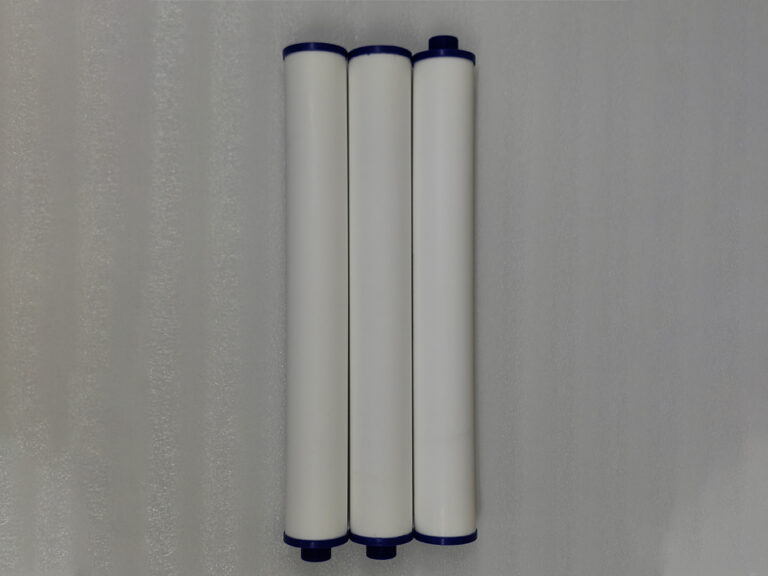
A high-flow cartridge is a large-format filter aspect created to process substantially extra liquid per element than a standard 2.5-inch-diameter cartridge.
Lots of layouts use pleated media, a big size, a single open end, and an inside-to-outside flow course. That arrangement catches impurities inside the cartridge and can streamline removal. Pall’s Ultipleat High Circulation system, for instance, uses a 6-inch size, coreless pleated construction; its released water-service information gets to 500 US gallons per min, or about 1,900 litres per min, for one 60-inch component under specified conditions.
Check out the credentials carefully: water-service information.
Manufactured water might have greater viscosity, oil loading, solids concentration, biological material, and temperature level. A cartridge promoted at 500 gpm on tidy water need to not instantly be arranged at 500 gpm on warm, oily brine bring FeS bits and polymer deposit.
Microns mislead purchasers.
A nominal 5 µm element, an outright 5 µm element, and a filter reporting a beta ratio at 5 µm are not interchangeable, although purchase software may minimize all 3 to the same deceptively clean number.
What matters is the verified retention performance under a representative impurity tons.
Where High-Flow Cartridges Belong in a Produced Water Purification Train
High-flow cartridges generally function best as a regulated sprucing up or equipment-protection stage, not as the initial item experienced by raw well fluids.
A defensible treatment train may include:
Three-phase separation for bulk gas, oil, and water separation
Hydrocyclones or flotation protection for spread oil reduction
Working out, nutshell filtration, media purification, or self-cleaning screening for bulk solids
High-flow cartridges for finer suspended-solids regulate
Membrane layers, ion exchange, adsorption, oxidation, evaporation, or crystallization when the last reuse target requires them
The order can transform. The reasoning must not.
Each stage needs to remove the contaminant course it can take care of economically. Asking a disposable cartridge to take in the failure of every upstream process is not simplification; it is merely moving operating cost into drums of invested media.
Parker’s oil-and-gas filtration product areas high-flow systems, duplex cartridge vessels, hydrocyclones, filter presses, and various other splitting up tools within broader produced-water and flowback treatment systems. That system-level framing is more sincere than presenting one cartridge as the entire treatment procedure.
Where solids arrive in hefty, irregular slugs, a stainless-steel bag filtering system may be reviewed as an upstream sacrificial phase. The connected devices is marketed for an additional industry, so material compatibility, stress ranking, seals, retention performance, and oilfield certification would certainly still need independent verification.
The Produced-Water Chemistry That Ruins Simple Filter Selections
The hardest filtration troubles are hardly ever brought on by quartz sand alone.
Produced water can carry or form:
Calcium carbonate, CaCO SIX
Barium sulfate, BaSO FOUR
Strontium sulfate, SrSO ₄
Iron sulfide, FeS
Iron hydroxides, consisting of Fe(OH)SIX
Deterioration pieces
Clay and formation fines
Microbial biomass
Residual polyacrylamide or other treatment polymers
Free and emulsified hydrocarbons
Paraffin and asphaltene product
These contaminants act differently.
Tough mineral pieces might build a reasonably absorptive cake. Fine iron sulfide can form a thick, low-permeability layer and generate a fast differential-pressure spike. Oil may blind hydrophilic or oleophilic media depending on the polymer and surface treatment. A polymer overdose might turn or else filterable fragments into a compressible gel.
And temperature level adjustments everything: thickness, wax practices, solution stability, elastomer performance, and differential stress.
This is why the December 2023 launch of variation 3.0 of the USGS National Produced Seas Geochemical Database issues. The data source assembles area, well, physical-property, organic-chemistry, and inorganic-chemistry info from produced-water examples throughout the United States; a related USGS source maps greater than 6,500 lithium measurements from oil and gas wastewaters.
There is no single “requirement created water.”
Any individual selling one global cartridge requirements is selling comfort, not certainty.
High-Flow Cartridges Versus Bags, Steel Aspects, and Membranes
Filtering choice
Finest operating function
Main advantage
Usual failing mode
My evaluation
High-flow pleated cartridge
Great bit control after bulk separation
High flow per aspect and decreased housing matter
Rapid blinding from oil, FeS, polymers, or solids slugs
Strong option when feed conditions are regulated
Filter bag
Coarse or variable solids filling
Affordable media and basic operation
Bypass, irregular retention, regular handling
Helpful upstream, but frequently oversold as accuracy filtration
Sintered metal aspect
Hot, abrasive, or chemically aggressive solution
Mechanical strength and possible cleanability
Pore blockage that cleansing can not fully turn around
Better lifecycle option when cleaning is confirmed
Sintered mesh component
Recyclable screening and particle control
Secure metal structure and broad product options
Embedded fines and incomplete regrowth
Helpful for extreme solution, not automatically affordable
PES membrane layer cartridge
Downstream fine or microbial sprucing up
Fine retention and defined membrane performance
Immediate fouling on oily or solids-rich feed
Maintain it far from without treatment produced water
Titanium permeable aspect
Destructive or high-temperature expert responsibility
Deterioration resistance in selected chemistries
High funding expense and hard fouling elimination
Warranted only by chemistry and lifecycle information
High-flow cartridges compete most straight with bags and banks of traditional cartridges. Steel components serve a different economic model: greater acquisition price, possible cleansing, and longer physical life.
For higher-corrosion applications, porous titanium cartridges from 0.2 to 1 micron may look eye-catching. Yet titanium is not a magic word. Galvanic problems, chloride focus, temperature level, cleansing chemistry, pore framework, weld quality, and total lifecycle expense still make a decision whether it is the appropriate material.
And a 0.1-micron PES pleated membrane cartridge belongs, at many, in a properly conditioned downstream brightening action. Place it straight behind an unstable oil-water separator and the replacement routine might become painfully instructional.
Exactly how to Specify the Best High-Flow Filter Cartridges for Oil and Gas
I would not accept a high-flow cartridge spec without these ten inputs:
Regular, minimum, and optimal flow
Operating and design temperature level
Regular and rise stress
Complete put on hold solids concentration
Particle-size distribution by number and volume
Free and distributed oil focus
Water chemistry, consisting of pH, TDS, chlorides, iron, barium, calcium, sulfate, and sulfide
Needed downstream fragment limit
Optimum allowable clean and incurable differential pressure
Expected cartridge life and allowed shutdown frequency
Then I would certainly ask the question procurement groups usually prevent: is the mentioned micron score nominal or outright?
A significant spec should specify the examination basis, efficiency, beta proportion where applicable, media material, assistance layers, end-cap construction, seal compound, collapse stress, flow instructions, extractables needs, and disposal course.
The seal should have even more attention than it usually gets. EPDM, FKM, NBR, PTFE encapsulation, and other materials can react differently to hydrocarbons, fragrant compounds, H TWO S, temperature, and cleaning agents. A cartridge body may continue to be intact while a puffy or hard seal creates bypass.
Inexpensive cartridges become expensive fast.
Sizing the Real Estate Without Thinking the Catalogue Flow Price
Begin with the called for procedure flow, however derate each element for real feed problems.
The hard term is “allowable operating circulation.”
It ought to show:
Tidy differential pressure at operating temperature
Anticipated viscosity
Solids concentration and particle-size circulation
Oil packing
Preferred service period
Optimum terminal differential pressure
Redundancy throughout changeout
Future circulation development
The loss of one vessel or cartridge train
A brochure might show a clean-water optimum. Your plant needs a steady operating price.
Think about a small 1,200 m TWO/ h treatment system. If representative pilot screening supports 75 m FIVE/ h per cartridge, the mathematical minimum is 16 cartridges. Creating specifically 16 would still be careless if the plant can not minimize flow throughout maintenance. A duty/standby plan, or two parallel trains sized below optimum loading, may call for 20, 24, or even more elements depending on the accessibility target.
The extra real estate volume is visible funding price.
The avoided shutdown is not.
Differential Stress Is the Operating Signal That Matters
A stress gauge prior to the housing and an additional after it are better than no dimension, however an adjusted differential-pressure transmitter is much better.
Fad ΔP against:
Circulation
Temperature level
TSS
Oil focus
Separator efficiency
Chemical dosage
Cartridge batch
Operating hours
Filtered quantity
A quick rise in differential pressure might show a solids slug, FeS development, oil carryover, biological development, polymer overdosing, or a fallen short upstream separator. Changing the filter without exploring the cause just resets the symptom.
A sluggish rise with stable filtrate quality may stand for typical cake formation. Dropping differential pressure is not always excellent news; it can indicate bypass, media collapse, seal failing, or a broken element.
So enjoy both sides: hydraulic resistance and filtrate top quality.
The Regulative Truth: Filtering Does Not Equal Discharge Compliance
High-flow filtration eliminates fragments. It does not immediately make generated water ideal for surface discharge, farming, industrial reuse, or aquifer recharge.
In the United States, oil and gas extraction wastewater is controlled under 40 CFR Part 435, with needs varying by subcategory, location, discharge path, and whether therapy happens at a centralized waste-treatment center. Clean Water Act point-source discharges typically call for an NPDES license including discharge limits, monitoring responsibilities, and reporting conditions.
State guidelines can be extra limiting or address various reuse situations. In 2024, for instance, New Mexico considered extra produced-water reuse laws concentrated on study and jobs that would not discharge to surface area water or groundwater.
That difference issues since a cartridge may produce aesthetically clear water while dissolved organics, chlorides, bromide, boron, barium, radionuclides, and therapy chemicals stay.
Clear is not clean.
A 2024 USGS examination near The golden state’s Placerita Oil Field found that six of 13 new groundwater samples revealed indicators of blending with liquids from hydrocarbon-bearing developments. The writers determined numerous feasible factors, consisting of altered hydraulic gradients and well-barrier failures, while noting that even more information were required.
The lesson is wider than that field: treatment hardware, containment, transport, well honesty, tracking, and policy form one threat system. A far better cartridge can not make up for a leaking barrier.
The Hard Business Economics: Price Per Thousand Barrels, Not Cost Per Cartridge
The cheapest element is not necessarily the lowest-cost filter.
Compute total purification price utilizing:
Cartridge purchase price
Freight and stock
Work for changeout
Lost manufacturing or minimized throughput
Disposal expense
Cleaning cost, when reusable
Housing capital and inspection price
Seal and spare-part usage
Downstream equipment damage
Injection-well impairment
Safety and security direct exposure during vessel opening
A high-flow cartridge might minimize labour because fewer aspects are transformed. It might also lower housing footprint. Yet when the media blinds after six hours rather than the expected six weeks, those advantages go away.
I like three functional metrics:
Expense per 1,000 barrels dealt with
Cartridges consumed per million barrels treated
Filteringed system quantity before incurable differential stress
These expose negative performance immediately. “Cartridge life was three weeks” informs us little bit unless flow, solids loading, oil carryover, and shutdown history are consisted of.
And insist on pilot information.
A side-stream test must utilize real generated water over adequate time to record separator swings, chemical modifications, well changes, temperature level variation, and solids events. A four-hour presentation on unusually tidy water is sales theater.
Frequently Asked Questions
Just how do high-flow cartridges treat created water?
High-flow cartridges treat created water forcibly the stream via a large-diameter pleated or depth medium that catches suspended solids, corrosion products, scale fragments, and some recurring beads, protecting downstream membrane layers, injection wells, or disposal devices while enabling considerably even more flow per component than standard small-format cartridges.
They are usually utilized after mass oil elimination and rugged solids splitting up. They do not eliminate liquified salts, dissolved metals, many low-molecular-weight organics, or steady emulsions without added therapy. Large-format commercial styles may utilize inside-to-outside circulation and single-open-ended building and construction to boost impurity control and simplify changeout.
What is the very best micron score for created water filtering?
The very best micron rating for produced water is the tiniest verified quality that meets the downstream solids restriction without creating unstable differential pressure, and it should be chosen through particle-size evaluation, representative pilot testing, oil-loading data, and an agreed cartridge-life target rather than a common oilfield rule.
A 1 µm cartridge is not inherently much better than a 10 µm cartridge. If 90% of the inbound solids burden is listed below 2 µm, a small 10 µm element may offer little protection. But if a 1 µm cartridge blinds in one hour because oil carryover is uncontrolled, it is not a sensible option either.
Are high-flow cartridges much better than bag filters?
High-flow cartridges are far better than bag filters when a plant requires higher circulation per element, more repeatable retention, reduced driver handling, and a smaller real estate footprint, while bag filters continue to be affordable for rugged, extremely variable solids tons where low media expense issues greater than tightly managed particle-removal efficiency.
The best layout may use both: bags or automatic screens for mass solids, complied with by high-flow cartridges for accuracy protection. Dealing with the choice as an either-or contest frequently generates a weaker treatment train.
Can high-flow cartridges get rid of liquified salts from produced water?
High-flow cartridges can not get rid of liquified salts such as NaCl, CaCl two, or liquified barium due to the fact that these ions pass through particle-filter media; desalination needs downstream innovations such as nanofiltration, reverse osmosis, electrodialysis, membrane distillation, dissipation, or formation after oil and suspended solids have been adequately regulated.
Cartridges may get rid of precipitated CaCO four or BaSO four particles, yet that is not the like eliminating liquified calcium, barium, carbonate, or sulfate ions prior to rainfall happens.
Exactly how often should a high-flow cartridge be changed?
High-flow cartridges should be replaced when differential stress gets to the validated incurable restriction, filtrate quality wears away, style flow can no longer be preserved, or a specified operating-time cap is reached, with the real period varying from hours to months relying on solids, oil, chemistry, temperature level, and upstream splitting up security.
Calendar-based substitute alone is weak technique. The operating team need to trend differential pressure, throughput, filtrate bit matters, TSS, oil carryover, and filtered quantity for each and every cartridge set.
Stop Purchasing Micron Rankings and Begin Buying Verified Performance
High-flow cartridges can make created water therapy systems smaller sized, easier to service, and extra constant.
However they are not forgiving.
They carry out well when bulk oil is controlled, solids filling is gauged, media chemistry works, the real estate is correctly sized, and operators utilize differential stress as a diagnostic signal instead of a substitute alarm system.
My blunt suggestion is simple: do not request a quotation for “5-micron high-flow cartridges” and expect the supplier to fix the rest. Provide the water analysis, fragment distribution, flow account, oil concentration, temperature level, stress, downstream target, and required operating interval.
Then demand proof.
For a produced-water filtering analysis, send depictive water chemistry, peak circulation, TSS, oil and grease information, operating temperature, target micron performance, and present cartridge life. The right style must be warranted by the procedure– not by the most inexpensive line on a comparison sheet.