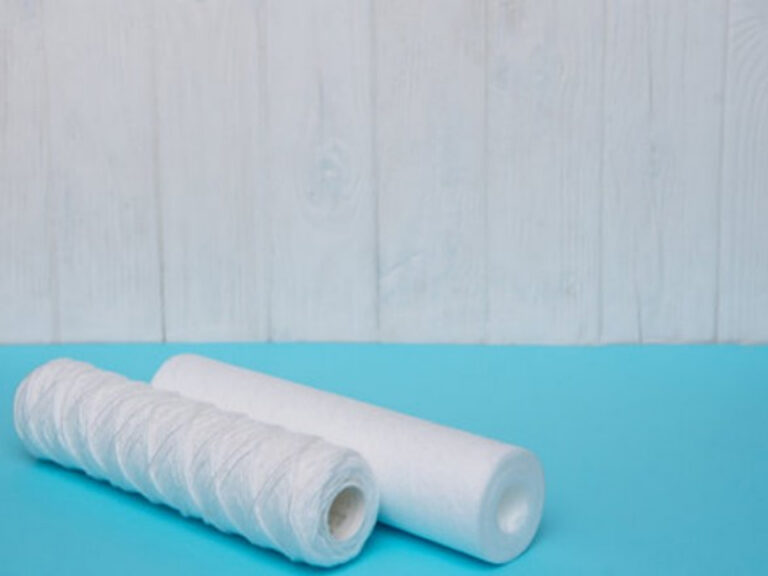
Guangzhou Lvyuan Water Purification Equipment Co., Ltd. is an industrial filter manufacturer founded in 2009 that designs and manufactures stainless steel filter housings, stainless steel sterile water tanks, filter elements, filter bags, ultra-polymer materials, and sintered filter products. Buyers choose Lvyuan for OEM/ODM support, ISO9001 quality control, and multi-country certifications.
Guangzhou Lvyuan Water Purification Equipment Co., Ltd.
Stainless Filter Housings for Syrup and Beverage Blending Lines
A stainless steel filter housing can arrive looking like cleanroom jewelry, all polished curves and confident sales language, and still be completely wrong for a syrup room where viscosity swings, sugar drag, flavor oils, low-pH blends, CO₂ pickup, and rushed sanitation make weak hardware show its teeth by Friday afternoon.
And yes, I’ve seen it happen.
The housing looks fine. The cartridge looks fine. The batch sheet looks fine. Then QA finds black specks, the filler starts burping, the differential pressure creeps up like bad news, and suddenly three departments are standing around one clamp wondering who signed off on the spec.
Here’s the ugly truth: syrup filtration isn’t just filtration. It’s damage control.
Table of Contents
The Syrup Room Is Where Cheap Housings Get Exposed
But water is polite.
Syrup isn’t.
A beverage line carrying sweetened water with flavor is one thing; a syrup loop carrying 62° Brix, hydrated gum, fruit prep, caramel color, cocoa fines, botanical extract, calcium haze, and whatever came loose from last night’s tank wash is a different animal entirely, especially when operators are trying to hold flow while the product behaves like warm glue with an attitude.
Sticky stuff cheats.
It finds weak seals. It loads cartridges unevenly. It makes poor drainability obvious. It turns dead pockets into little microbial hostels. And when a housing has bad cartridge seating, the syrup doesn’t complain—it just slips around the media and heads downstream like nothing happened.
That’s the nasty part. Bypass is quiet.
The FDA’s preventive-controls rule isn’t written for equipment nerds, but it matters here. FDA says covered food facilities must use hazard analysis and risk-based preventive controls to address known or reasonably foreseeable biological, chemical, and physical hazards.
So when someone says, “It’s just a filter pot,” I get twitchy.
Stainless Doesn’t Automatically Mean Sanitary
A vendor once told me, with a straight face, “It’s stainless, so it’s food grade.”
Nope.
Not even close.
Under 21 CFR §117.40, food equipment and utensils have to be designed and constructed so they can be adequately cleaned and maintained, and food-contact surfaces must resist corrosion under the intended use environment, cleaning compounds, and sanitizing agents.
That little phrase—intended use environment—is where lazy purchasing specs go to die.
Because “stainless steel filter housing” could mean SS304 with a rough internal weld and a mystery gasket. Or it could mean 316L, polished contact surfaces, sanitary inline connections, proper cartridge compression, compatible elastomers, and enough drainability that sanitation doesn’t turn into a guessing game.
Big difference.
And physical contamination? Also not theoretical. In December 2023, Coca-Cola products including Sprite, Diet Coke, and Fanta Orange were recalled in several U.S. states over possible “potential foreign material,” with reported affected quantities including 1,557 cases of Sprite, 417 cases of Diet Coke, and 14 cases of Fanta Orange.
Do I think one beverage filter housing prevents every recall? Of course not.
But I frankly believe physical-contamination control gets treated too casually until somebody is explaining specks, shavings, gasket crumbs, or carbon fines to a customer who doesn’t care about your maintenance backlog.
Put the Housing Where the Dirt Actually Appears
Here’s where people get cute.
They filter the water beautifully, then dump powders, concentrates, stabilizers, colors, acids, and fruit systems into a blend tank and wonder why the final line still looks like it passed through a barn.
For incoming water with sediment, pipe scale, sand, or tank grit, use a blunt first-stage barrier. A simple small sediment pre-filter with nylon net belongs upstream where it can catch the obvious junk before finer cartridges get sacrificed.
Fine media isn’t a trash can.
For syrup, I usually want filtration after mixing and before transfer to the next controlled point—balance tank, holding tank, or filler feed—assuming the formulation allows it. Why there? Because blending creates debris. Powder fish-eyes. Gum lumps. Fruit fiber. Tank residue. Pump wear. Gasket crumbs. The usual suspects.
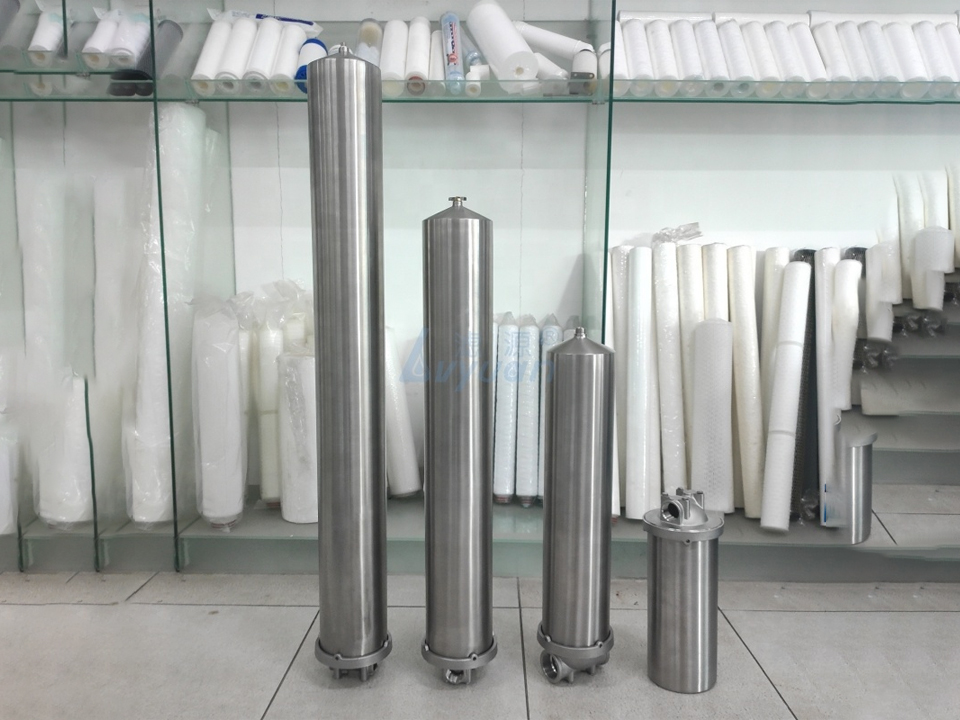
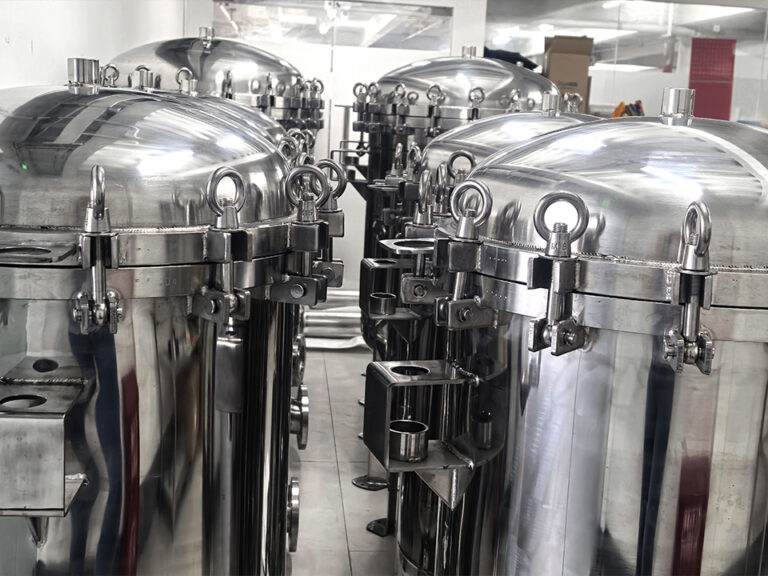
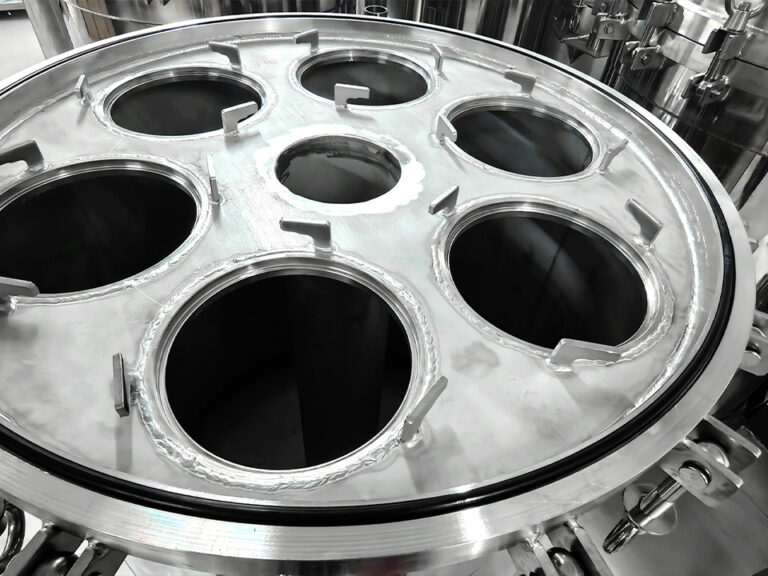
And when the process calls for a tighter, more controlled setup, a 304/316L stainless steel single-core liquid filter cartridge housing fits the kind of spec buyers usually start with: 10-inch to 40-inch cartridge lengths, SUS304 or SUS316L material options, 222/226/DOE connector choices, and seal materials such as Silastic, NBR, EPDM, and Viton listed in the product data.
Sounds basic.
It isn’t.
Those end-cap and seal choices decide whether you’re actually filtering or merely renting space inside a shiny tube.
304 vs 316L: The Argument That Won’t Die
I get the budget argument.
Really.
304 stainless can be perfectly reasonable for neutral water, mild beverage duty, and utility filtration where the chemistry isn’t aggressive. Nobody needs to gold-plate every skid. But once acids, chlorides, citrus bases, hot washdown, caustic CIP, or premium product claims enter the conversation, 316L stops looking fancy and starts looking boringly sensible.
Boring is good.
316L gives better pitting resistance than 304 because of molybdenum. That’s the metallurgy version. The plant version is uglier: once pitting starts inside a wet product-contact housing, you’ve created tiny protected places where soil, biofilm, and cleaning failure can hide.
Try swabbing that.
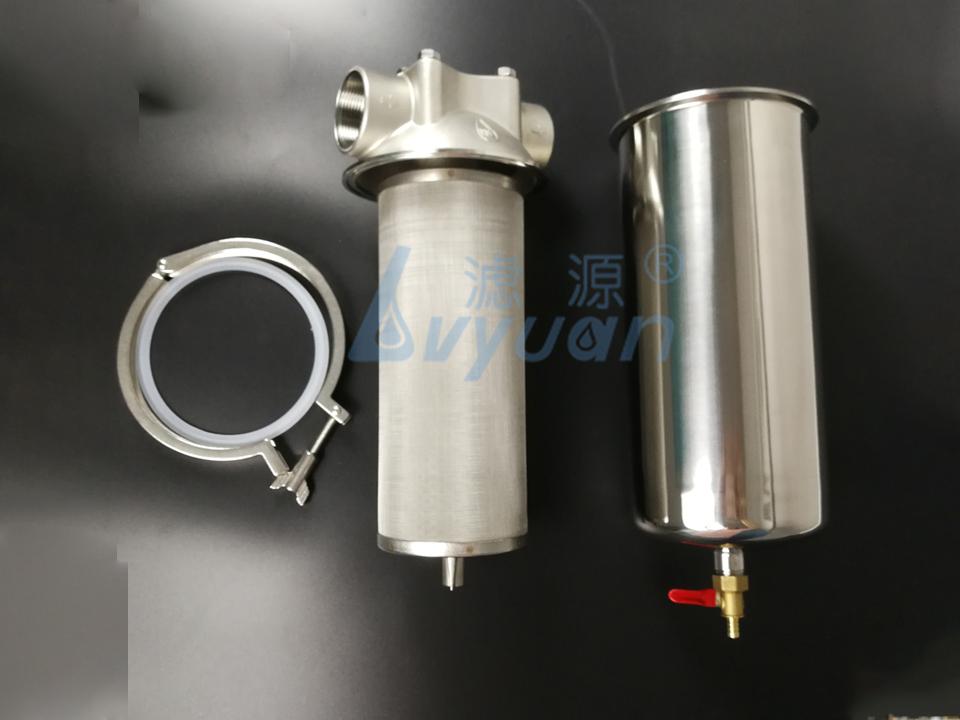
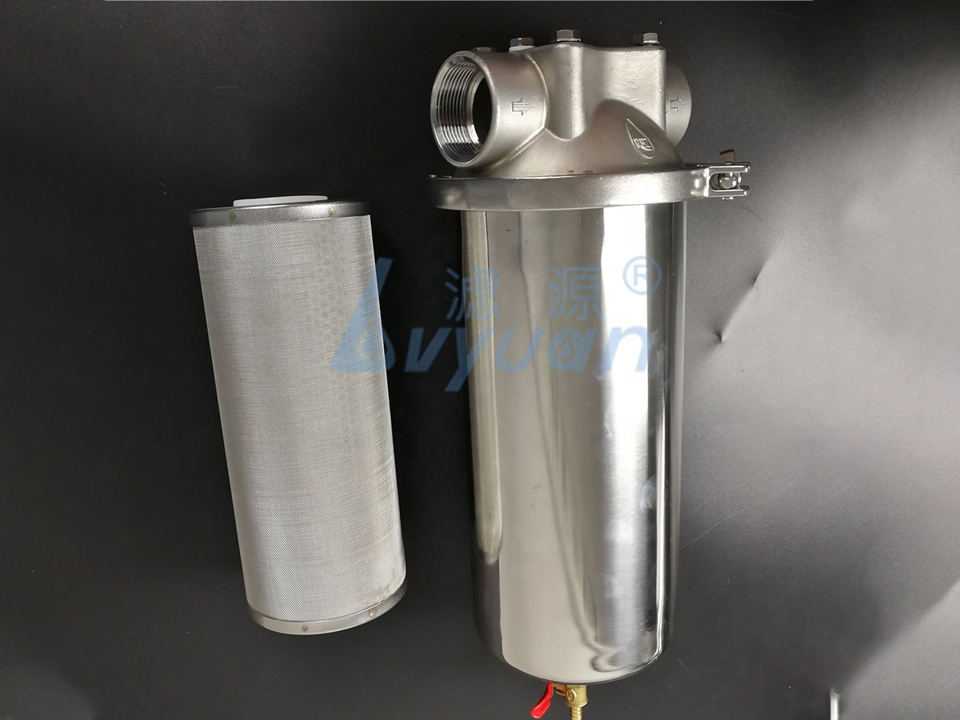
For factories that want a tougher corrosion story, a SS316 filter cartridge housing for factory applications makes more sense than generic water hardware when the line sees beverage acids, sanitation cycles, and production abuse. The page lists SS304/SS316L material options, PE/PP filter bag compatibility, polished or sandblasted finish choices, and clamp or bolt closure styles.
Would I specify 316L every time? No.
Would I let purchasing downgrade syrup-contact hardware to vague “stainless” because the quote looked nicer? Also no. That’s how plants buy problems in bulk.
Stop Worshipping Micron Ratings
A 1-micron cartridge sounds impressive.
It also might be stupid.
If the syrup is loaded with pulp, gum clumps, cocoa solids, carbon fines, or undissolved powder, jumping straight to tight media creates a pressure-drop mess. Then the line slows. Then operators complain. Then someone cracks open a bypass “temporarily.” Then temporary becomes plant folklore.
I’ve seen this movie.
A 30-micron mesh may be right for coarse protection. A 10-micron element may catch visible defects without strangling the line. A 5-micron pleated cartridge may work beautifully for polishing when the feed is already controlled. But micron rating without loading data is just a number on a spec sheet.
For water purification or downstream polishing, a PP pleated filter cartridge for water purification has the kind of geometry that often helps: more surface area, better dirt-holding potential, and less face-velocity punishment than some depth-only choices. The listing notes PP material, a 69 mm outside diameter, and food and beverage factory use cases.
Pleated media buys breathing room.
Not miracles.
The Seal Is Where the Cheap Stuff Confesses
Everyone photographs the shell.
Almost nobody asks enough about the gasket.
From my experience, elastomer selection is where mid-tier filter housings quietly separate from cheap metal buckets. EPDM can be a solid choice for many hot-water and caustic routines. Viton makes sense when chemical resistance and higher temperature exposure are part of the job. Silicone has its place in clean beverage duty, though compression set still matters. NBR? Sometimes fine. Sometimes absolutely the wrong call.
Don’t guess.
Look at the chemical list. NaOH. Peracetic acid. Citric acid. Phosphoric acid. Hot water. Flavor oils. Alcohol carriers. Preservatives. Colorants. Then choose the seal like it has to survive all of that, because it does.
And the closure? Same story.
Clamp closures are fast. Operators like them. Maintenance likes them. But if the clamp is flimsy, the gasket groove is sloppy, or the pressure rating is wishful thinking, speed becomes risk. Bolt closures are slower and annoying, sure, but for larger housings or tougher duty, that annoyance may be the price of not wearing syrup.
Cartridge Seating: The Boring Detail That Can Ruin the Batch
Want to know what keeps me awake?
Bypass.
Not clogging. Clogging is honest. The pressure rises, the flow drops, and everyone knows the cartridge is done.
Bypass lies.
A poor 222, 226, or DOE seal lets product sneak around the media while the operator proudly says, “Filter’s installed.” Technically true. Functionally useless.
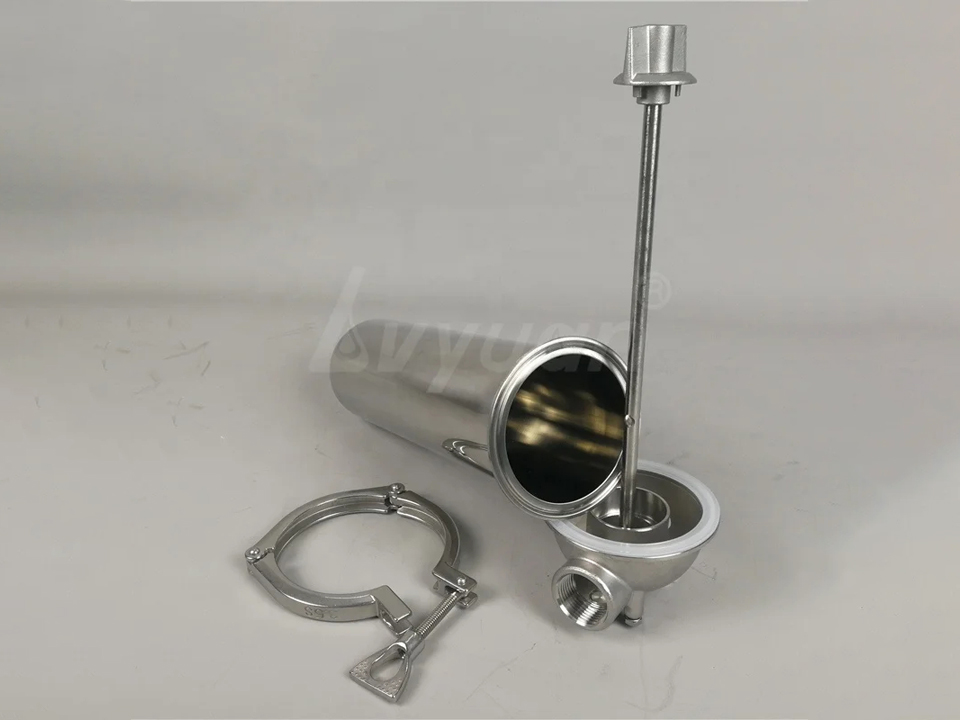
That’s why the cartridge interface matters as much as housing material. The spring, the seat, the knife edge, the end-cap fit, the compression plate—all those ugly little mechanical details decide whether the stainless steel cartridge filter housing is doing real work or just giving QA false confidence.
The FDA’s 2024 CORE annual report said the agency evaluated 72 incidents, initiated 26 responses, and issued 10 public health advisories tied to FDA-regulated human food incidents in calendar year 2024.
That’s not a filter-housing statistic. Let’s be honest.
But it is a reminder that food plants don’t get graded on intentions. They get judged by outcomes.
Stainless Filter Housing Specification Table for Beverage Buyers
Specification Area
Safer Choice for Syrup and Beverage Lines
Risky Shortcut
My Field Opinion
Housing material
316L for acidic, chloride-heavy, hot-CIP, or premium beverage lines
Generic “stainless” with no grade stated
“Stainless” without grade is a sales fog machine
Cartridge format
222/226 end cap where bypass control matters; DOE where cost and simple service dominate
Loose-fit cartridge with weak seating
Bypass is worse than clogging because it lies quietly
Micron rating
Staged filtration: coarse pre-filter, then final cartridge
Jumping straight to 1–5 micron on dirty feed
Small micron numbers impress buyers and annoy operators
Seal material
EPDM, Viton, silicone, or NBR selected by chemistry and temperature
Random gasket included by supplier
Seal failure often masquerades as “product instability”
Sized for peak flow, viscosity, solids load, and cartridge area
Sized by pipe diameter only
Pipe size is not filtration capacity
Differential pressure
Gauge ports before and after housing
No DP monitoring
Without DP, cartridge changeout becomes superstition
Upstream protection
Sediment screen or coarse filter before finer media
One housing expected to do everything
Staging is cheaper than downtime
How to Choose Filter Housing for Syrup Processing
Don’t start with the housing.
Start with the liquid.
What’s the Brix? What’s the viscosity at actual operating temperature—not the tidy number in the lab? Is the product acidic? Any citrus oil? Any pulp? Any xanthan, CMC, pectin, cocoa, caramel, calcium, tea extract, or botanical sludge hiding in the blend? What flow do you need at peak rate? What differential pressure can the pump tolerate before everyone starts blaming the cartridge?
Answer those first.
Then pick the sanitary inline filter housing.
For a multi-SKU beverage plant, I’d usually split the job into three zones: utility water filtration, ingredient or process-water polishing, and syrup or final beverage security filtration. Blurring those jobs is how one housing ends up responsible for everything and good at nothing.
I don’t like “universal” specs.
A clear flavored water line and a fruit-syrup loop don’t behave the same. Neither do hot-filled tea, carbonated soft drink syrup, dairy-style beverage bases, or functional drinks with mineral salts and plant extracts. Same pipe size? Maybe. Same filtration reality? Not even close.
Bigger Housing Beats Tighter Media More Often Than Buyers Admit
Here’s a boring sentence that saves money: more media area usually beats a smaller housing with a tighter micron rating.
There.
I said it.
A larger stainless steel filter housing gives you lower face velocity, less differential pressure, longer cartridge life, fewer mid-run changeouts, and less operator fiddling. That’s especially true with syrup, where high viscosity and suspended solids punish undersized housings quickly and without mercy.
But the quote looks cheaper with the smaller body, right?
That’s the trap. The low-CAPEX housing shows up, passes installation photos, then spends the next two years eating cartridges and slowing production. Nobody remembers the purchase saving. Everybody remembers the downtime.
Ask suppliers for the flow assumptions. Ask for viscosity. Ask for clean and dirty pressure-drop estimates. Ask what happens at 70% or 80% loading. If the answer comes back fluffy, the sizing was probably done by pipe diameter and optimism.
Don’t Buy Water Hardware and Pretend It’s Beverage Duty
Yet plants do this constantly.
They buy industrial water filtration hardware, bolt it onto a beverage skid, and then act surprised when cleaning access is awkward, seals don’t like the sanitation chemistry, drainage is poor, and the housing becomes that one component nobody enjoys opening.
Water hardware has a place.
Use it for rough pre-filtration, utility protection, or non-critical service. Fine. But syrup filtration housing needs tighter thinking: cleanable internal surfaces, correct elastomers, material grade traceability, pressure safety, proper cartridge compression, and practical access for operators who are already tired.
The FDA Food Code is intended as a model to safeguard public health and make sure food is safe, unadulterated, and honestly presented; FDA also notes the 2022 Food Code received editorial corrections in December 2024.
That sounds regulatory and dry.
On the floor, it means this: if your housing can’t be cleaned, drained, inspected, sealed, and documented without drama, it’s not really sanitary. It’s just shiny.
FAQ
What is a stainless steel filter housing in a beverage blending line?
A stainless steel filter housing is a pressure-rated vessel that holds a cartridge, bag, or mesh element inside a beverage or syrup line to remove sediment, pulp, carbon fines, gasket debris, and other unwanted particles before blending, holding, carbonation, filling, or packaging.
The shell gets the attention, but the internals do the work. Cartridge seat, gasket compression, inlet/outlet geometry, venting, drainability, and surface finish decide whether the housing is a real control point or just polished plumbing.
How do I choose filter housing for syrup processing?
Choosing filter housing for syrup processing means matching material grade, seal chemistry, cartridge format, micron rating, housing size, pressure capacity, and cleanability to the syrup’s viscosity, acidity, solids load, temperature, flow rate, sanitation routine, and finished-product clarity target.
Start ugly. Look at the worst product, not the easiest one. High Brix, fruit pulp, gums, acids, and hot CIP will expose a weak housing fast. If the supplier can’t talk about differential pressure and cartridge seating, keep pushing.
Is 304 or 316L stainless steel better for beverage filter housing?
304 stainless steel can work for neutral water and mild beverage service, while 316L stainless steel is usually the stronger choice for acidic syrups, chloride exposure, aggressive sanitation chemistry, hot cleaning cycles, and higher-risk food and beverage filtration systems.
I frankly believe too many buyers treat 316L as a luxury. It isn’t always needed, but when citrus, salt, heat, or harsh cleaning enters the line, corrosion margin matters. Pitted stainless is not just ugly—it’s harder to clean.
What micron rating is best for syrup and beverage lines?
The best micron rating depends on particle load and product target, but syrup and beverage lines usually perform better with staged filtration: coarse sediment protection first, then finer cartridge filtration or polishing near the blending, transfer, or filler-protection stage.
Don’t worship tiny numbers. A 1-micron cartridge on a dirty syrup feed can become an expensive cork. Sometimes 30 micron, then 10 micron, then 5 micron is smarter than pretending one tight cartridge can do every job.
Why does differential pressure matter in a beverage filter housing?
Differential pressure is the pressure difference between the inlet and outlet of a filter housing, and it shows how much resistance the cartridge or mesh creates as solids collect on the media during beverage or syrup production.
No DP reading? You’re guessing. Maybe the cartridge is clean. Maybe it’s loaded. Maybe the operator changed it too early. Maybe bypass has already started. Differential pressure turns cartridge changeout from superstition into maintenance data.
Can one sanitary inline filter housing handle every beverage application?
One sanitary inline filter housing can handle several beverage applications only when the liquids share similar flow rate, viscosity, acidity, temperature, solids load, sanitation chemistry, filtration target, and cartridge compatibility; otherwise, one shared housing quickly becomes a compromise.
I’ve seen “one housing for all SKUs” work in simple plants. I’ve also seen it fail spectacularly once fruit systems, functional ingredients, and mineral blends were added. Product families matter. So do cleaning validation and seal selection.
Final Word: Buy the Housing Like It Can Hurt You
Because it can.
A stainless steel filter housing won’t rescue a sloppy blending process. Let’s not pretend. But the wrong housing can turn a decent line into a complaint generator—pressure spikes, cartridge bypass, seal shedding, poor drainage, bad cleanability, short cartridge life, and the slow-motion misery of recurring quality holds.
I’d rather over-ask before purchase than over-explain after failure.
So specify the real stuff: 304 or 316L, seal material, end-cap style, micron staging, cartridge length, flow rate, peak viscosity, pressure rating, surface finish, drainability, venting, clamp or bolt closure, and CIP chemistry. Write it down. Make the supplier answer it. Make purchasing keep it.
For syrup and beverage blending lines, review the available stainless housing and cartridge options, then request a quote with your actual flow rate, liquid type, temperature, target micron rating, solids load, and sanitation chemistry. Not the easy version. The real one.