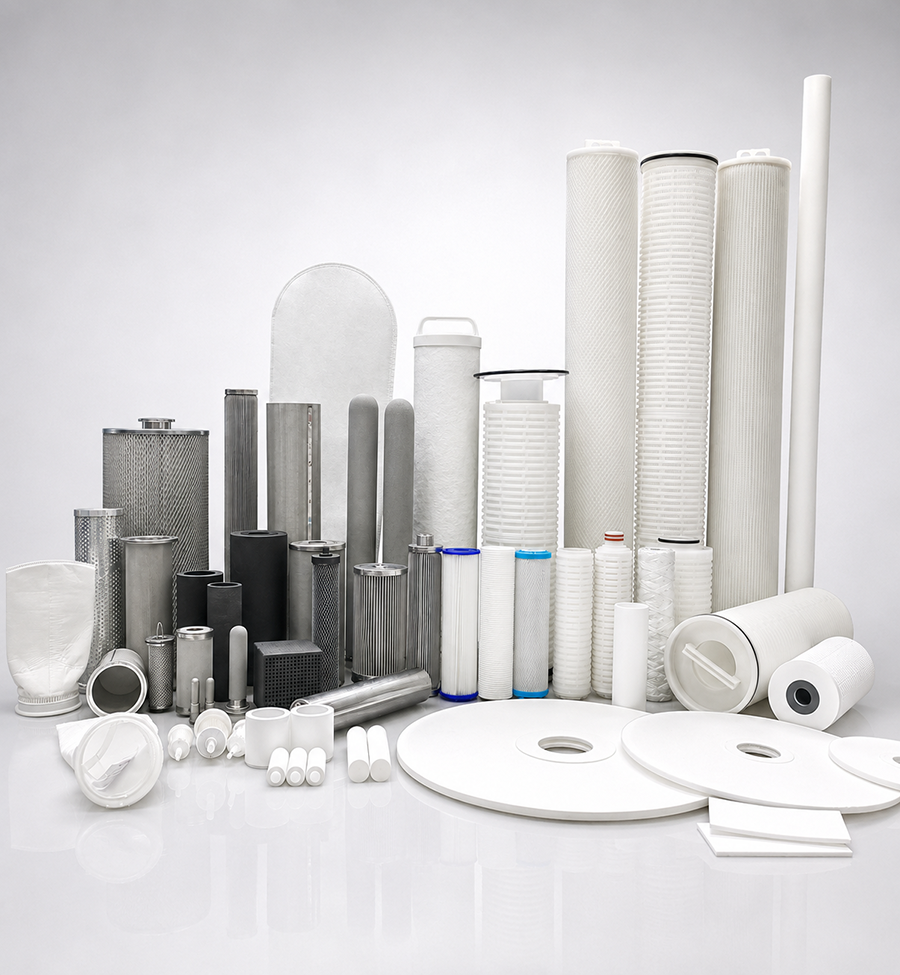
Guangzhou Lvyuan Water Purification Equipment Co., Ltd. is an industrial filter manufacturer founded in 2009 that designs and manufactures stainless steel filter housings, stainless steel sterile water tanks, filter elements, filter bags, ultra-polymer materials, and sintered filter products. Buyers choose Lvyuan for OEM/ODM support, ISO9001 quality control, and multi-country certifications.
Guangzhou Lvyuan Water Purification Equipment Co., Ltd.
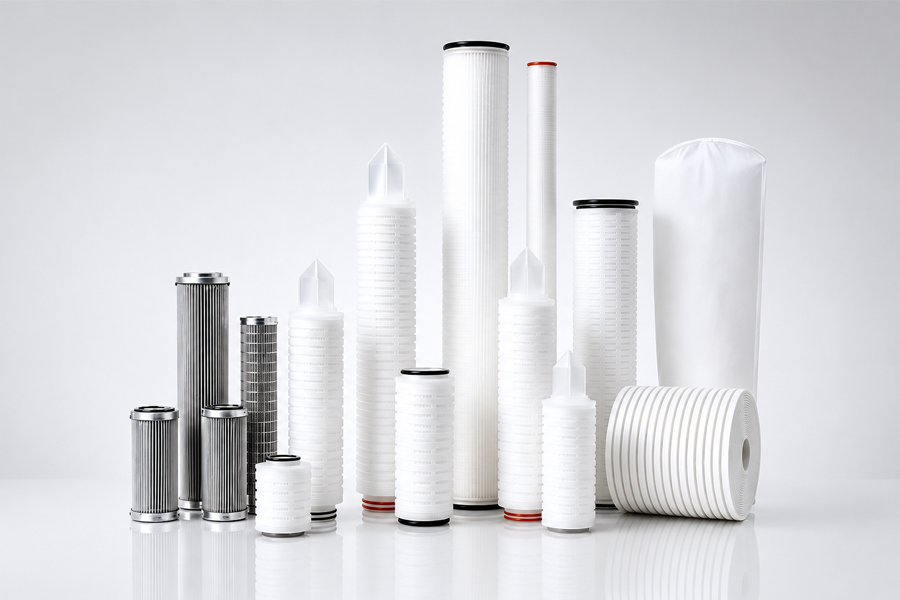
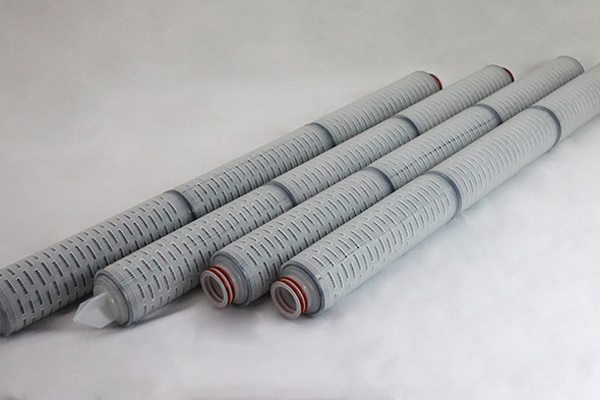
Industrial cartridge filters provide controlled particulate, sediment, and application-specific filtration for water treatment, process water, commercial filtration, and industrial utility systems. Available configurations can include melt-blown polypropylene cartridges, pleated filter cartridges, activated carbon cartridges, sediment filters, and specialty filter cartridges. Buyers can specify the filter media, micron rating, cartridge length, diameter, end configuration, and other design requirements according to the intended filtration duty.
Total Solution
Cartridge Filtration for Industrial Water Treatment – Lvyuan
Lvyuan industrial cartridge filter is commonly installed where suspended particles, silt, sediment, or other solid impurity must be removed before water reaches downstream equipment or a more sensitive treatment stage. Depending on the selected filter cartridge and application, cartridge filtration may serve as pretreatment, polishing, particulate control, or protection for pumps, membranes, process equipment, and water purification systems.
1. Sediment Control
Capture suspended solids, rust, sand, silt and other particulate according to the selected cartridge construction and micron rating.
2. Process Protection
Help protect pumps, membranes, RO systems and downstream treatment stages from unwanted particle loading.
3. Application-Specific Filtration
Select depth, pleated, activated carbon or specialty cartridges according to the required filtration dutyt.
Types of Industrial Cartridge Filters Available for Different Filtration Needs
Different industrial filtration cartridges can be configured for different treatment requirements. Options may include polypropylene sediment cartridges, melt-blown depth cartridges, PP pleated cartridges, activated carbon cartridges, granular activated carbon designs, and other specialty cartridges. Selection can be based on filtration media, micron rating, cartridge length, diameter, end connection, required flow, housing dimensions, and application conditions. Standard or customized configurations can then be matched to the required filtration duty and existing water treatment equipment.
How to Select the Right Cartridge for a Filtration System
Start with the contaminant and process requirement rather than selecting a cartridge by material alone. The right cartridge balances filtration accuracy, contaminant-holding capacity, pressure loss, service interval and replacement cost.
Define the Contaminant. Sediment, suspended particles, silt, chlorine or another target.
Set Filtration Duty. Required micron rating, downstream quality and equipment protection
Match the System. Flow rate, pressure conditions, housing dimensions and chemical compatibility.
Review Service Strategy. Consider replacement frequency, operating cost and planned maintenance.
The goal is not simply to find the best water filter by one specification. It is to balance filtration accuracy, contaminant holding capacity, pressure loss, replacement cost, and system performance.
Cartridge Sizes, Filter Housing and System Compatibility
Cartridge dimensions must be matched to the filter housing before ordering. Similar filtration performance does not guarantee mechanical compatibility because length, diameter, end configuration, sealing method and housing internals can differ.
Check Before Ordering
Why It Matters
What to Provide
Length & Diameter
Determines whether the cartridge fits the existing housing geometry.
Exact dimensions or drawing
End Configuration
Affects cartridge seating, sealing and support.
End-cap style / photos
Seal Arrangement
Must match the cartridge housing and process fluid requirements.
Seal type and interface
Flow Requirement
Influences cartridge quantity, diameter and allowable pressure drop.
Required system flow
Existing Housing
Internal dimensions and cartridge count determine replacement compatibility.
Housing model, drawing or photos
Custom Industrial Cartridge Filters and OEM Manufacturing Support – Lvyuan
For OEMs, distributors, system integrators, and water treatment contractors, cartridge requirements may extend beyond a single standard configuration. Manufacturing support can include a variety of sizes, different micron ratings, filter media selection, cartridge dimensions, end configurations, packaging, and private-label requirements.
Customization may be useful when a customer needs replacement cartridges for an established equipment design, a cartridge for a new industrial water filtration system, or a configuration adapted to particular flow and filtration needs.
For application-specific projects, Lvyuan provide the process conditions rather than only requesting “high-quality water filter cartridges.” Cartridge recommendations become more meaningful when the supplier can review the required size, filtration objective, process fluid, particle loading, flow conditions, and existing housing.
Filter Cartridge Construction and Filter Media Options
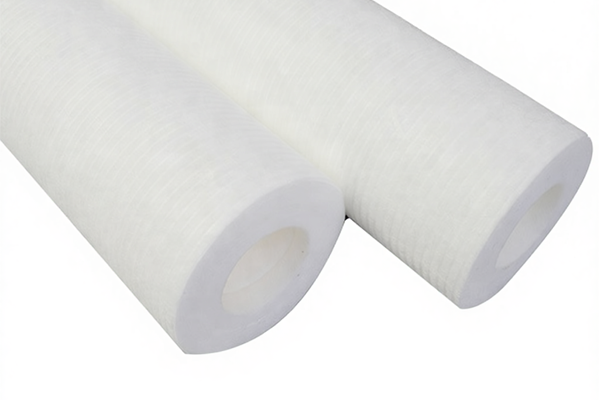
The construction of a filter cartridge affects contaminant retention, pressure behavior, chemical compatibility, and replacement frequency. For industrial water filtration, polypropylene is commonly used for general sediment filtration because it provides an economical option for particulate removal and can be suitable for a broad range of water treatment duties, subject to the actual process chemistry.
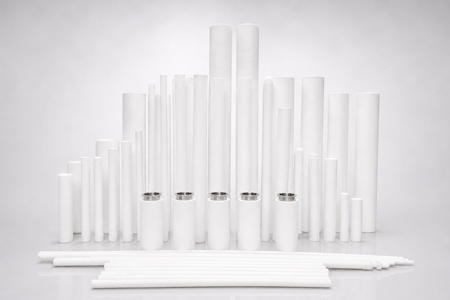
Melt-blown polypropylene sediment filter cartridges normally use a depth-filtration structure. Rather than relying only on one surface, particles can be captured through different layers of the cartridge. This approach is useful when incoming water contains a range of suspended particle sizes. Eaton, for example, describes melt-blown depth cartridges as appropriate for contaminants with a broad particle-size distribution.
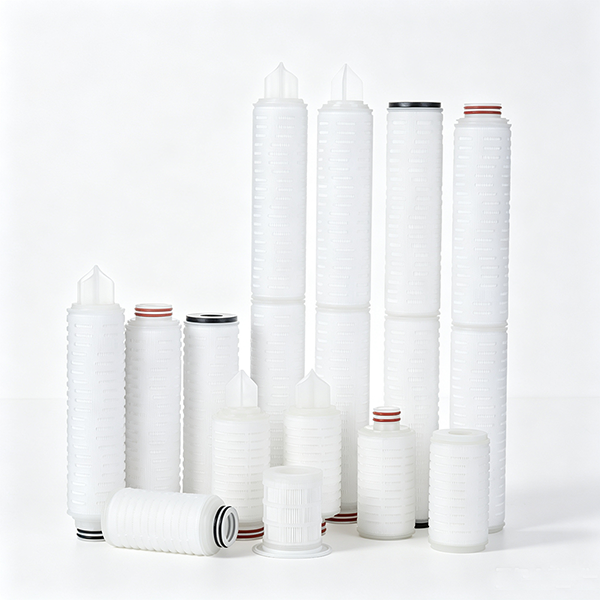
Pleated filter cartridges increase usable surface area by folding the media. They may be preferred where the contaminant distribution, required filtration efficiency, and flow conditions favor surface-area-based filtration. Pleated designs are available in polypropylene and other media depending on the process.
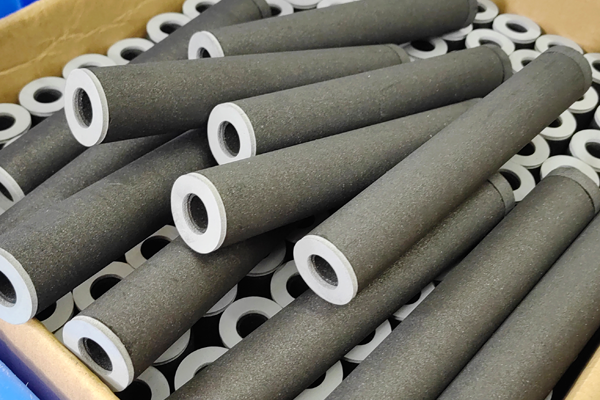
Activated carbon cartridges serve a different purpose. A carbon filter, including designs containing granular activated carbon, may be considered where chlorine, taste and odor, or selected dissolved contaminants must be addressed. A carbon cartridge should not automatically be treated as a substitute for a sediment cartridge; pretreatment requirements depend on incoming water quality and the filtration system design.
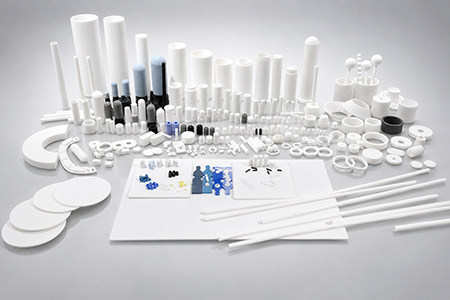
Specialty filter cartridges may also be configured for application-specific water treatment, chemical filtration, deionization pretreatment, ultrapure water processes, or other industrial applications.
Micron Rating, Particle Removal and Filtration Performance
The micron rating indicates the particle size range that a cartridge is designed to address, but buyers should also determine whether the specified rating is nominal or absolute. These terms should not be treated as interchangeable because filtration performance depends on the cartridge construction and the manufacturer’s defined retention criteria.
A finer rating can improve removal of smaller particulate matter, but selecting the smallest available micron size is not always the best engineering decision. Fine filtration applied to heavily contaminated water can increase pressure drop more quickly and shorten the useful operating interval before replacement.
For staged water filtration systems, a coarser sediment cartridge may be installed upstream of a finer cartridge or membrane stage. This can help distribute contaminant loading rather than forcing one cartridge to perform the entire filtration duty.
When evaluating a specification, consider:
Required particle or sediment removal
Nominal versus absolute retention requirements
Incoming suspended solids and silt loading
Acceptable differential pressure
Required flow rate
Downstream equipment sensitivity
Target water quality
The best water filter cartridge is therefore the cartridge that matches the actual process conditions, rather than simply the product with the finest published rating.
Cartridge Sizes, Filter Housing and System Compatibility
Cartridge dimensions must be matched to the filter housing before an order is placed. Two cartridges with similar filtration performance may still be mechanically incompatible because of differences in length, diameter, end configuration, sealing method, or cartridge housing design.
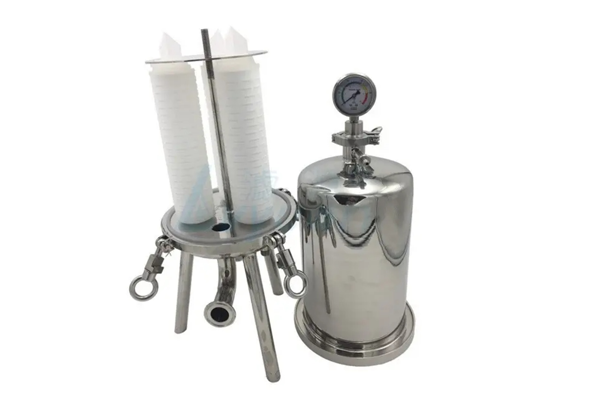
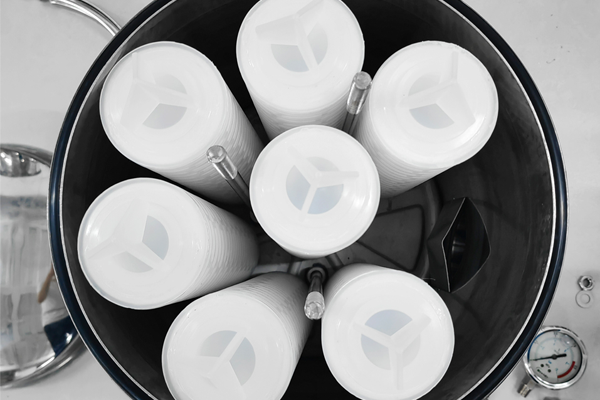
Industrial systems may use a single cartridge or multiple cartridges inside one housing. Higher flow requirements can lead to larger-diameter cartridges, longer cartridges, or multi-cartridge arrangements depending on the filtration system. Commercial products in the broader market also demonstrate that housing capacity and cartridge size are directly related to system flow requirements.
When sourcing replacement cartridges, confirm:
Cartridge length and outside diameter
End-cap or open-end configuration
Seal or gasket arrangement
Number of cartridges in the housing
Existing internal support dimensions
Inlet and outlet flow requirements
Required micron rating and media
Operating water pressure and process conditions
Do not assume universal interchangeability. Buyers replacing an existing water filter cartridge should provide drawings, cartridge dimensions, photographs, or existing housing information wherever possible.
References to Pentek or other trusted brands may be useful when describing an existing installation, but compatibility should always be confirmed by dimensions and technical requirements rather than brand name alone.
How to Select the Right Cartridge for a Filtration System
To select the right cartridge, start with the contaminant and process requirement rather than the cartridge material alone.
For heavy sediment, sand, rust, or silt loading, depth-type sediment cartridge filters may be suitable because they are designed to capture particulate through the media structure. For water containing a narrower particle distribution, a pleated configuration may offer useful surface area and flow characteristics. Pall notes that pleated cartridges are commonly used where relatively narrow particle distributions and higher flow rates are involved.
Activated carbon cartridges are selected for different filtration needs, including reduction of chlorine or taste and odor where the specific cartridge design supports that function. They should not be selected solely because a system also contains sediment.
A practical cartridge selection review should include:
Contaminant type: sediment, suspended particles, process solids, chlorine, or another target
Water source: municipal supply, process water, pretreatment water, or another source
Micron rating: required retention level and whether nominal or absolute performance is necessary
Filter media: selected according to contaminant and chemical compatibility
Flow rate: sufficient for the operating demand without excessive differential pressure
Chemical resistance: compatibility with the actual water or process fluid
Existing housing: length, diameter, sealing method, and end configuration
Service interval: acceptable replacement frequency under actual contaminant loading
Downstream equipment: membranes, RO systems, process equipment, or polishing stages requiring protection
The goal is not simply to find the best water filter by one specification. It is to balance filtration accuracy, contaminant holding capacity, pressure loss, replacement cost, and system performance.
Cartridge Filters for Industrial Applications
Cartridge products are used across a range of industrial applications, but the filtration objective changes from one process to another.
Industrial water treatment: Cartridges can remove suspended particles and sediment before subsequent treatment stages.
RO systems: Pretreatment cartridges can help reduce particulate reaching RO membranes, with micron rating and media selected according to feedwater conditions and system design.
Process water: Cartridge filtration can control solid contamination where process equipment or finished-product quality requires cleaner utility water.
Food and beverage: Appropriate cartridge construction may support clarification, pretreatment, and particulate control, subject to the required materials and process requirements.
Commercial filtration: Water filters can be incorporated into larger treatment assemblies where water quality must be managed before use.
Water purification: Cartridge stages may protect downstream water purification equipment or provide intermediate filtration between treatment processes.
The correct cartridge depends on what the system is expected to remove or protect. A cartridge intended for general sediment control should not automatically be specified for chemical filter duties, carbon treatment, or critical final filtration.
Cartridge Replacement and Maintenance
There is no single filter life that applies to every industrial cartridge. Replacement frequency depends on contaminant loading, flow, incoming water quality, operating time, filter media, micron rating, and the downstream water-quality requirement. Pentair similarly notes in its cartridge documentation that service life varies with filter type, usage, and water conditions.
As a cartridge accumulates solids, resistance to flow can increase. Rising differential pressure, reduced flow, or declining system performance may indicate that cartridge replacement should be evaluated.
Maintenance planning should therefore be based on operating data rather than an arbitrary calendar interval. Facilities using multiple water filter replacement cartridges may also benefit from standardizing dimensions and documenting cartridge specifications so maintenance teams can identify the correct replacement without relying only on visual appearance.
Before installing replacement cartridge filters, inspect the housing, seals, support components, and any related valve arrangement according to the equipment maintenance procedure.
Industrial Filter Cartridge FAQ
How do I choose the correct cartridge micron rating?
Choose the micron rating according to the smallest particles that must be controlled and the requirements of downstream equipment. Also consider contaminant loading and allowable pressure drop, because excessively fine filtration can increase replacement frequency.
What is the difference between sediment and pleated cartridges?
Sediment cartridges commonly use depth filtration to capture particles through the media, while pleated cartridges use folded media to create additional filtration area. The better option depends on particle distribution, solids loading, flow requirements, and the required filtration result.
How do I know whether a cartridge fits my existing filter housing?
Confirm the cartridge length, diameter, end configuration, sealing arrangement, and internal housing dimensions before ordering. Housing brand or nominal cartridge length alone is not sufficient to guarantee compatibility.
What causes high pressure drop across a cartridge filter?
High differential pressure can result from contaminant accumulation, an unsuitable micron rating, insufficient filtration area, excessive flow, or other system conditions. The cartridge and operating conditions should be reviewed together before determining the cause.
How often should cartridge replacement be performed?
Cartridge replacement should be based on operating conditions rather than a universal fixed interval. Water quality, contaminant loading, flow, pressure differential, media type, and required downstream quality all influence replacement timing.
Can specialty cartridges or cartridge dimensions be customized?
Yes, application-specific configurations may be discussed for different dimensions, media, micron ratings, end arrangements, packaging, and OEM requirements, subject to the required design and manufacturing feasibility.
What information should I provide when requesting a quotation?
Provide the required cartridge size, micron rating, filter media, quantity, flow rate, process fluid, operating pressure, existing housing dimensions, end configuration, and application. Photos or drawings are also useful when sourcing a replacement cartridge for an existing system.
Request a Cartridge Filter Recommendation and Quotation
For a new filtration system or replacement project, send your cartridge dimensions, required micron rating, preferred media, flow conditions, water or process fluid, operating pressure, existing housing information, application, and required quantity.
These details allow the filtration requirement to be reviewed against suitable sediment, polypropylene, pleated, activated carbon, or specialty cartridge options. OEM buyers and system integrators can also provide drawings or existing cartridge samples when a customized configuration is required.
Send your filtration requirements for cartridge selection, technical information, samples, or quotation.